Cranberry Walnut Bread is one of those comforting bakes that feels special without demanding hours in the kitchen. This no-knead version captures that magic, using the power of time to develop a wonderfully tender crumb and a golden crust. The tartness of dried cranberries plays perfectly against the nutty crunch of walnuts, and a hint of orange zest adds a bright, fresh note that makes the whole loaf sing. It’s the kind of bread I love to pull from the oven on a quiet Saturday morning, filling the house with a warm, inviting aroma. You can also make the dough the night before and bake it fresh the next day, making it incredibly convenient for busy schedules. The simplicity of this no-knead Cranberry Walnut Bread means you don’t need any special skills – just a bowl, some basic ingredients, and a little patience. It’s a wonderfully straightforward way to enjoy homemade bread, perfect for slicing and toasting with butter or enjoying plain.
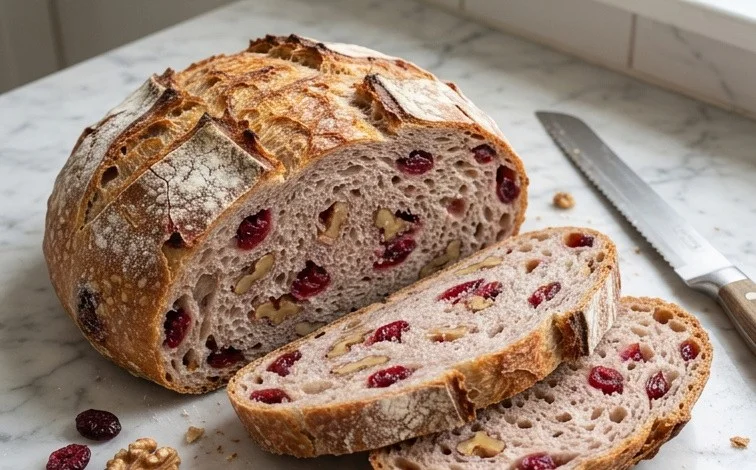
Cranberry Walnut Bread (No-Knead)
This Cranberry Walnut Bread is perfect for those mornings when you want something comforting and delicious without the fuss of traditional bread-making. The combination of tart dried cranberries and earthy walnuts, with a hint of orange zest, makes for a wonderfully flavorful loaf that requires no kneading. It’s a straightforward recipe that even beginners can master, yielding a beautiful crust and a tender crumb. I often make this on a weekend to enjoy throughout the week, especially with my morning coffee or as an afternoon snack. The no-knead method relies on time and a high-hydration dough to develop gluten, making it incredibly simple to achieve a great texture.
Ingredients:
- ½ teaspoon active dry yeast
- 1 ½ cups warm water (warmed to 110 to 115 degrees F)
- 1 teaspoon granulated sugar
- 2 teaspoons Kosher salt
- 3 cups bread flour, plus 2 tablespoons (plus more for surface)
- ¾ cup dried cranberries
- ½ cup dried walnuts, roughly chopped
- 1 tablespoon honey
- 1 tablespoon orange zest
Making the Dough
The first step is to activate your yeast. In a large bowl, combine the warm water and granulated sugar. Sprinkle the active dry yeast over the surface of the water. Let it sit for about 5 to 10 minutes. You should see it get foamy and bubbly, which indicates the yeast is alive and ready to work. If it doesn’t foam, your yeast might be old, or the water was too hot or too cold, and you’ll need to start over with fresh yeast and properly tempered water. This foamy stage is a visual confirmation that your leavening agent is active, setting you up for a successful rise.
Once the yeast is bubbly, add the Kosher salt, 3 cups of bread flour, the dried cranberries, chopped walnuts, honey, and orange zest to the bowl. Stir everything together with a wooden spoon or a sturdy spatula until a shaggy, wet dough forms. It will look very sticky and unmanageable, and that’s exactly what you want. Resist the urge to add more flour at this stage. The high hydration is key to the no-knead texture. Ensure the cranberries and walnuts are well distributed throughout the dough. The honey adds a touch of sweetness and also helps with browning and tenderness, while the orange zest provides a lovely aromatic lift that complements the other flavors beautifully. Make sure the orange zest is finely grated so it incorporates evenly without large chunks.
First Rise and Shaping
Cover the bowl tightly with plastic wrap or a damp kitchen towel. Let the dough rise in a warm place for 12 to 18 hours. The longer the rise, the more complex the flavor will become. During this long fermentation, the yeast will produce gas, causing the dough to rise and develop a wonderful, airy structure. A slightly warmer spot, like a slightly warmed (but turned off) oven, can speed things up, but a regular kitchen counter will work perfectly well. You’re looking for the dough to at least double in size and become bubbly on the surface. It will be very airy and might have large pockets.
After the long rise, the dough will be bubbly and have expanded significantly. Lightly flour your work surface and a bench scraper. Gently scrape the dough out of the bowl onto the floured surface. It will be very sticky and wet. Try not to deflate it too much. You want to create a relatively smooth ball. To do this, gently fold the edges of the dough into the center, then flip it over so the seam is on the bottom. This is a gentle shaping, not a vigorous kneading. You’re just trying to give it a little structure before its final proof. You can use your floured hands or a bench scraper to help gather and shape the dough. Dusting your hands lightly with flour will prevent them from sticking to the dough.
Second Rise and Baking
Generously dust a piece of parchment paper with flour or cornmeal. Carefully transfer the shaped dough onto the prepared parchment paper, seam-side down. Cover it loosely with plastic wrap or a clean kitchen towel and let it rest for about 1 to 2 hours, or until it looks puffy and has increased in size by about 50%. While the dough is having its second rise, preheat your oven to 450 degrees F (230 degrees C). If you have a Dutch oven or a heavy oven-safe pot with a lid, place it in the oven while it preheats. The preheated pot is essential for creating that beautiful, crispy crust characteristic of no-knead bread. It traps the steam released from the dough, allowing it to bake evenly and develop a fantastic crust.
Once the dough has finished its final proof and your oven and Dutch oven are fully preheated, carefully remove the hot Dutch oven from the oven. Using the parchment paper as a sling, carefully lower the dough into the hot Dutch oven. Be very cautious as the pot is extremely hot. Put the lid back on the Dutch oven. Place the covered Dutch oven back into the preheated oven and bake for 30 minutes. After 30 minutes, carefully remove the lid. The bread will have risen and started to brown. Continue to bake for another 15 to 25 minutes, uncovered, or until the crust is a deep golden brown and the internal temperature of the bread reaches about 205-210 degrees F (96-99 degrees C). This second phase of baking without the lid allows the crust to crisp up and deepen in color. You can tap the bottom of the loaf; it should sound hollow when it’s done.
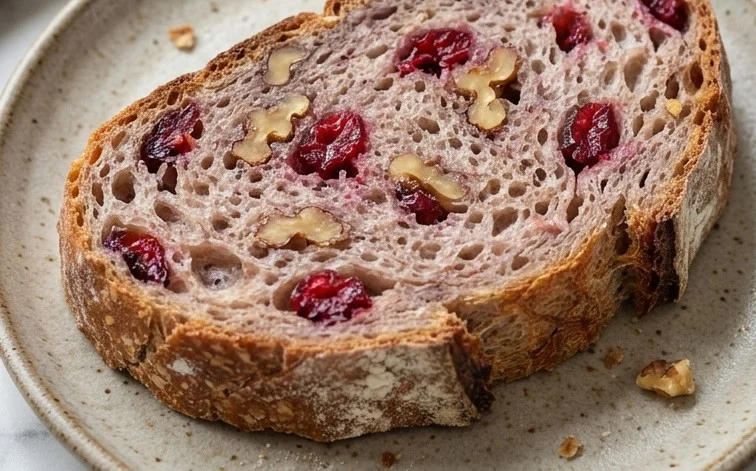
When the bread is fully baked, carefully remove it from the Dutch oven using oven mitts and place it on a wire rack to cool completely. It’s incredibly tempting to slice into it immediately, but allowing it to cool is important for the crumb to set properly. If you cut it too soon, it can turn gummy. This bread is wonderful served warm with butter, or cooled and enjoyed plain, toasted, or with a smear of cream cheese. It stores well at room temperature in a paper bag or bread box for up to 3 days.
Conclusion:
This no-knead Cranberry Walnut Bread is a true triumph of simple baking. It proves you don’t need to knead dough for hours to achieve a beautiful, flavorful loaf with a fantastic texture. The combination of sweet, tart, and nutty elements makes it a versatile bread that’s perfect for any occasion. Enjoy it warm from the oven with a smear of butter, or let it cool completely and slice it for everyday enjoyment. It’s also wonderful toasted and served with your morning coffee or tea, or as part of a simple brunch spread. For variations, consider adding a pinch of cinnamon or nutmeg to the dry ingredients for an extra layer of warmth, or swap some of the walnuts for pecans. This Cranberry Walnut Bread is proof that delicious homemade bread can be remarkably simple. Give it a try – you’ll be amazed at the results from such minimal effort!
Frequently Asked Questions:
How can I store Cranberry Walnut Bread?
Once completely cooled, you can store the bread at room temperature in a bread box or a loosely sealed plastic bag for up to 3 days. For longer storage, wrap it tightly in plastic wrap and then aluminum foil, and freeze it for up to 3 months. Thaw at room temperature or gently reheat slices in the oven.
Can I use fresh cranberries instead of dried?
Yes, you can use fresh cranberries, but you’ll need to adjust the amount. Use about 1 to 1.5 cups of fresh cranberries and you might want to add an extra tablespoon of sugar to the dough to balance the tartness. Baking time might also need a slight adjustment, as fresh cranberries release more moisture.
Cranberry Walnut Bread (No-Knead)
A simple, no-knead bread bursting with the flavors of cranberry and walnut, with a hint of orange zest and honey.
Ingredients
-
½ teaspoon active dry yeast
-
1 ½ cups warm water (warmed to 110 to 115 degrees F)
-
1 teaspoon granulated sugar
-
2 teaspoons Kosher salt
-
3 cups bread flour, plus 2 tablespoons
-
¾ cup dried cranberries
-
½ cup dried walnuts, roughly chopped
-
1 tablespoon honey
-
1 tablespoon orange zest
Instructions
-
Step 1
In a large bowl, whisk together the warm water, sugar, and yeast. Let stand for 5 minutes until foamy. -
Step 2
Add the salt, bread flour, dried cranberries, dried walnuts, honey, and orange zest to the bowl. Stir with a wooden spoon until just combined and no dry flour remains. The dough will be sticky. -
Step 3
Cover the bowl with plastic wrap and let it rest at room temperature for at least 1 hour, or up to 3 hours, until doubled in size. -
Step 4
Preheat your oven to 450 degrees F (230 degrees C). Place a Dutch oven or oven-safe pot with a lid inside the oven to preheat for at least 30 minutes. -
Step 5
Turn the dough out onto a lightly floured surface. Gently shape it into a round loaf. Be careful not to deflate it too much. -
Step 6
Carefully remove the hot Dutch oven from the oven. Place the dough inside. Cover with the lid. -
Step 7
Bake for 30 minutes with the lid on. Remove the lid and bake for another 15-20 minutes, or until the crust is golden brown and the internal temperature reaches 200-210 degrees F (93-99 degrees C). -
Step 8
Transfer the bread to a wire rack to cool completely before slicing.
Important Information
Nutrition Facts (Per Serving)
It is important to consider this information as approximate and not to use it as definitive health advice.
Allergy Information
Please check ingredients for potential allergens and consult a health professional if in doubt.

Leave a Comment