Gruyère & Thyme Italian Focaccia brings a deeply satisfying aroma right into your kitchen, especially when it emerges from the oven with a golden, crisp crust and a wonderfully airy crumb. The star is undoubtedly the Gruyère cheese; its nutty, slightly sweet profile melts into every pocket of the dough, offering little moments of pure bliss with each bite. Complementing the cheese is fresh thyme, providing a bright, herbaceous scent that cuts through the richness. This focaccia is incredibly versatile – it’s perfect for tearing off a piece to dip into a bowl of good olive oil, serving alongside a fresh green salad, or simply enjoying as a stand-alone savory treat. Making your own focaccia might seem daunting, but the process is surprisingly straightforward and profoundly rewarding.
Ingredients:
- 6 1/4 cups bread flour
- 2 teaspoons instant dry yeast
- 2 cups warm water ((105°F–115°F or 40°C–46°C))
- 1 tablespoon granulated sugar
- 1/2 cup plus 2 tablespoons extra virgin olive oil
- 4 teaspoons fine sea salt
- 1/4 cup extra virgin olive oil (plus more for greasing the sheet pan)
- 1/4 cup room temperature water
- 7 ounces gruyère cheese (sliced into small cubes)
- 2 tablespoons fresh thyme leaves
- 2 teaspoons Maldon sea salt flakes
Instructions:
Making the Dough
First, let’s get the dough started. In a large mixing bowl, combine the bread flour and the instant dry yeast. Give them a quick whisk to distribute the yeast evenly through the flour. In a separate, smaller bowl or measuring cup, whisk together the warm water and the granulated sugar until the sugar dissolves. This helps to activate the yeast. Pour the water and sugar mixture into the flour and yeast. Now, add the 1/2 cup plus 2 tablespoons of extra virgin olive oil to the mixture.
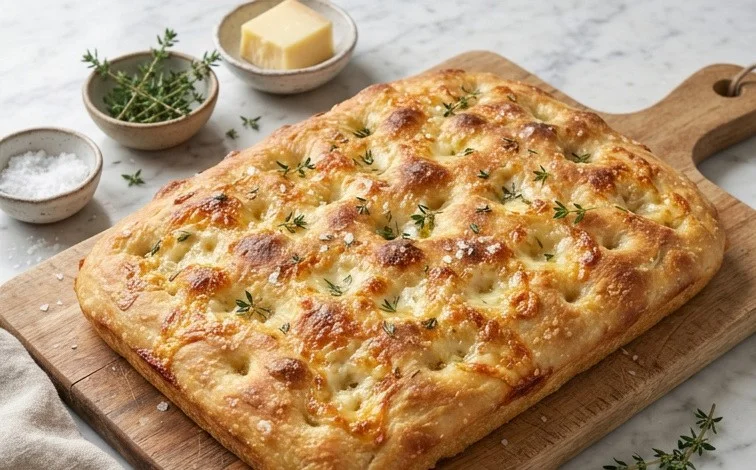
Gruyère & Thyme Italian Focaccia
This focaccia is a wonderful thing to have fresh from the oven, with its crisp, golden crust and tender, airy interior. The nutty, slightly sweet Gruyère cheese melts into the dough, creating little pockets of pure joy, while the fragrant thyme adds a fresh, herbaceous counterpoint. It’s perfect for dipping in olive oil, serving alongside a salad, or just enjoying on its own as a savory snack. Making focaccia is really quite straightforward, and the process is deeply satisfying, filling your kitchen with an incredible aroma.
Ingredients:
- 6 1/4 cups bread flour
- 2 teaspoons instant dry yeast
- 2 cups warm water ((105°F–115°F or 40°C–46°C))
- 1 tablespoon granulated sugar
- 1/2 cup plus 2 tablespoons extra virgin olive oil
- 4 teaspoons fine sea salt
- 1/4 cup extra virgin olive oil (plus more for greasing the sheet pan)
- 1/4 cup room temperature water
- 7 ounces gruyère cheese (sliced into small cubes)
- 2 tablespoons fresh thyme leaves
- 2 teaspoons Maldon sea salt flakes
Instructions:
Making the Dough
First, let’s get the dough started. In a large mixing bowl, combine the bread flour and the instant dry yeast. Give them a quick whisk to distribute the yeast evenly through the flour. In a separate, smaller bowl or measuring cup, whisk together the warm water and the granulated sugar until the sugar dissolves. This helps to activate the yeast. Pour the water and sugar mixture into the flour and yeast. Now, add the 1/2 cup plus 2 tablespoons of extra virgin olive oil and the 4 teaspoons of fine sea salt. Using a wooden spoon or a sturdy spatula, mix everything together until a shaggy dough forms. It will look quite wet and sticky at this stage, and that’s exactly what we want for a truly delicious focaccia. Don’t worry if it seems a bit unmanageable; that’s normal. Cover the bowl tightly with plastic wrap or a damp kitchen towel and let it rest in a warm place for about 1 to 2 hours, or until it has doubled in size. This long, slow rise is key to developing the open, airy texture of good focaccia.
First Rise and Dimpling
Once the dough has doubled, it’s time to get it ready for the pan. Generously grease a 9×13 inch rimmed baking sheet with extra virgin olive oil. You want a good coating so the focaccia doesn’t stick and gets a lovely crispy bottom. Gently scrape the risen dough out of the bowl and onto the prepared baking sheet. The dough will be puffy and airy. Using oiled fingertips, gently spread the dough out to fill the pan, being careful not to deflate all the air bubbles. It might not reach the edges perfectly at first; that’s fine. Let it rest, uncovered, on the baking sheet for another 30 to 45 minutes. During this time, the dough will relax and spread further. After this rest, it’s time for the signature dimpling. Drizzle the 1/4 cup of extra virgin olive oil over the surface of the dough, and then, using your oiled fingertips, press down firmly into the dough all over, creating deep dimples. Be sure to go all the way down to the bottom of the pan. This creates those wonderful pockets that hold all the delicious olive oil and toppings.
Adding the Toppings
Now for the best part – adding the flavor! Scatter the small cubes of Gruyère cheese evenly over the dimpled surface of the focaccia. Try to get them nestled into some of the dimples. Next, sprinkle the fresh thyme leaves over the cheese. The aroma of fresh thyme is just wonderful. Finally, generously sprinkle the Maldon sea salt flakes over everything. These flaky sea salt crystals will provide a beautiful crunch and a burst of salty goodness when you bite into the focaccia.
Baking the Focaccia
Preheat your oven to 425°F (220°C). Once the oven is fully heated, carefully place the baking sheet with the prepared focaccia into the oven. Bake for 25 to 30 minutes, or until the focaccia is deeply golden brown and the cheese is melted and bubbly. Keep an eye on it during the last 10 minutes of baking to ensure it doesn’t burn. If the top is browning too quickly, you can loosely tent it with aluminum foil.
Cooling and Serving
Once baked to perfection, carefully remove the focaccia from the oven. Immediately, while it’s still hot, you can drizzle a little extra olive oil over the top if you like, or brush it on. Let the focaccia cool in the pan on a wire rack for at least 10 to 15 minutes before cutting. This allows the internal structure to set up properly. If you cut it too soon, it might be a bit gummy. Once cooled slightly, you can cut it into squares or rectangles. This Gruyère and thyme focaccia is best served warm. It’s absolutely fantastic on its own, but it also makes a wonderful accompaniment to soups, salads, or as part of an antipasto platter. Store any leftovers (if there are any!) in an airtight container at room temperature for up to two days. You can also reheat it gently in the oven or a toaster oven to revive its crispness.
Conclusion:
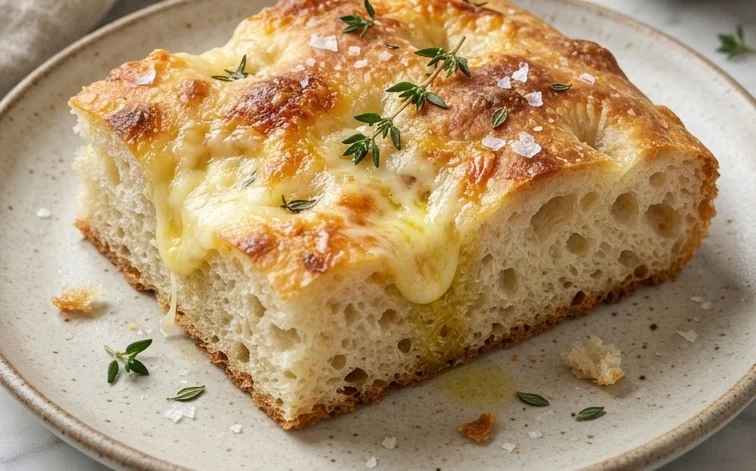
This Gruyère & Thyme Italian Focaccia is a truly rewarding bake. The combination of nutty cheese and fragrant herbs baked into a light, airy bread with a crisp crust is hard to beat. It’s a testament to how simple ingredients can create something so special. Whether you’re serving it as an appetizer, a side dish, or enjoying it all on its own, this focaccia is sure to impress. Don’t be afraid to get your hands in the dough; the process is therapeutic and the end result is absolutely worth it. Enjoy the incredible aroma that fills your home as it bakes!
Serving Suggestions: Tear off pieces and serve warm with good quality olive oil for dipping, alongside a fresh salad, or as a base for bruschetta. It’s also fantastic with soups and stews.
Variations: Feel free to experiment with other hard cheeses that melt well, like aged cheddar or fontina. Other herbs such as rosemary or sage can also be used, though thyme offers a unique balance here.
Storage: Store cooled focaccia in an airtight container at room temperature for up to 2 days. Reheat gently in a warm oven to restore crispness.
FAQs
Can I use pre-shredded Gruyère cheese?
While pre-shredded cheese can work, cubing the Gruyère yourself is recommended. Cubes tend to melt into distinct pockets of cheesy goodness, whereas shredded cheese can sometimes distribute more evenly and melt into the background. Ensure your cheese is at room temperature before adding it to the dough for better integration.
My focaccia didn’t rise much. What could have gone wrong?
Several factors can affect rising. Ensure your yeast was fresh and properly activated by the warm water and sugar mixture. Water that is too hot can kill the yeast, while water that’s too cold won’t activate it sufficiently. Also, check that your dough had a warm, draft-free place to rise. Cold environments can significantly slow down or stop the rising process.
Gruyère & Thyme Italian Focaccia
A savory Italian focaccia bread infused with the nutty flavor of Gruyère cheese and aromatic fresh thyme.
Ingredients
-
6 1/4 cups bread flour
-
2 teaspoons instant dry yeast
-
2 cups warm water ((105°F–115°F or 40°C–46°C))
-
1 tablespoon granulated sugar
-
1/2 cup plus 2 tablespoons extra virgin olive oil
-
4 teaspoons fine sea salt
-
1/4 cup extra virgin olive oil (plus more for greasing the sheet pan)
-
1/4 cup room temperature water
-
7 ounces gruyère cheese (sliced into small cubes)
-
2 tablespoons fresh thyme leaves
-
2 teaspoons Maldon sea salt flakes
Instructions
-
Step 1
In a large bowl, whisk together the bread flour, instant dry yeast, granulated sugar, and fine sea salt. Gradually add the 2 cups of warm water and the 1/2 cup plus 2 tablespoons of extra virgin olive oil. Mix until a shaggy dough forms. Knead on a lightly floured surface for about 8-10 minutes, or until smooth and elastic. Place the dough in a lightly oiled bowl, cover, and let rise in a warm place for 1 to 1.5 hours, or until doubled in size. -
Step 2
Grease a 9×13-inch baking sheet generously with extra virgin olive oil. Gently punch down the risen dough and transfer it to the prepared baking sheet. Press the dough outwards to fill the pan, creating dimples with your fingertips. Cover and let rest for another 30 minutes. -
Step 3
Preheat your oven to 425°F (220°C). -
Step 4
Drizzle the 1/4 cup of extra virgin olive oil over the surface of the dough. Sprinkle the gruyère cheese cubes evenly over the dough. Distribute the fresh thyme leaves on top. -
Step 5
Pour the 1/4 cup of room temperature water into the dimples of the dough. Sprinkle the Maldon sea salt flakes over the entire surface. -
Step 6
Bake for 20-25 minutes, or until golden brown and cooked through. Let cool slightly on a wire rack before slicing and serving.
Important Information
Nutrition Facts (Per Serving)
It is important to consider this information as approximate and not to use it as definitive health advice.
Allergy Information
Please check ingredients for potential allergens and consult a health professional if in doubt.



Leave a Comment