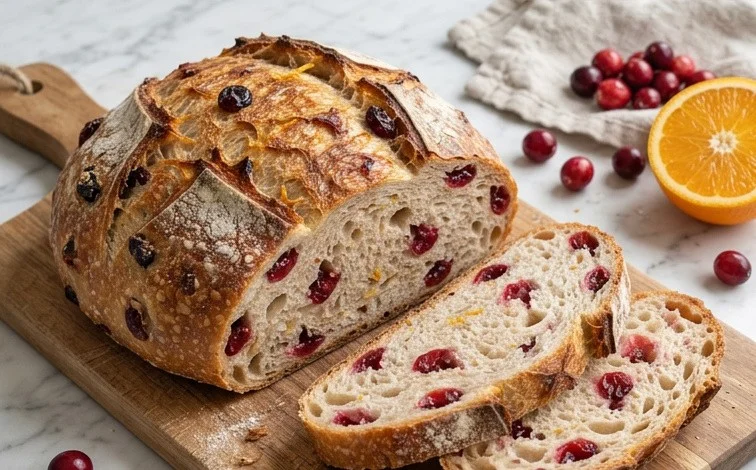
Cranberry Orange Sourdough Bread brings together the sweet-tart chew of dried cranberries and the bright zest of fresh orange in every tangy slice. This loaf is a wonderful way to start the day, perhaps toasted with a smear of butter, or as a comforting accompaniment to a warm meal. Making sourdough bread at home can feel like a big undertaking, but this recipe breaks down the process into manageable steps. Understanding your sourdough starter is key; this recipe relies on a lively, active starter to give your bread its characteristic lift and complex flavor. The combination of cranberries and orange is a classic for a reason, offering a delightful contrast to the sour tang that sourdough is known for. It’s a bread that feels both rustic and a little bit special, perfect for sharing with friends or enjoying yourself over a quiet weekend.
Making the Levain
The first step in creating this delicious bread is to build your levain, which is essentially a small, active starter preparation that will be the powerhouse for your dough’s rise. In a clean jar or bowl, combine the 50 g of active sourdough starter, 50 g of bread flour, and 50 g of water. Mix this thoroughly until there are no dry bits of flour remaining. Cover the container loosely and let it sit at room temperature for about 4 to 8 hours, or until it has doubled in size and is bubbly and active. You’ll know it’s ready when a small spoonful dropped into a glass of water floats. The cost of this initial stage is minimal, primarily just a small amount of flour and water, but it’s vital for a strong, reliable fermentation in your final dough.
Ingredients:
- 50 g active sourdough starter
- 50 g bread flour
- 50 g water
- 350 g water
- all of the levain
- 500 g bread flour
- 10 g salt
- 100 g dried cranberries
- zest of one orange
- 20 g honey or maple syrup, optional
Cranberry Orange Sourdough Bread
This cranberry orange sourdough bread is a wonderfully fragrant and flavorful loaf, perfect for a cozy breakfast or a special treat. The bright citrus notes from the orange zest mingle beautifully with the tartness of the cranberries, all carried by the complex tang of sourdough. Making sourdough can seem daunting, but with a bit of patience and attention, you can achieve a fantastic result right in your own kitchen. The key is understanding the stages and how your starter behaves. This recipe uses a relatively high hydration level, which contributes to a wonderfully open crumb and a crisp crust when baked correctly.
Making the Levain
The first step in creating this delicious bread is to build your levain, which is essentially a small, active starter preparation that will be the powerhouse for your dough’s rise. In a clean jar or bowl, combine the 50 g of active sourdough starter, 50 g of bread flour, and 50 g of water. Mix this thoroughly until there are no dry bits of flour remaining. Cover the container loosely and let it sit at room temperature for about 4 to 8 hours, or until it has doubled in size and is bubbly and active. You’ll know it’s ready when a small spoonful dropped into a glass of water floats. The cost of this initial stage is minimal, around $0.09 for the flour and starter, and essentially free for the water.
Autolyse
Once your levain is ready, it’s time to start combining the main dough ingredients. In a large mixing bowl, add the 350 g of water and all of the prepared levain. Stir them together until the levain is mostly dispersed in the water. Then, add the 500 g of bread flour to the bowl. Mix with your hands or a sturdy spatula until just combined. There should be no dry flour pockets. At this stage, the dough will look shaggy and unappealing – that’s perfectly normal. Cover the bowl and let it rest for 30 minutes to an hour. This resting period is called the autolyse, and it allows the flour to fully hydrate and gluten development to begin naturally, making the dough easier to work with later.
Mixing and Bulk Fermentation
After the autolyse, it’s time to incorporate the salt and the flavorings. Sprinkle the 10 g of salt over the dough. If you are using honey or maple syrup for a touch of sweetness and to aid browning, add the 20 g now. Add the zest of one orange and the 100 g of dried cranberries. Now, it’s time to really mix and develop the dough. Wet your hands slightly to prevent sticking and begin incorporating the salt, zest, and cranberries by pinching and stretching the dough. Continue mixing for about 5 to 7 minutes, performing a series of stretch and folds within the bowl. The dough will start to feel smoother and more cohesive. The goal here is to build strength without overworking it.
Cover the bowl again and let the dough rest for 30 minutes. Following this, begin the bulk fermentation process. This is where the magic of sourdough happens. You’ll perform a series of ‘stretch and folds’ every 30 to 45 minutes for the next 3 to 4 hours, or until the dough has increased in volume by about 30-50% and looks noticeably aerated with some bubbles forming on the surface. To perform a stretch and fold, lightly wet your hand, grab a portion of the dough from one side, stretch it up gently, and fold it over the center of the dough. Rotate the bowl and repeat this process on all four sides. This builds the gluten structure necessary for a good rise. During this phase, the dough will become smoother, more elastic, and hold its shape better.
Shaping and Cold Proofing
Once the bulk fermentation is complete, gently tip the dough out onto a lightly floured surface. Be careful not to degas it too much. Shape the dough into a round (boule) or an oval (batard). There are many ways to shape sourdough, but the key is to create surface tension. You can do this by gently tucking the edges underneath the dough to create a taut skin. Once shaped, place the dough seam-side up into a floured proofing basket (banneton) or a bowl lined with a floured tea towel. Cover it with plastic wrap or a reusable cover and place it in the refrigerator for a cold proof, typically for 12 to 24 hours. This slow, cold fermentation develops deeper flavor and makes the dough easier to score and handle.
Baking the Bread
When you are ready to bake, preheat your oven to 230°C (450°F) with a Dutch oven or baking vessel inside for at least 30 minutes. Carefully remove the hot Dutch oven from the oven. Gently invert your proofed dough onto a piece of parchment paper. Score the top of the dough with a lame or a sharp knife. This allows the bread to expand in a controlled way during baking. Carefully lift the parchment paper with the dough and lower it into the hot Dutch oven. Place the lid back on the Dutch oven.
Bake with the lid on for 20 minutes. This traps the steam released from the dough, creating a wonderfully crisp crust. After 20 minutes, carefully remove the lid. Reduce the oven temperature to 220°C (430°F) and continue baking for another 20-25 minutes, or until the crust is a deep golden brown and the internal temperature of the bread reaches around 96-99°C (205-210°F). Once baked, carefully remove the bread from the Dutch oven and let it cool completely on a wire rack before slicing. Cooling is essential for the crumb to set properly. Enjoy your homemade cranberry orange sourdough!
Conclusion:
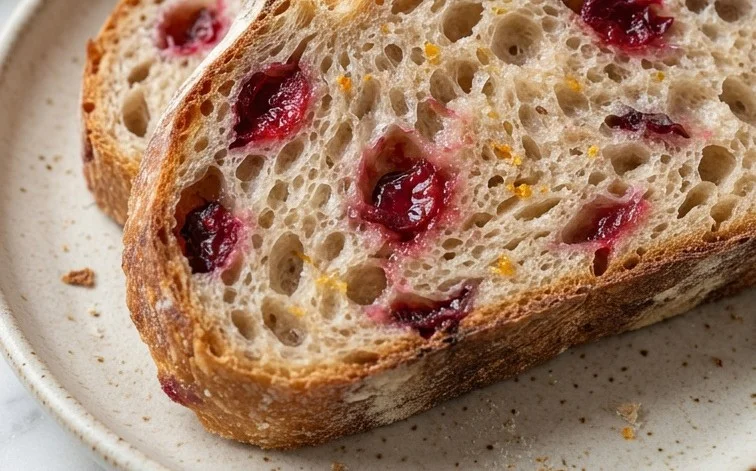
This Cranberry Orange Sourdough Bread is a rewarding bake that fills your home with an incredible aroma and delivers a loaf with a wonderful balance of tang, sweetness, and citrus. The chewy cranberries and fragrant orange zest make it a standout bread that’s perfect for any occasion, from a simple breakfast to a festive gathering. Don’t be intimidated by the sourdough process; follow the steps carefully, and you’ll achieve a beautiful crust and a tender crumb. The effort is absolutely worth it for the unique flavor and texture you get.
Serving Suggestions: This bread is delicious served warm, lightly toasted with butter. It also pairs beautifully with a sharp cheese or a dollop of cream cheese. For a sweet treat, try it with a drizzle of honey or maple syrup.
Variations: You can swap out the dried cranberries for other dried fruits like cherries or apricots. A touch of cinnamon or nutmeg in the dough can also add extra warmth. If you don’t have fresh orange zest, a teaspoon of orange extract can be used, though fresh zest offers the best flavor.
Frequently Asked Questions:
Can I use all-purpose flour for the levain?
It’s best to use bread flour for the levain. Bread flour has a higher protein content, which develops better gluten structure, essential for a strong starter and a well-risen loaf. All-purpose flour might result in a less vigorous levain.
How do I store Cranberry Orange Sourdough Bread?
Once completely cooled, store the bread in a bread box or a paper bag at room temperature for 2-3 days. For longer storage, wrap it tightly in plastic wrap and then in foil, and freeze for up to 3 months. You can toast slices directly from frozen.
Cranberry Orange Sourdough Bread
A fragrant and festive sourdough bread with the bright flavors of cranberry and orange, perfect for any occasion.
Ingredients
-
50 g active sourdough starter
-
50 g bread flour
-
50 g water
-
350 g water
-
500 g bread flour
-
10 g salt
-
100 g dried cranberries
-
zest of one orange
-
20 g honey or maple syrup, optional
Instructions
-
Step 1
Prepare the levain: Mix 50g active sourdough starter, 50g bread flour, and 50g water. Let it sit at room temperature for 4-12 hours until bubbly and active. -
Step 2
Autolyse: In a large bowl, combine 500g bread flour and 350g water. Mix until just combined and let rest for 30-60 minutes. -
Step 3
Incorporate levain and salt: Add all of the prepared levain to the autolysed dough. Add 10g salt and 20g honey or maple syrup (if using). Mix and knead for 5-10 minutes until well incorporated and the dough starts to gain strength. -
Step 4
Add inclusions: Gently fold in 100g dried cranberries and the zest of one orange. Stretch and fold the dough a few times to distribute them evenly. -
Step 5
Bulk Fermentation: Perform a series of stretch and folds every 30-60 minutes for 3-4 hours, or until the dough has increased in volume by about 30-50% and feels airy. -
Step 6
Shape and Cold Proof: Shape the dough into your desired loaf shape and place it in a well-floured proofing basket. Cover and refrigerate for 12-24 hours for cold proofing. -
Step 7
Bake: Preheat your oven with a Dutch oven to 450°F (230°C). Score the dough and bake covered for 20 minutes, then uncovered for another 20-25 minutes, or until deeply golden brown and the internal temperature reaches 200-210°F (93-99°C).
Important Information
Nutrition Facts (Per Serving)
It is important to consider this information as approximate and not to use it as definitive health advice.
Allergy Information
Please check ingredients for potential allergens and consult a health professional if in doubt.


Leave a Comment