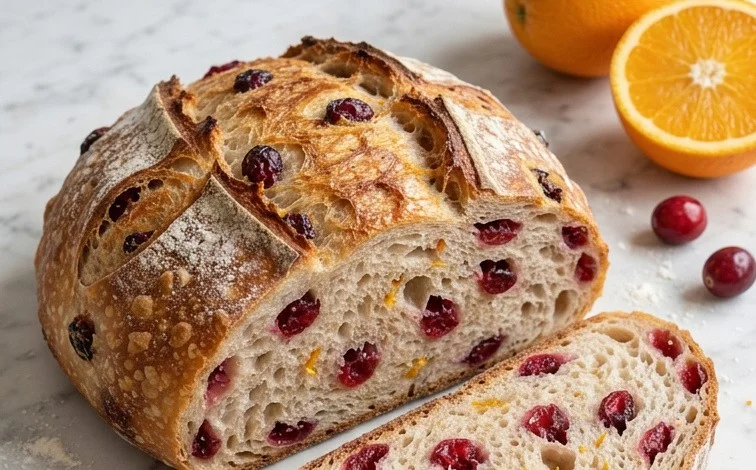
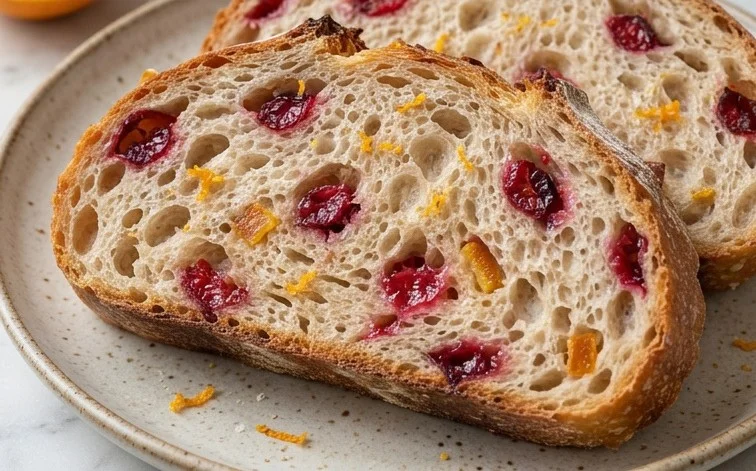
The cheerful red jewels of dried cranberries scattered through a crusty loaf, with bright notes of orange zest – that’s what Cranberry Orange Sourdough Bread brings to the table. This isn’t just any bread; it’s a bake that transforms simple ingredients into something truly special, perfect for a cozy weekend breakfast or an elegant accompaniment to dinner. The tang from the sourdough starter mingles beautifully with the sweetness of the cranberries and the subtle perfume of orange, creating a complex flavor profile that’s both comforting and exciting. I love making this bread when the weather turns cooler, as the warm spices and fruit notes feel particularly fitting. The open, airy crumb structure, a hallmark of good sourdough, makes each slice a delight. Get ready to fill your home with an incredible aroma and enjoy a loaf that’s as satisfying to make as it is to eat.
Ingredients:
- 50 g active sourdough starter (($0.05))
- 50 g bread flour (($0.09))
- 50 g water (($0.00))
- 350 g water (($0.00))
- all of the levain
- 500 g bread flour (($0.86))
- 10 g salt (($0.01))
- 100 g dried cranberries (($1.09))
- zest of one orange (($0.77))
- 20 g honey or maple syrup, optional (($0.22))
Making the Levain
To start, we need to build our levain, which is essentially a mature starter that’s been fed specifically for this bake. In a small bowl or jar, combine your 50 g of active sourdough starter, 50 g of bread flour, and 50 g of water. Stir this mixture well until there are no dry bits of flour left. It should have a consistency like thick pancake batter. Cover this loosely and let it sit at room temperature for about 4 to 8 hours, or until it has doubled in size and is bubbly and active. You’ll know it’s ready when a little bit floats in a glass of water. This levain will give our bread its characteristic tang and airy crumb.
Mixing the Dough
Once your levain is ready, it’s time to mix the main dough. In a large mixing bowl, combine the 350 g of water with all of the prepared levain. Whisk them together until the levain is mostly dispersed in the water. Then, add the 500 g of bread flour and the 10 g of salt. If you’re using the honey or maple syrup for a touch of sweetness and to aid in browning, add that in now as well. Use your hands or a sturdy spoon to mix everything together until a shaggy dough forms. There shouldn’t be any large pockets of dry flour. This initial mixing is just to bring the ingredients together, not to develop gluten yet.
Autolyse and First Rise (Bulk Fermentation)
Cover the bowl with a damp cloth or plastic wrap and let the dough rest for about 30 minutes. This resting period is called autolyse, and it allows the flour to fully hydrate and the gluten to start developing on its own, making the dough more extensible and easier to work with. After the autolyse, it’s time for the first rise, also known as bulk fermentation. During this phase, we’ll perform a series of “stretch and folds” to build strength in the dough.
For the stretch and folds, wet your hands slightly to prevent sticking. Reach into the bowl, grab a portion of the dough from one side, stretch it up gently, and fold it over onto itself. Rotate the bowl and repeat this motion 3 to 4 more times, working your way around the bowl. This process will feel like you’re tucking the dough in. Do these stretch and folds every 30 to 60 minutes for the first 2 to 3 hours of bulk fermentation. The dough will gradually become smoother, more elastic, and show signs of increasing in volume. You’re looking for it to increase by about 30-50%.
Adding the Inclusions
With about 30 to 60 minutes remaining in your bulk fermentation, it’s time to add the cranberries and orange zest. Gently add the 100 g of dried cranberries and the zest of one orange to the dough. Incorporate them by performing one final set of stretch and folds. Be careful not to be too aggressive here, as you don’t want to tear the gluten structure you’ve worked so hard to build. The goal is to evenly distribute the cranberries and zest throughout the dough. You might feel some resistance as you fold, which is perfectly normal. The dough should now feel cohesive and have the cranberries and zest well distributed.
Shaping and Second Rise (Proofing)
Once bulk fermentation is complete, turn the dough out onto a lightly floured surface. Gently pre-shape the dough into a rough ball and let it rest, covered, for about 20 minutes. This bench rest allows the gluten to relax before the final shaping. After the rest, perform your final shaping. Depending on whether you want a round loaf (boule) or an oval one (batard), shape the dough accordingly, ensuring you create good surface tension. This tension is what will help the bread rise nicely in the oven.
Place the shaped dough seam-side up into a floured proofing basket (banneton) or a bowl lined with a floured tea towel. Cover it and place it in the refrigerator for a cold proof. This cold proof, which typically lasts overnight (12-24 hours), develops more complex flavors and makes the dough easier to score and handle. It’s a patient step, but the results are well worth it.
Baking the Bread
When you’re ready to bake, preheat your oven to 230°C (450°F) with a Dutch oven or baking vessel inside for at least 30 minutes. Carefully remove the hot Dutch oven from the oven. Gently invert the cold dough from the proofing basket onto a piece of parchment paper. Score the top of the loaf with a sharp knife or razor blade. This scoring allows the bread to expand in a controlled manner during baking. Carefully lower the dough into the hot Dutch oven, place the lid on, and return it to the oven.
Bake with the lid on for 20 minutes. This traps the steam released from the dough, creating a wonderful crust. After 20 minutes, remove the lid and continue baking for another 20-25 minutes, or until the crust is a deep golden brown and the internal temperature of the bread reaches around 96-99°C (205-210°F). Once baked, carefully remove the bread from the Dutch oven and place it on a wire rack to cool completely. Resist the urge to cut into it too soon; letting it cool fully allows the crumb to set properly.
Conclusion:
You’ve now got all the steps to create a stunning Cranberry Orange Sourdough Bread that’s sure to impress. The combination of tangy sourdough, sweet cranberries, and bright orange zest makes this loaf a real showstopper. It’s wonderfully versatile – enjoy it toasted with butter, alongside a hearty soup, or even as part of a cheese board. For a variation, consider adding a pinch of cinnamon or a touch of cardamom to the dough for an extra layer of warmth, especially during the fall months. Don’t be intimidated by sourdough; the process is rewarding, and the results are worth every moment. This Cranberry Orange Sourdough Bread is more than just a recipe; it’s an experience. Give it a try and discover the joy of homemade sourdough!
Frequently Asked Questions:
Can I use fresh cranberries instead of dried?
You can use fresh cranberries, but you might want to reduce their quantity slightly as they release a lot of moisture. You may also want to toss them with a little extra flour before adding them to the dough to help prevent them from sinking. Cooking them down slightly first can also help manage moisture.
What if my sourdough starter isn’t very active?
An inactive starter means your levain might not rise properly, affecting the bread’s texture. Ensure your starter is fed regularly and showing signs of strong activity, like doubling in size within a few hours after feeding, before you begin making the levain. A sluggish starter needs more frequent feeding and warmer temperatures to become vigorous.
How long can I store this bread?
This Cranberry Orange Sourdough Bread is best enjoyed fresh, but it will keep at room temperature in a paper bag or bread box for 2-3 days. For longer storage, slice the cooled bread and freeze it in an airtight container or freezer bag. It thaws well and can be reheated.
Cranberry Orange Sourdough Bread
A fragrant and slightly tart sourdough bread featuring the bright flavors of cranberry and orange zest, perfect for toasting or enjoying with butter.
Ingredients
-
50 g active sourdough starter
-
50 g bread flour
-
50 g water
-
350 g water
-
all of the levain
-
500 g bread flour
-
10 g salt
-
100 g dried cranberries
-
zest of one orange
-
20 g honey or maple syrup, optional
Instructions
-
Step 1
Prepare the levain: Mix 50g active sourdough starter, 50g bread flour, and 50g water. Let it sit at room temperature for 4-8 hours until doubled and bubbly. -
Step 2
Autolyse: In a large bowl, combine 500g bread flour and 350g water. Mix until just combined, then let rest for 30 minutes. -
Step 3
Add levain and salt: Add the prepared levain and 10g salt to the autolysed dough. Mix thoroughly until everything is well incorporated. Perform a few sets of stretch and folds over the next 2-3 hours. -
Step 4
Incorporate inclusions: Gently fold in 100g dried cranberries and the zest of one orange. If using, add 20g honey or maple syrup and mix until evenly distributed. -
Step 5
Bulk fermentation: Let the dough ferment at room temperature for 4-6 hours, performing stretch and folds every hour, until it has increased in volume by about 30-50% and feels airy. -
Step 6
Shape and proof: Shape the dough into a round or oval. Place it in a banneton or proofing basket and refrigerate for 12-24 hours for cold proofing. -
Step 7
Bake: Preheat your oven with a Dutch oven to 475°F (245°C). Score the dough and bake covered for 20 minutes, then uncovered for another 20-25 minutes, or until the crust is deeply golden brown and the internal temperature reaches 200-210°F (93-99°C).
Important Information
Nutrition Facts (Per Serving)
It is important to consider this information as approximate and not to use it as definitive health advice.
Allergy Information
Please check ingredients for potential allergens and consult a health professional if in doubt.


Leave a Comment