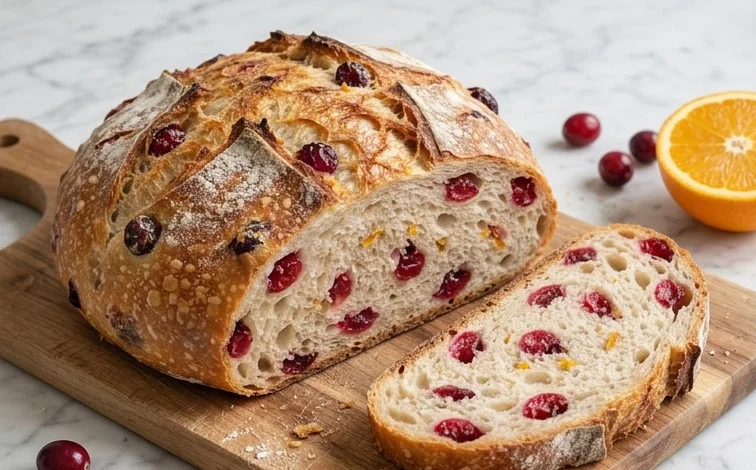
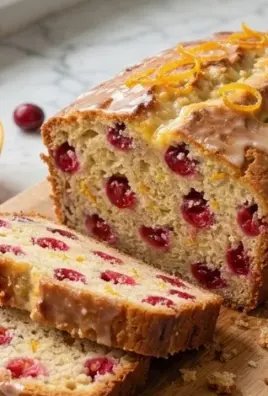
The bright tang of orange zest and chewy, plumped cranberries baked into a deeply golden, crackly crust is what makes Rustic No-Knead Cranberry Orange Bread so irresistible. This isn’t your everyday loaf; it’s a bread that requires minimal effort but delivers maximum flavor and texture. Imagine slicing into a warm piece, the steam carrying the sweet citrus aroma, with the delightful surprise of juicy cranberries in every bite. It’s the kind of bread that transforms a simple breakfast into something special or makes an afternoon cup of tea feel like a treat. What sets this Rustic No-Knead Cranberry Orange Bread apart is the overnight fermentation, which develops a complex flavor and the signature airy crumb without any kneading at all. It’s proof that anyone can bake incredible bread at home, even with just a bowl, a spoon, and a bit of patience. This loaf is a testament to the beauty of simple ingredients coming together.
Ingredients:
- 3 cups all purpose flour
- ½ tsp. active dry yeast
- 2 tsp. salt
- 1½ cups water
- zest of 2 oranges
- ¾ cup “plumped” dried cranberries
Rustic No-Knead Cranberry Orange Bread
This bread starts with a simple mix, and the magic happens overnight. You don’t need any fancy equipment or strong arms for this recipe; just a bowl, a spoon, and a little patience. The combination of bright orange zest and tart cranberries baked into a crusty loaf is perfect for a cozy breakfast, a special brunch, or even just an afternoon snack with a cup of tea. The “plumped” cranberries are key here, they rehydrate in the dough, making them wonderfully chewy and juicy, not dry and hard.
Making the Dough
The beauty of no-knead bread is its simplicity. You’ll start by mixing all your dry ingredients in a large bowl. That means the flour, the active dry yeast, and the salt. Give them a quick whisk together to ensure the yeast and salt are evenly distributed. Now, add the water, the orange zest, and the plumped dried cranberries. The zest from two oranges gives this bread its wonderfully fragrant and citrusy aroma and taste. To plump the cranberries, you can soak them in a little warm water for about 15-20 minutes while you prepare the other ingredients. Drain them well before adding them to the dough.
Stir everything together with a spoon or a spatula until just combined. It will be a shaggy, sticky dough. Don’t worry if it looks messy; that’s exactly what you want. You’re not developing gluten by kneading, so resist the urge to overmix. Just make sure there are no dry pockets of flour. Cover the bowl tightly with plastic wrap. It’s important to get a good seal to keep the dough from drying out. Let it sit at room temperature for about 12 to 18 hours. This long, slow fermentation is what develops the flavor and the airy texture in your bread. You’ll notice the dough will become bubbly and significantly increase in volume.
Shaping and Baking
After the long rest, your dough will be wonderfully aerated. Gently scrape the dough out of the bowl onto a well-floured surface. Be generous with the flour, as the dough will still be quite sticky. You don’t need to knead it; just gently shape it into a round or oval loaf. The goal is to create a taut surface without deflating all those precious air bubbles. You can fold the edges in on themselves a few times to create a bit of tension.
Now, you’ll need to let it rest again. Place the shaped loaf onto a piece of parchment paper. This parchment paper will make it easy to transfer the dough into your hot pot later. Cover the loaf loosely with plastic wrap or a clean kitchen towel and let it rest for another 30 minutes. This final rest allows the gluten to relax and the loaf to firm up slightly before baking.
Preheat your oven to 450°F (230°C). While the oven is preheating, place a Dutch oven or other heavy, oven-safe pot with a lid into the oven. Letting the pot heat up with the oven is critical for creating that signature crispy crust. You want that pot to be screaming hot when the dough goes in.
Once the oven and the Dutch oven are fully preheated, carefully remove the hot pot from the oven. This is where the parchment paper really helps. Using the parchment paper as handles, carefully lower the dough into the hot Dutch oven. Be cautious, the pot is extremely hot. Put the lid back on the Dutch oven. The lid traps steam, which is essential for the bread to rise properly and develop a thin, crisp crust.
Bake with the lid on for 30 minutes. After 30 minutes, carefully remove the lid. The bread will have puffed up and started to turn golden. Continue baking uncovered for another 15 to 20 minutes, or until the crust is a deep golden brown and the internal temperature of the bread reaches around 200-210°F (93-99°C) when tested with an instant-read thermometer. The aroma filling your kitchen at this stage is heavenly – a perfect blend of warm bread, bright orange, and sweet cranberries.
Cooling and Enjoying
Once baked, carefully remove the bread from the Dutch oven and place it on a wire rack to cool completely. Resist the temptation to slice into it immediately; it’s still cooking internally and will continue to set as it cools. Letting it cool for at least an hour will ensure the best texture and flavor. Slice it thick and enjoy the rustic charm of this incredibly easy and delicious bread. It’s wonderful served warm with butter, or alongside your favorite jams and cheeses. The tangy cranberries and the subtle citrus notes make it a welcome addition to any meal.
Conclusion:
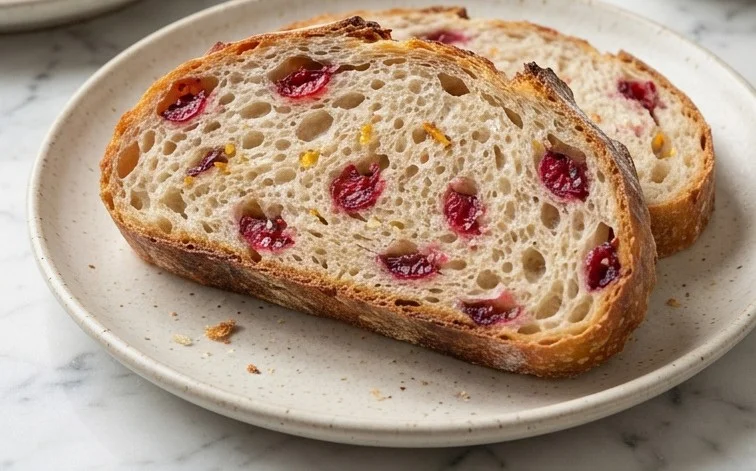
You’ve just learned how to make Rustic No-Knead Cranberry Orange Bread, a loaf that proves amazing bread doesn’t need fussy techniques or lots of time spent at the counter. The magic happens overnight in the bowl, letting the yeast work its wonders to create a bread with a wonderfully chewy interior and a satisfyingly crusty exterior, studded with sweet, plump cranberries and fragrant orange zest. It’s a joy to bake and even more of a joy to eat, perfect for any occasion. Serve slices warm with a smear of butter, or alongside your favorite jam. It’s also fantastic toasted the next day.
Serving Suggestions: This bread is wonderful on its own, but it also pairs beautifully with a light cream cheese spread, a drizzle of honey, or alongside a bowl of fruit salad for a complete breakfast. For brunch, consider it as a more rustic alternative to sweet rolls.
Variations: Feel free to experiment with other dried fruits like chopped apricots or raisins. A pinch of ground cinnamon or nutmeg in the dry ingredients can add another layer of warmth. If you don’t have fresh oranges, a teaspoon of orange extract added to the water can provide the citrus note, though fresh zest is preferred for its aromatic oils.
FAQs
Can I use regular dried cranberries if I don’t have time to plump them?
You can, but they might be a bit drier and tougher in the finished bread. Plumping them rehydrates them, ensuring they are chewy and juicy. If you skip this step, the flavor will still be there, but the texture of the cranberries won’t be as ideal.
How do I store this bread?
Once completely cooled, store the Rustic No-Knead Cranberry Orange Bread at room temperature in a bread box or a loosely sealed paper bag for up to 3 days. For longer storage, slice the cooled bread and freeze it in an airtight bag; thaw slices at room temperature or toast them directly from frozen.
Rustic No-Knead Cranberry Orange Bread
A simple and delicious no-knead bread bursting with the bright flavors of cranberry and orange.
Ingredients
-
3 cups all purpose flour
-
½ tsp. active dry yeast
-
2 tsp. salt
-
1½ cups water
-
zest of 2 oranges
-
¾ cup plumped dried cranberries
Instructions
-
Step 1
In a large bowl, whisk together the flour, yeast, and salt. -
Step 2
Add the water and stir until just combined. The dough will be shaggy and sticky. -
Step 3
Stir in the orange zest and plumped dried cranberries until evenly distributed. -
Step 4
Cover the bowl tightly with plastic wrap and let it rest at room temperature for at least 1 hour, or up to 3 hours, until doubled in size. -
Step 5
Preheat your oven to 450°F (230°C). Place a Dutch oven or oven-safe pot with a lid in the oven while it preheats. -
Step 6
Carefully remove the hot Dutch oven from the oven. Gently scrape the dough into the hot pot. Cover with the lid. -
Step 7
Bake for 30 minutes with the lid on. Then, remove the lid and bake for another 15 minutes, or until the crust is golden brown and the internal temperature reaches 200-210°F (93-99°C). -
Step 8
Let the bread cool completely on a wire rack before slicing and serving.
Important Information
Nutrition Facts (Per Serving)
It is important to consider this information as approximate and not to use it as definitive health advice.
Allergy Information
Please check ingredients for potential allergens and consult a health professional if in doubt.
Leave a Comment