Cranberry Orange Bread is a wonderfully moist and flavorful quick bread, perfect for breakfast, a snack, or even as a sweet accompaniment to a meal. The bright, zesty flavor of the orange beautifully complements the tartness of the cranberries, creating a balanced and utterly delicious loaf. It’s the kind of bread that smells amazing while it bakes, filling your kitchen with an inviting aroma that signals good things are on the way. I often make this when I have a surplus of fresh cranberries, especially around the holidays, but it’s delightful any time of year.
Ingredients:
- 4 tablespoons unsalted butter (room temperature)
- 1 cup granulated sugar
- 1 large egg
- ¾ cup fresh orange juice
- 1 tablespoon orange zest
- 2 cups all-purpose flour
- 1 ½ teaspoons baking powder
- ½ teaspoon baking soda
- 1 teaspoon kosher salt
- 1 ½ cups cranberries (chopped)
- ¾ cup toasted chopped walnuts (optional)
- ¼ cup sanding sugar
- 1 tablespoon orange zest
Preparing the Batter
The first step to a fantastic loaf of Cranberry Orange Bread is to ensure your butter is properly softened to room temperature. This means it should be yielding to the touch but not melted. Creaming the softened butter with the granulated sugar is key to developing a light and airy texture in the finished bread. You’ll want to beat them together until the mixture is pale yellow and fluffy; this usually takes about 3 to 5 minutes with an electric mixer. This process incorporates air, which helps the bread rise and creates that tender crumb everyone loves. Once creamed, beat in the egg until just combined, then stir in the fresh orange juice and orange zest. Be careful not to overmix at this stage, as too much agitation can lead to a tough loaf.

Cranberry Orange Bread
This Cranberry Orange Bread is a wonderfully moist and flavorful quick bread, perfect for breakfast, a snack, or even as a sweet accompaniment to a meal. The bright, zesty flavor of the orange beautifully complements the tartness of the cranberries, creating a balanced and utterly delicious loaf. It’s the kind of bread that smells amazing while it bakes, filling your kitchen with an inviting aroma that signals good things are on the way. I often make this when I have a surplus of fresh cranberries, especially around the holidays, but it’s delightful any time of year.
Ingredients:
- 4 tablespoons unsalted butter (room temperature)
- 1 cup granulated sugar
- 1 large egg
- ¾ cup fresh orange juice
- 1 tablespoon orange zest
- 2 cups all-purpose flour
- 1 ½ teaspoons baking powder
- ½ teaspoon baking soda
- 1 teaspoon kosher salt
- 1 ½ cups cranberries (chopped)
- ¾ cup toasted chopped walnuts (optional)
- ¼ cup sanding sugar
- 1 tablespoon orange zest
Preparing the Batter
The first step to a fantastic loaf of Cranberry Orange Bread is to ensure your butter is properly softened to room temperature. This means it should be yielding to the touch but not melted. Creaming the softened butter with the granulated sugar is key to developing a light and airy texture in the finished bread. You’ll want to beat them together until the mixture is pale yellow and fluffy; this usually takes about 3 to 5 minutes with an electric mixer. This process incorporates air, which helps the bread rise and gives it a tender crumb. Next, add the large egg to the creamed butter and sugar. Beat it in until it’s fully incorporated, scraping down the sides of the bowl as needed to ensure everything is mixed evenly.
Now, it’s time to add the liquid ingredients. Pour in the fresh orange juice and the first tablespoon of orange zest. Orange zest, the finely grated peel of the orange, is where much of the intense citrus flavor comes from, so don’t skip this! Mix these in until just combined. You don’t want to overmix at this stage.
In a separate medium bowl, whisk together the dry ingredients: the all-purpose flour, baking powder, baking soda, and kosher salt. Whisking these together before adding them to the wet ingredients ensures that the leavening agents (baking powder and baking soda) and salt are evenly distributed throughout the flour. This prevents pockets of leavening or saltiness in your bread.
Combining Wet and Dry Ingredients
Gradually add the dry ingredients to the wet ingredients. Mix on low speed or by hand until just combined. It’s very important not to overmix the batter once the flour is added. Overmixing develops the gluten in the flour too much, which can result in a tough, dense bread. Stop mixing as soon as you no longer see streaks of dry flour. The batter will be thick at this point.
Now for the additions that make this bread so special. Gently fold in the chopped cranberries and the toasted chopped walnuts, if you’re using them. To chop the cranberries, a simple chop with a knife works well. If they are particularly large, giving them a rough chop will distribute them more evenly and make them easier to eat in slices. Toasting the walnuts beforehand really brings out their nutty flavor and adds a delightful crunch; you can toast them in a dry skillet over medium heat for a few minutes until fragrant, or spread them on a baking sheet and toast them in a low oven (around 300°F or 150°C) for about 8-10 minutes. Be careful not to burn them. Folding these in gently ensures they are distributed throughout the batter without overworking it.
Baking the Bread
Preheat your oven to 350°F (175°C). Grease and flour a standard 9×5 inch loaf pan, or line it with parchment paper, leaving some overhang on the sides to make it easier to lift the bread out later. Pour the batter into the prepared loaf pan and spread it evenly.
For a beautiful, sparkly finish, sprinkle the top of the batter evenly with the ¼ cup of sanding sugar and the remaining 1 tablespoon of orange zest. The sanding sugar will create a lovely crust that adds a touch of sweetness and crunch, and the extra zest on top provides another burst of citrus aroma as it bakes.
Bake for approximately 50 to 65 minutes, or until a wooden skewer or toothpick inserted into the center of the loaf comes out clean. The baking time can vary depending on your oven, so start checking for doneness around the 50-minute mark. If the top of the bread starts to brown too quickly before the inside is cooked, you can loosely tent it with aluminum foil.
Cooling and Serving
Once baked, remove the loaf pan from the oven and let the Cranberry Orange Bread cool in the pan for about 10 to 15 minutes. This allows the bread to set up a bit more before you attempt to remove it. After the initial cooling in the pan, carefully invert the loaf onto a wire rack to cool completely. If you used parchment paper with overhang, this step is very straightforward. If you greased and floured the pan, you might need to gently run a knife around the edges to loosen it before inverting.
Allow the bread to cool completely on the wire rack before slicing. Slicing it while warm can sometimes result in a gummy texture or cause the slices to fall apart. Once fully cooled, slice it with a serrated knife for clean cuts. This Cranberry Orange Bread is delicious on its own, or you can serve it with a dollop of butter, cream cheese, or even a drizzle of honey. It keeps well at room temperature, stored in an airtight container, for about 3-4 days. You can also freeze slices for longer storage.
Conclusion:
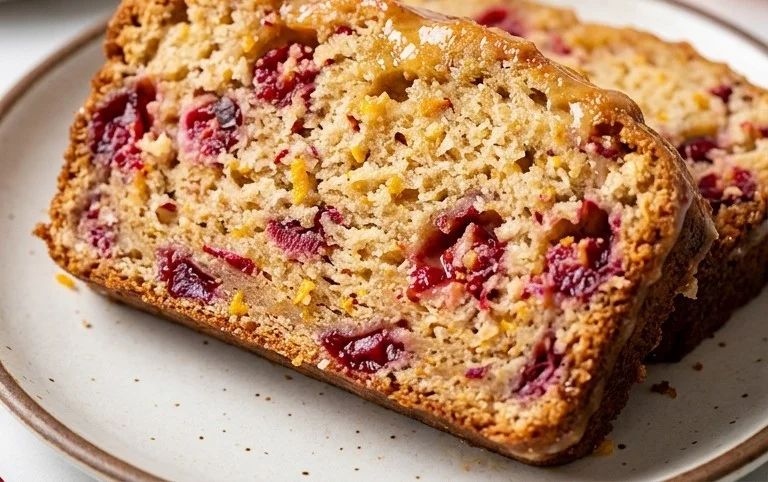
This Cranberry Orange Bread is a truly satisfying bake. Its tender crumb, speckled with tart cranberries and brightened by orange, makes it a standout quick bread. It’s simple enough for a weeknight treat but special enough for holiday tables. Don’t be afraid to experiment with the optional walnuts, or even add a pinch of cinnamon for extra warmth. The sanding sugar on top gives it a delightful crunch and sparkle. Remember to use room temperature ingredients for the best texture and avoid overmixing the batter for a moist, tender loaf.
FAQs:
Can I use frozen cranberries?
Yes, you can use frozen cranberries. There’s no need to thaw them first. Just toss them directly into the batter. You might need to bake the bread for a few extra minutes, as the frozen fruit will cool the batter slightly.
How should I store Cranberry Orange Bread?
Once completely cooled, wrap the bread tightly in plastic wrap or store it in an airtight container at room temperature for up to 3 days. For longer storage, you can freeze slices or the whole loaf, well-wrapped, for up to 3 months. Toasting a slice can revive its freshness.
What can I serve with Cranberry Orange Bread?
This bread is fantastic on its own, but it also pairs wonderfully with a cup of coffee or tea. For breakfast, serve it with a smear of butter or cream cheese. It also makes a lovely side for brunch dishes or even a simple salad.
Cranberry Orange Bread
A moist and flavorful quick bread bursting with festive cranberry and bright orange flavors, perfect for holidays or any time of year.
Ingredients
-
4 tablespoons unsalted butter, room temperature
-
1 cup granulated sugar
-
1 large egg
-
¾ cup fresh orange juice
-
1 tablespoon orange zest
-
2 cups all-purpose flour
-
1 ½ teaspoons baking powder
-
½ teaspoon baking soda
-
1 teaspoon kosher salt
-
1 ½ cups cranberries, chopped
-
¾ cup toasted chopped walnuts (optional)
-
¼ cup sanding sugar
-
1 tablespoon orange zest
Instructions
-
Step 1
Preheat oven to 350°F (175°C). Grease and flour a 9×5 inch loaf pan. -
Step 2
In a large bowl, cream together the softened butter and granulated sugar until light and fluffy. -
Step 3
Beat in the egg, then stir in the orange juice and 1 tablespoon of orange zest. -
Step 4
In a separate bowl, whisk together the flour, baking powder, baking soda, and salt. Gradually add the dry ingredients to the wet ingredients, mixing until just combined. Do not overmix. -
Step 5
Gently fold in the chopped cranberries and optional walnuts. -
Step 6
Pour the batter into the prepared loaf pan. Sprinkle the top evenly with sanding sugar and the remaining 1 tablespoon of orange zest. -
Step 7
Bake for 50-60 minutes, or until a wooden skewer inserted into the center comes out clean. Let the bread cool in the pan for 10 minutes before transferring it to a wire rack to cool completely.
Important Information
Nutrition Facts (Per Serving)
It is important to consider this information as approximate and not to use it as definitive health advice.
Allergy Information
Please check ingredients for potential allergens and consult a health professional if in doubt.



Leave a Comment