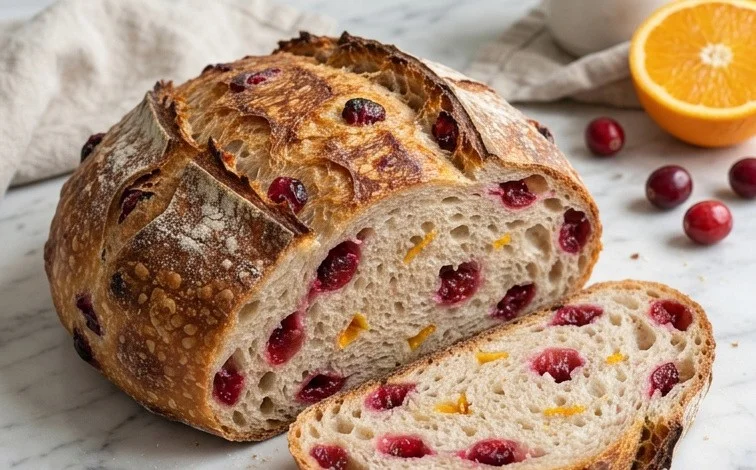
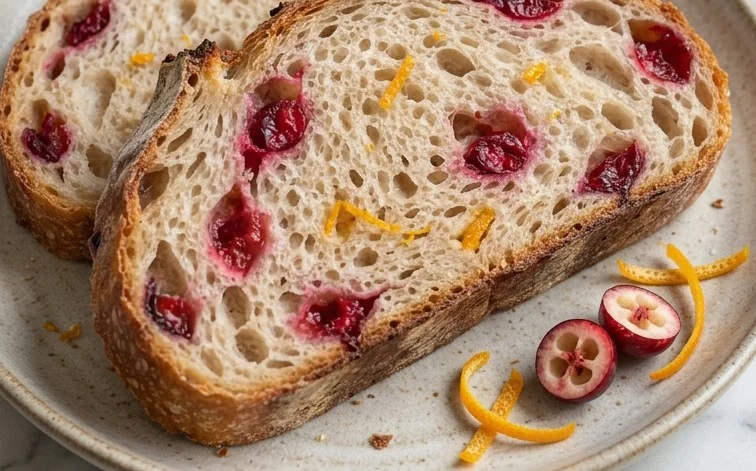
The bright tang of oranges and the tart chew of dried cranberries make this Cranberry Orange Sourdough Bread a real standout. It’s the kind of bread you want on your table when you’re looking for something a little special, but it’s also comforting enough for an everyday treat. I love how the sourdough base gives it a soft, slightly chewy crumb with a wonderful depth of flavor that perfectly complements the fruit and citrus notes. It’s not just about the taste, though. The aroma of orange zest and baking bread filling your kitchen is an experience in itself. This recipe uses a simple levain build and a straightforward dough process, making it accessible even if you’re relatively new to sourdough baking. The combination of cranberries and orange is a classic for a reason – it’s refreshing, festive, and just plain delicious. This bread is proof that sourdough can be incredibly versatile and exciting.
Ingredients:
- 50 g active sourdough starter
- 50 g bread flour
- 50 g water
- 350 g water
- all of the levain
- 500 g bread flour
- 10 g salt
- 100 g dried cranberries
- zest of one orange
- 20 g honey or maple syrup, optional
Making the Levain
To begin, we need to prepare our sourdough starter for baking. This is often called making the “levain.” In a clean jar or bowl, combine 50 g of your active sourdough starter, 50 g of bread flour, and 50 g of water. Mix this thoroughly until there are no dry bits of flour remaining. Cover the jar loosely – a lid placed on top but not screwed tight, or a piece of plastic wrap secured with a rubber band works well. Let this mixture sit at room temperature for about 4 to 8 hours, or until it has at least doubled in size and is bubbly and active. You’ll know it’s ready when a small spoonful floats in a glass of water. This active levain is what gives our bread its lift and distinctive flavor. If your starter is usually slow, you might need to feed it a couple of times leading up to this to ensure it’s vigorous.
Mixing the Dough
Once your levain is ready, it’s time to mix the main dough. In a large mixing bowl, combine 350 g of water with your active levain. Stir gently to help the levain start to dissolve into the water. Then, add 500 g of bread flour. Mix this with your hands or a sturdy spoon until just combined. It will be a shaggy, sticky dough at this stage, and that’s perfectly fine. There’s no need to develop gluten much at this point.
Autolyse and Adding Flavor
Cover the bowl and let the dough rest for 30 minutes. This resting period is called the autolyse, and it allows the flour to fully hydrate, which makes the dough more extensible and easier to work with. After the autolyse, it’s time to add the salt, dried cranberries, and orange zest. If you’re using honey or maple syrup for a touch of sweetness and to help with browning, add it now too. Sprinkle the salt evenly over the dough. Then, add the dried cranberries and the zest of one orange. You can add these directly into the bowl. Work the salt, cranberries, and zest into the dough using your hands. This can be a bit messy, especially with the sticky dough and the additions. Just keep folding and squishing the dough until the salt is distributed and the cranberries and zest seem reasonably incorporated. Don’t worry if they aren’t perfectly even; they will distribute more as the dough develops.
Bulk Fermentation and Folds
Now comes the bulk fermentation, where the dough develops its flavor and structure. Over the next 3 to 4 hours, you will perform a series of “stretch and folds.” To do a stretch and fold, wet your hands slightly to prevent sticking. Grab one side of the dough, stretch it upwards gently, and fold it over to the opposite side. Rotate the bowl a quarter turn and repeat this process with the other three sides. Aim to do these folds every 30 to 60 minutes during the bulk fermentation. This technique builds gluten strength without aggressive kneading. You’ll notice the dough becoming smoother and more elastic with each set of folds. The dough should increase in volume by about 30-50% and feel airy. The ambient temperature will affect the fermentation time; a warmer kitchen will speed things up, while a cooler one will slow it down.
Shaping and Cold Proof
Once the bulk fermentation is complete, it’s time to shape the dough. Turn the dough out onto a lightly floured surface. Gently shape it into your desired loaf form – either a round boule or an oblong batard. Be careful not to deflate all the precious air you’ve incorporated. Place the shaped dough into a well-floured banneton (proofing basket) or a bowl lined with a floured tea towel, seam-side up. Cover the banneton or bowl and place it in the refrigerator for a cold proof. This overnight proof (12-24 hours) develops deeper flavor and makes the dough easier to score and handle for baking. The cold also slows down yeast activity, allowing the sourdough culture to work its magic for a longer period.
Baking the Bread
When you’re ready to bake, preheat your oven to 230°C (450°F) with a Dutch oven or baking vessel inside for at least 30 minutes. Carefully turn the chilled dough out of the banneton onto a piece of parchment paper. Score the top of the loaf with a sharp knife or lame. A simple cross or a series of slashes works well. Carefully lower the dough (using the parchment paper as a sling) into the hot Dutch oven. Cover with the lid. Bake for 20 minutes with the lid on. Then, remove the lid and continue to bake for another 20-25 minutes, or until the crust is a deep golden brown and the internal temperature reaches 96-99°C (205-210°F). The cranberries should be nicely toasted and the orange zest will have infused a lovely aroma throughout the loaf. Let the bread cool completely on a wire rack before slicing. This is important for the crumb structure to set properly. Enjoy the wonderfully aromatic, slightly tart, and sweet notes from the cranberries and orange.
Conclusion:
This Cranberry Orange Sourdough Bread brings together the best of tangy sourdough with the bright, cheerful flavors of orange and cranberry. It’s a bread that feels both comforting and special, perfect for breakfast, a snack, or alongside a meal. The process of making sourdough is rewarding, and this particular loaf offers a delightful twist that’s sure to impress. Don’t be afraid to give it a try, even if you’re new to sourdough; the steps are clear, and the results are well worth the effort.
Serving Suggestions: This bread is fantastic toasted and served with butter, cream cheese, or a drizzle of honey. It also makes a wonderful base for avocado toast or even as a side to a hearty soup. For a festive touch, consider a light glaze made from powdered sugar and orange juice.
Variations: If you don’t have dried cranberries, chopped dried cherries or raisins work well. For an extra layer of flavor, you can add a teaspoon of ground cinnamon or a pinch of cardamom to the dough. A handful of chopped walnuts or pecans can add a nice crunch.
Frequently Asked Questions:
How do I store Cranberry Orange Sourdough Bread?
Once cooled, store the bread in a bread box or a loosely sealed paper bag at room temperature for up to 3-4 days. For longer storage, you can slice the bread and freeze it, wrapping the slices tightly in plastic wrap or a freezer bag.
Can I use fresh cranberries instead of dried?
Fresh cranberries can be used, but you may want to reduce the amount slightly as they release more moisture. Consider tossing them with a tablespoon of sugar before adding to the dough. They will also be more tart than dried.
Why isn’t my sourdough rising well?
Ensure your starter is active and bubbly before making the levain. Feed your starter regularly and make sure the environment where you let the levain and dough ferment is warm enough (ideally 75-80°F or 24-27°C). If your starter is consistently sluggish, it might need more frequent feeding or a warmer spot.
Cranberry Orange Sourdough Bread
A flavorful sourdough bread with the tartness of cranberries and the bright zest of orange.
Ingredients
-
50 g active sourdough starter
-
50 g bread flour
-
50 g water
-
350 g water
-
all of the levain
-
500 g bread flour
-
10 g salt
-
100 g dried cranberries
-
zest of one orange
-
20 g honey or maple syrup, optional
Instructions
-
Step 1
Prepare the levain: Mix 50g active sourdough starter, 50g bread flour, and 50g water. Let it rest at room temperature for 4-12 hours, or until doubled and bubbly. -
Step 2
Autolyse: In a large bowl, combine 500g bread flour and 350g water. Mix until just combined and let rest for 30 minutes. -
Step 3
Add levain and salt: Add the prepared levain and 10g salt to the autolysed dough. Mix thoroughly until well incorporated. If using, mix in honey or maple syrup. -
Step 4
Bulk Fermentation: Perform a series of stretch and folds every 30 minutes for the first 2 hours. During the last hour of bulk fermentation, gently incorporate the dried cranberries and orange zest. Continue bulk fermentation until the dough has increased in volume by about 50-75% and is airy. -
Step 5
Shaping and Cold Retard: Gently shape the dough into your desired loaf shape. Place it seam-side up in a well-floured banneton. Cover and refrigerate for 12-24 hours for cold fermentation. -
Step 6
Baking: Preheat your oven with a Dutch oven inside to 475°F (245°C). Carefully score the top of the cold dough and transfer it to the hot Dutch oven. Bake covered for 20 minutes, then uncovered for another 20-25 minutes, or until the crust is deeply golden brown and the internal temperature reaches 200-210°F (93-99°C). -
Step 7
Cooling: Let the bread cool completely on a wire rack before slicing.
Important Information
Nutrition Facts (Per Serving)
It is important to consider this information as approximate and not to use it as definitive health advice.
Allergy Information
Please check ingredients for potential allergens and consult a health professional if in doubt.


Leave a Comment