
Mustard Braised Cabbage This mustard braised cabbage is a dish that’s surprisingly comforting and packed with flavor. The sweetness of the cabbage and onions softens beautifully as they cook down in the broth, and the mustard adds a tangy, slightly sharp counterpoint that wakes everything up. It’s one of those simple side dishes that can transform a meal, making even plain roasted chicken or simple grilled fish feel special. I often make a big batch of this because it reheats wonderfully and the flavors tend to deepen over time. The texture is key here – you want it tender but not mushy, with just a little bit of chew left in the cabbage leaves. Ingredients: 4 tablespoons unsalted butter or olive oil 1 medium head green cabbage, sliced 1 medium white onion, sliced 4-5 cloves garlic, minced 2 1/2 cups broth, vegetable or chicken 1/2 cup mustard, any kind 1 teaspoon kosher salt Cooking Instructions Sautéing the Aromatics and Cabbage Start by melting the 4 tablespoons of unsalted butter or heating the olive oil in a large, heavy-bottomed pot or Dutch oven over medium heat. Once the butter is melted and bubbling slightly, or the oil is shimmering, add the sliced white onion . Cook the onion, stirring occasionally, until it begins to soften and turn translucent, which should take about 5-7 minutes. You’re not looking for deep browning here, just a gentle softening to release its sweetness. Next, add the minced garlic and cook for another minute until fragrant, being careful not to burn it. Now, add the sliced cabbage to the pot. It will seem like a lot, but it will cook down considerably. Stir it in with the onions and garlic, letting it wilt for a few minutes. This initial sautéing helps build a foundational layer of flavor and removes some of the raw bite from the cabbage. Then, pour in the 2 1/2 cups of broth. Stir everything together, scraping up any bits stuck to the bottom of the pot. Bring the liquid to a simmer. Once simmering, reduce the heat to low, cover the pot tightly, and let the cabbage cook. The goal is for it to become tender. This braising process is what transforms the cabbage into something truly special. Simmer for about 20-30 minutes, checking occasionally. You want the cabbage to be fork-tender. While the cabbage is braising, prepare the mustard. In a small bowl, whisk together the 1/2 cup of mustard with about 1/4 cup of the hot broth from the pot. This step tempers the mustard, mellowing its sharpness slightly and ensuring it integrates smoothly into the dish without clumping. Once the cabbage is tender, uncover the pot and stir in the tempered mustard mixture and the 1 teaspoon of kosher salt. Continue to cook, uncovered, for another 5-10 minutes, allowing the sauce to thicken slightly and the flavors to meld. Taste and adjust seasoning if needed; you might want a pinch more salt or a touch more mustard depending on your preference. This final simmer helps to concentrate the flavors. Serve hot.
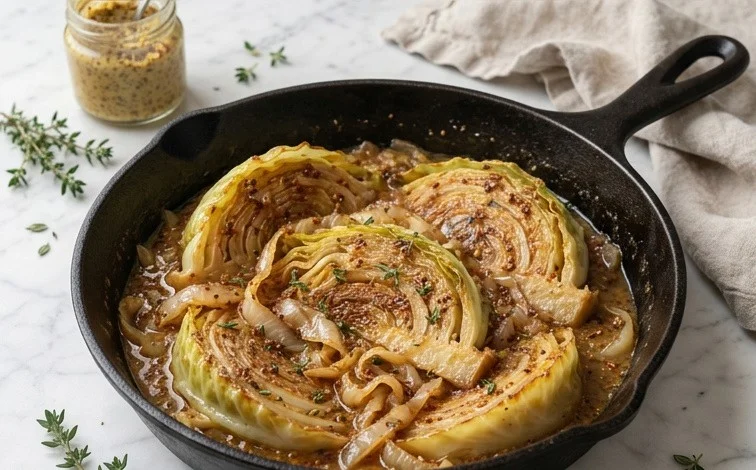
Mustard Braised Cabbage
This mustard braised cabbage is a dish that’s surprisingly comforting and packed with flavor. The sweetness of the cabbage and onions softens beautifully as they cook down in the broth, and the mustard adds a tangy, slightly sharp counterpoint that wakes everything up. It’s one of those simple side dishes that can transform a meal, making even plain roasted chicken or simple grilled fish feel special. I often make a big batch of this because it reheats wonderfully and the flavors tend to deepen over time. The texture is key here – you want it tender but not mushy, with just a little bit of chew left in the cabbage leaves.
Ingredients:
- 4 tablespoons unsalted butter or olive oil
- 1 medium head green cabbage, sliced
- 1 medium white onion, sliced
- 4-5 cloves garlic, minced
- 2 1/2 cups broth, vegetable or chicken
- 1/2 cup mustard, any kind
- 1 teaspoon kosher salt
Cooking Instructions
Sautéing the Aromatics and Cabbage
Start by melting the 4 tablespoons of unsalted butter or heating the olive oil in a large, heavy-bottomed pot or Dutch oven over medium heat. Once the butter is melted and bubbling slightly, or the oil is shimmering, add the sliced white onion. Cook the onion, stirring occasionally, until it begins to soften and turn translucent, which should take about 5-7 minutes. You’re not looking for deep browning here, just a gentle softening to release its sweetness. Next, add the minced garlic and cook for another minute until fragrant, being careful not to burn it. Burnt garlic can turn bitter, so keep an eye on it.
Now it’s time for the star of the show: the cabbage. Add the sliced cabbage to the pot. It will look like a lot, but cabbage cooks down significantly. Stir the cabbage into the onions and garlic, coating it with the butter or oil. Cook, stirring frequently, until the cabbage begins to wilt and shrink in volume. This process can take about 8-10 minutes. You want to see the edges of the cabbage leaves start to soften and turn a brighter green.
Braising the Cabbage
Once the cabbage has wilted down, pour in the 2 1/2 cups of broth (vegetable or chicken, depending on your preference). Stir everything together, scraping up any bits stuck to the bottom of the pot, as these bits hold a lot of flavor. Bring the liquid to a gentle simmer.
In a separate small bowl, whisk together the 1/2 cup of mustard with about 1/4 cup of the hot broth from the pot. This helps to temper the mustard and ensures it disperses evenly throughout the braising liquid without clumping. Pour this mustard mixture back into the pot with the cabbage and broth. Add the 1 teaspoon of kosher salt. Stir everything well to combine.
Simmering to Perfection
Reduce the heat to low, cover the pot tightly, and let the cabbage simmer gently. The goal is to braise the cabbage until it is fork-tender. This will typically take between 30 to 45 minutes. During this time, the cabbage will absorb the flavors of the broth, mustard, and aromatics, becoming incredibly tender and delicious. Check on the cabbage periodically, giving it a stir to ensure it’s cooking evenly and that the liquid isn’t evaporating too quickly. If it seems dry, you can add a splash more broth or water. The cabbage is ready when a fork can easily pierce through the thicker parts of the leaves and stems.
Finishing and Serving
Once the cabbage has reached your desired tenderness, remove the lid and increase the heat slightly to medium. Let the cabbage simmer uncovered for another 5-10 minutes. This step helps to thicken the braising liquid slightly, concentrating the flavors and creating a more luscious sauce. Taste the cabbage and adjust the seasoning if needed, adding a pinch more salt if necessary, or even a little more mustard if you prefer a stronger tang.
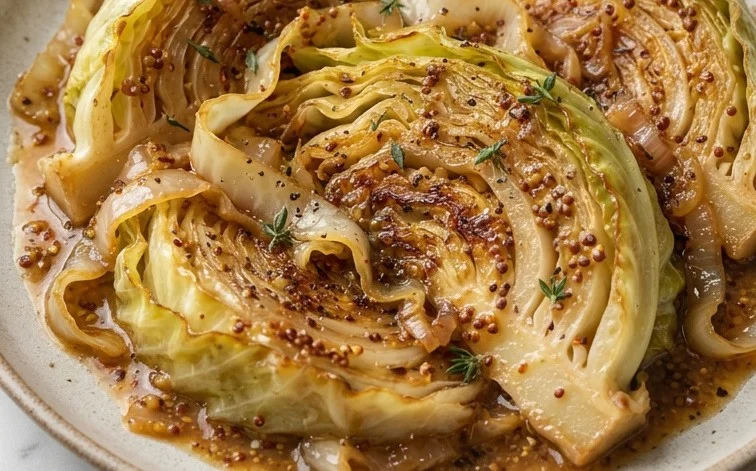
Serve the mustard braised cabbage hot. It makes a wonderful accompaniment to roasted meats like chicken or lamb, grilled beef sausages, or even a simple pan-seared fish. It’s also surprisingly good as a hearty vegetarian side dish. The textures and flavors are comforting and satisfying, and it’s a great way to enjoy cabbage beyond the usual coleslaw or stir-fry. This dish can be made ahead of time; the flavors often meld and improve overnight. Gently reheat it on the stovetop over low heat, adding a little extra broth if needed to loosen it up.
Conclusion:
Mustard Braised Cabbage is a wonderful way to enjoy this humble vegetable. It transforms simple green cabbage into a dish that is tender, slightly sweet, and perfectly complemented by the tangy mustard. The braising method ensures the cabbage is cooked through without becoming mushy, retaining a pleasant bite. It’s a forgiving recipe, and the flavors only get better the next day, making it ideal for meal prep or casual entertaining. I love serving this alongside roasted meats, beef sausages, or even a simple grilled chicken breast. Its comforting nature makes it a go-to for cooler evenings. For a variation, try adding a pinch of caraway seeds during the sautéing stage for a subtle anise note. You could also stir in a tablespoon of apple cider vinegar at the end for an extra layer of tanginess. Give this Mustard Braised Cabbage a try; I’m sure you’ll find it’s a delicious and surprisingly simple side that punches above its weight.
Frequently Asked Questions:
Can I use a different type of mustard?
Yes, absolutely. While a Dijon or a whole grain mustard work wonderfully, feel free to experiment with yellow mustard for a milder tang or a spicy brown mustard for a bit more kick. The key is to use a mustard you enjoy the flavor of, as it’s a star ingredient here.
How should I store leftovers?
Leftover braised cabbage can be stored in an airtight container in the refrigerator for up to 3-4 days. Reheat gently on the stovetop or in the microwave. The flavors often meld and deepen overnight, making leftovers just as good, if not better, than when freshly made.
Can I make this ahead of time?
Definitely. This dish is excellent made a day in advance. The flavors have more time to meld together, and you can simply reheat it before serving. This makes it a perfect make-ahead side dish for gatherings.
Mustard Braised Cabbage
Tender, flavorful braised green cabbage with a zesty mustard kick, perfect as a side dish.
Ingredients
-
4 tablespoons unsalted butter or olive oil
-
1 medium head green cabbage, sliced
-
1 medium white onion, sliced
-
4-5 cloves garlic, minced
-
2 1/2 cups broth, vegetable or chicken
-
1/2 cup mustard, any kind
-
1 teaspoon kosher salt
Instructions
-
Step 1
Melt butter or heat olive oil in a large pot or Dutch oven over medium heat. -
Step 2
Add the sliced onion and cook until softened, about 5-7 minutes. -
Step 3
Add the minced garlic and cook for 1 minute more until fragrant. -
Step 4
Add the sliced cabbage to the pot, stirring to coat with the oil and aromatics. -
Step 5
Pour in the broth and stir in the mustard and salt. -
Step 6
Bring the mixture to a simmer, then reduce heat to low, cover, and cook for 25-35 minutes, or until the cabbage is tender. -
Step 7
Stir occasionally during braising. Adjust seasoning to taste before serving.
Important Information
Nutrition Facts (Per Serving)
It is important to consider this information as approximate and not to use it as definitive health advice.
Allergy Information
Please check ingredients for potential allergens and consult a health professional if in doubt.


Leave a Comment