
Cranberry Orange Shortbread Cookies are the absolute epitome of holiday baking joy, wouldn’t you agree? These aren’t just any cookies; they’re a delightful symphony of textures and tastes that capture the very essence of festive cheer. Imagine tender, buttery shortbread, infused with the bright zest of fresh oranges, and studded with tart, jewel-like cranberries. It’s a flavor combination that simply sings, evoking cozy afternoons by the fire and happy gatherings with loved ones. What truly makes these Cranberry Orange Shortbread Cookies so special is their perfect balance – the richness of the butter is cut beautifully by the citrus, and the subtle chew of the cranberries adds an irresistible counterpoint to the crumbly, melt-in-your-mouth shortbread. They’re elegant enough for a holiday cookie platter yet so simple to make, bringing smiles to everyone who takes a bite. Get ready to fill your kitchen with an aroma that promises pure deliciousness.
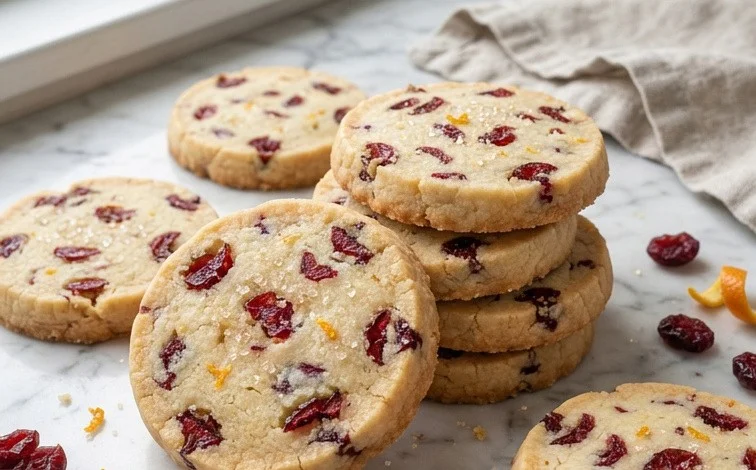
Cranberry Orange Shortbread Cookies
These cranberry orange shortbread cookies are a wonderful treat, especially around the holidays. The bright citrus notes from the orange zest and juice cut through the rich, buttery flavor of the shortbread, while the dried cranberries add a lovely chewy texture and a hint of tartness. They’re incredibly simple to make, relying on just a few pantry staples, and the results are always impressive. I love making a batch when I want something a little bit special but don’t have a lot of time. The combination of cranberry and orange is a classic for a reason – it’s comforting and festive.
Ingredients:
- 60 g caster sugar
- 1 orange (zest)
- 125 g unsalted butter (room temperature)
- 1 tsp vanilla extract
- 180 g plain flour (all-purpose)
- 75 g dried cranberries (finely chopped)
- 120 g powdered icing sugar (confectioners’ sugar)
- 30 ml orange juice
- 1 tsp unsalted butter (melted)
Making the Dough
The first step to creating these delicious shortbread cookies is to get your ingredients ready. Make sure your unsalted butter is truly at room temperature. This means it should be soft enough to indent with your finger without feeling cold or greasy. If your butter is too cold, it won’t cream properly with the sugar, and you’ll end up with a tough cookie. If it’s too warm, it will melt and make the dough sticky and difficult to handle.
In a medium bowl, cream together the softened unsalted butter and the caster sugar. You can use an electric mixer for this, starting on a low speed and gradually increasing it, or you can use a sturdy whisk or a wooden spoon and a bit of elbow grease. You want to beat them together until the mixture is pale and fluffy. This process incorporates air into the dough, which helps with the texture of the finished cookie. While creaming, add the zest of one whole orange. Zesting the orange before juicing it is a good practice. Make sure to only zest the orange part, avoiding the bitter white pith underneath. The zest will release its fragrant oils into the butter and sugar mixture, infusing the shortbread with a wonderful citrus aroma and flavor. Next, stir in the vanilla extract.
Now it’s time to add the dry ingredients. Sift the plain flour into the butter and sugar mixture. Sifting the flour helps to remove any lumps and aerates it, which contributes to a lighter texture in your shortbread. Gently fold the flour into the wet ingredients using a spatula or a wooden spoon until just combined. Be careful not to overmix at this stage. Overmixing can develop the gluten in the flour, leading to tough cookies, and we want a tender, crumbly shortbread.
The final addition to the dough is the finely chopped dried cranberries. Ensure they are chopped into small pieces so they distribute evenly throughout the cookie and don’t create large, hard pockets. Fold these into the dough until they are evenly dispersed. The dough will be quite crumbly at this point, but it should hold together when squeezed. If it seems too dry to come together, you can add a teaspoon of milk or water at a time, but usually, the fat from the butter is enough to bind it.
Shaping and Baking
Once the dough is made, you need to shape it. You can do this in a couple of ways. One method is to divide the dough in half, shape each half into a log about 4-5 cm (1.5-2 inches) in diameter, wrap them tightly in cling film, and chill them in the refrigerator for at least 30 minutes. This chilling step is very important as it firms up the butter, making the logs easier to slice and preventing the cookies from spreading too much during baking.
Alternatively, you can press the dough directly onto a lightly floured surface or parchment paper, flatten it into a disk about 1.5 cm (about ½ inch) thick, and then cut out shapes using cookie cutters. If you choose this method, you’ll also need to chill the dough before cutting.
When you are ready to bake, preheat your oven to 180°C (160°C fan / 350°F / Gas Mark 4). Line baking sheets with parchment paper. If you chilled log-shaped dough, take one log out of the refrigerator and use a sharp knife to slice it into rounds about 1 cm (less than ½ inch) thick. Arrange the cookies on the prepared baking sheets, leaving some space between them as they will expand slightly. You can gently press them down with a fork if you like, or leave them as is for a more rustic look.
Bake the cookies for 15-20 minutes, or until the edges are lightly golden brown. The centers should still look pale and feel slightly soft. They will firm up as they cool. Keep an eye on them as oven temperatures can vary. Shortbread is forgiving, but you don’t want to overbake them to a dark brown. Once baked, let them cool on the baking sheet for 5-10 minutes before transferring them to a wire rack to cool completely. This is when they achieve their signature crumbly texture.
Orange Glaze
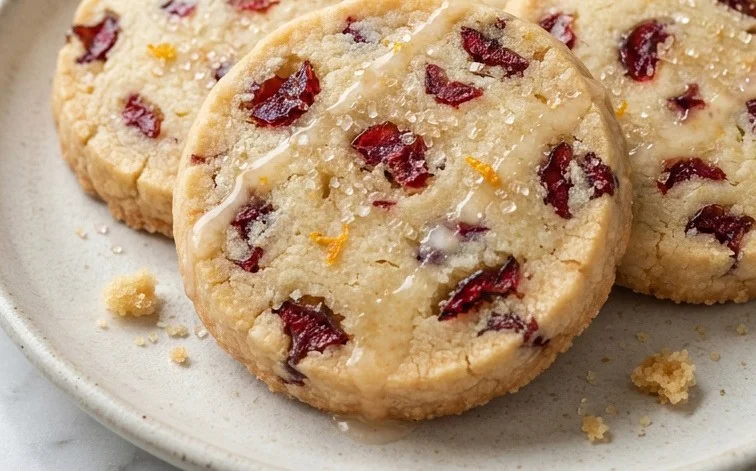
While the cookies are cooling, prepare the simple orange glaze. In a small bowl, whisk together the powdered icing sugar, orange juice, and the teaspoon of melted unsalted butter. Whisk until you have a smooth, pourable glaze. The melted butter helps to give the glaze a nice sheen. You can adjust the consistency by adding a tiny bit more orange juice if it’s too thick, or a little more icing sugar if it’s too thin.
Once the cookies have completely cooled, you can drizzle or dip them in the orange glaze. Drizzling is easier and allows you to control how much glaze you add. Use a spoon to create thin lines of glaze over the cookies. If you prefer a more substantial glaze, you can dip the tops of the cooled cookies into the glaze. Let the glaze set completely before storing the cookies.
Storage and Serving
These cranberry orange shortbread cookies can be stored in an airtight container at room temperature for up to a week. They are delicious served with a cup of tea or coffee, or as part of a dessert platter. The combination of buttery shortbread, tart cranberries, and bright orange is perfect for any occasion, but especially lovely during autumn and winter. Enjoy!
Conclusion:
I hope you’ve enjoyed learning how to make these delightful Cranberry Orange Shortbread Cookies! This recipe truly shines with its perfect balance of buttery richness, the zesty brightness of orange, and the festive tartness of cranberries. They are incredibly simple to prepare, making them an ideal treat for both seasoned bakers and beginners alike. The resulting shortbread is wonderfully crumbly, melts in your mouth, and offers a beautiful festive color that’s perfect for any occasion.
These Cranberry Orange Shortbread Cookies are incredibly versatile. Enjoy them with a cup of hot tea or coffee during a cozy afternoon. They also make a stunning addition to any holiday cookie platter, a thoughtful homemade gift, or a lovely accompaniment to a winter fruit salad. Don’t be afraid to get creative with variations! You could add a sprinkle of finely chopped pecans for extra crunch, or a hint of cardamom for a warmer spice profile. I truly encourage you to give this recipe a try; you won’t be disappointed!
Frequently Asked Questions:
Why are my shortbread cookies not crumbly enough?
For the best crumbly texture, ensure your butter is cold and that you don’t overmix the dough after adding the flour. Overmixing can develop gluten, leading to a tougher cookie. Also, chilling the dough before baking is crucial for shortbread.
Can I make this recipe gluten-free?
Yes, you can! You can substitute a good quality gluten-free all-purpose flour blend for the all-purpose flour. You might need to adjust the liquid slightly, so start with the recommended amount and add a tiny bit more if the dough seems too dry.
How should I store these cookies?
Store your Cranberry Orange Shortbread Cookies in an airtight container at room temperature. They will stay fresh and delicious for up to a week, retaining their wonderful buttery flavor and crumbly texture.
Cranberry Orange Shortbread Cookies
Delightful shortbread cookies infused with the bright flavors of orange zest and sweet-tart dried cranberries.
Ingredients
-
60 g caster sugar
-
1 orange (zest)
-
125 g unsalted butter (room temperature)
-
1 tsp vanilla extract
-
180 g plain flour
-
75 g dried cranberries (finely chopped)
-
120 g powdered icing sugar
-
30 ml orange juice
-
1 tsp unsalted butter (melted)
Instructions
-
Step 1
Cream together the room temperature unsalted butter and caster sugar until light and fluffy. Stir in the orange zest and vanilla extract. -
Step 2
Gradually add the plain flour to the butter mixture, mixing until just combined to form a soft dough. -
Step 3
Fold in the finely chopped dried cranberries. Cover the dough and chill in the refrigerator for at least 30 minutes. -
Step 4
Preheat your oven to 180°C (160°C fan/350°F/Gas Mark 4). Line baking sheets with parchment paper. -
Step 5
Roll out the chilled dough on a lightly floured surface to about 1cm (0.5 inch) thickness. Cut into desired shapes using cookie cutters. -
Step 6
Place the cookies onto the prepared baking sheets and bake for 12-15 minutes, or until the edges are lightly golden. -
Step 7
While the cookies are still warm, whisk together the powdered icing sugar, orange juice, and melted unsalted butter. Drizzle this glaze over the cooled cookies.
Important Information
Nutrition Facts (Per Serving)
It is important to consider this information as approximate and not to use it as definitive health advice.
Allergy Information
Please check ingredients for potential allergens and consult a health professional if in doubt.

Leave a Comment