Goat Cheese and Fig Puff Pastry Tarts start with a delightful contrast. The creamy, slightly tangy goat cheese is mellowed by the deep, sweet intensity of fig jam. All of this is encased in incredibly flaky, buttery puff pastry, which shatters with each bite. I find these tarts especially pleasing because they look so elegant, yet they come together with surprising speed, particularly if you use good quality store-bought puff pastry. They are perfect for when unexpected guests arrive or just for a quiet moment with a warm drink. The addition of caramelized onions provides a savory depth that makes these tarts more than just a simple pastry; they become a balanced bite. The thyme adds a fresh, aromatic finish. Making these Goat Cheese and Fig Puff Pastry Tarts is a rewarding experience, offering a taste of gourmet simplicity right from your own kitchen.
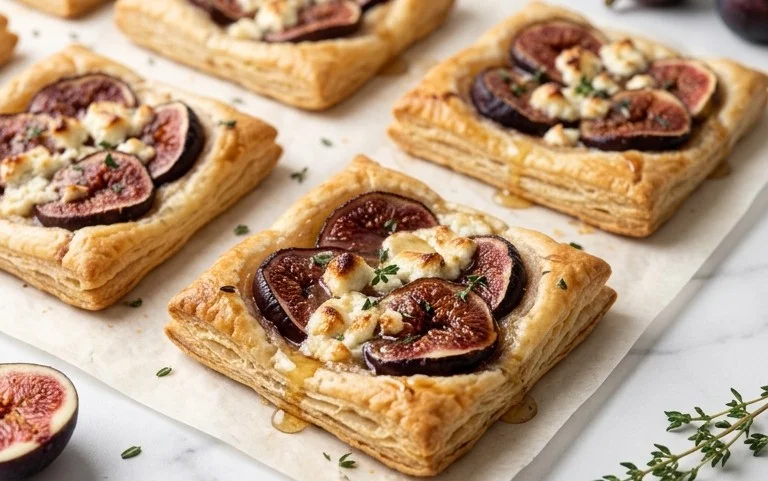
Goat Cheese and Fig Puff Pastry Tarts
These little tarts are a wonderful balance of sweet and savory. The creamy tang of goat cheese pairs beautifully with the deep, concentrated sweetness of fig jam, all wrapped up in flaky, buttery puff pastry. They’re surprisingly simple to make, especially if you opt for good quality store-bought puff pastry. I love making these for impromptu gatherings or just as a special treat with a cup of tea or coffee. The caramelized onions add a depth of flavor that really ties everything together. They look elegant, but they’re incredibly forgiving.
Ingredients:
- ½ batch rough puff pastry or classic puff pastry (or store-bought, see notes)
- All-purpose flour (for work surface)
- Egg wash (1 egg whisked with 1 teaspoon of water or cream)
- 1 cup fig jam
- ½ cup prepared caramelized onions, rough chopped
- 4 ounces goat cheese
- 6-10 sprigs of fresh thyme.
Preparing the Pastry
First things first, let’s get our puff pastry ready. If you’re using store-bought, make sure it’s thawed according to package directions. It’s usually best to work with puff pastry when it’s cold but pliable. If you’re making your own rough puff, ensure it’s well-chilled. Lightly flour your work surface and your rolling pin. Gently unfold your puff pastry sheet. If it’s a rectangle, you can either work with it as is or cut it into smaller portions, depending on how many tarts you want and what size you’re aiming for. For these tarts, I like to cut the pastry into roughly 4-inch squares or circles. If you’re cutting shapes, use a sharp knife or a round cutter. Don’t overwork the pastry at this stage; we want to keep those delicate layers intact for maximum flakiness.
Assembling the Tarts
Now for the fun part – assembly! For each tart, spread about 1 to 2 tablespoons of fig jam evenly over the surface of the pastry, leaving a small border of about ½ inch around the edges. This border will help create a lovely crust when the pastry puffs up. Next, scatter the rough-chopped caramelized onions over the fig jam. Don’t be shy with the onions; they add a wonderful savory depth. Then, crumble the goat cheese over the onions. You want to distribute it fairly evenly so you get a nice cheesy bite in every tart. For a final touch before baking, gently pull off the leaves from your fresh thyme sprigs and sprinkle them over the goat cheese. The thyme adds a lovely aromatic quality that complements the sweetness of the figs and the creaminess of the cheese.
Creating the Edges and Egg Wash
To give our tarts a beautiful golden-brown finish and a slightly crispier edge, we’re going to apply an egg wash. This is where the whisked egg and water or cream come in. Using a pastry brush, gently brush the exposed ½-inch border of the puff pastry with the egg wash. This not only adds color but also helps the pastry seal and puff nicely. Be careful not to get too much egg wash on the jam or cheese, as this can prevent the pastry from puffing as effectively. If you’ve cut your pastry into shapes, make sure all the edges that you want to puff up get a good coating of the egg wash. This simple step makes a big difference in the final presentation.
Baking the Tarts
Preheat your oven to 400°F (200°C). Line a baking sheet with parchment paper. Carefully arrange your assembled tarts on the prepared baking sheet, making sure there’s a little space between them so they can expand without touching. Bake for 15 to 20 minutes, or until the puff pastry is golden brown, puffed up significantly, and the cheese is softened and slightly melty. Keep an eye on them during the last few minutes of baking, as puff pastry can go from perfectly golden to burnt very quickly. If some areas seem to be browning too fast, you can loosely tent them with foil. The goal is a beautiful, puffed crust and warm, gooey filling.
Finishing and Serving
Once baked, carefully remove the tarts from the oven. Let them cool on the baking sheet for a few minutes before transferring them to a wire rack or a serving platter. They are best served warm, when the goat cheese is wonderfully creamy and the pastry is at its flakiest. If you like, you can add a tiny drizzle of honey or a few extra fresh thyme leaves just before serving for an extra touch of elegance. These tarts are fantastic as an appetizer, a light lunch served with a simple green salad, or even as part of a brunch spread. If you happen to have any leftovers, which is unlikely, they can be gently reheated in a low oven or a toaster oven.
Conclusion:
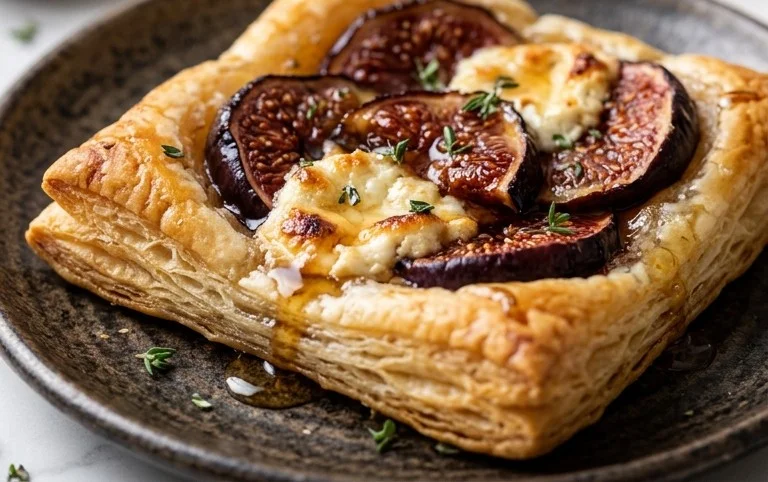
These Goat Cheese and Fig Puff Pastry Tarts are a fantastic way to impress without a lot of fuss. The interplay of sweet fig, tangy goat cheese, savory caramelized onions, and flaky puff pastry is truly something special. They are wonderful served warm, making them ideal for appetizers, a light lunch with a salad, or even a sophisticated dessert with a drizzle of honey.
For variations, you could try adding a sprinkle of chopped walnuts for crunch, or a touch of balsamic glaze after baking for an extra layer of flavor. If you can’t find fig jam, a good quality apricot or cherry jam would also work well, though the flavor profile will change. Don’t be afraid to experiment! Making these tarts is a joyful process, and the results are consistently impressive.
Frequently Asked Questions:
Can I make the caramelized onions ahead of time?
Yes, absolutely. Caramelized onions can be made a day or two in advance and stored in an airtight container in the refrigerator. They are even better when made ahead, as the flavors can meld.
What kind of goat cheese is best?
A fresh, plain goat cheese log (chèvre) is ideal. Its creamy texture and mild tang pair perfectly with the other ingredients. Avoid pre-crumbled goat cheese if possible, as it can sometimes be drier.
How should I store leftover tarts?
Leftover tarts are best stored in an airtight container at room temperature for up to two days. For longer storage, you can refrigerate them, but the pastry may lose some of its crispness. Reheat gently in a moderate oven to revive their texture.
Goat Cheese and Fig Puff Pastry Tarts
Elegant and easy puff pastry tarts featuring the delightful combination of creamy goat cheese, sweet fig jam, savory caramelized onions, and fresh thyme.
Ingredients
-
½ batch rough puff pastry or classic puff pastry (or store-bought)
-
All-purpose flour (for work surface)
-
Egg wash (1 egg whisked with 1 teaspoon of water or cream)
-
1 cup fig jam
-
½ cup prepared caramelized onions, rough chopped
-
4 ounces goat cheese
-
6-10 sprigs of fresh thyme
Instructions
-
Step 1
Preheat oven to 400°F (200°C). Line a baking sheet with parchment paper. -
Step 2
Lightly flour a clean work surface. Roll out the puff pastry to about 1/8-inch thickness. Cut into desired shapes (e.g., rounds or squares). -
Step 3
Place pastry shapes onto the prepared baking sheet. Score a border about 1/2-inch from the edge on each piece. Prick the center of each tart with a fork. -
Step 4
Spread a thin layer of fig jam over the center of each tart, staying within the scored border. -
Step 5
Crumble the goat cheese over the fig jam and scatter the caramelized onions on top. -
Step 6
Brush the edges of the pastry with egg wash. -
Step 7
Bake for 15-20 minutes, or until the pastry is golden brown and puffed. Garnish with fresh thyme sprigs before serving.
Important Information
Nutrition Facts (Per Serving)
It is important to consider this information as approximate and not to use it as definitive health advice.
Allergy Information
Please check ingredients for potential allergens and consult a health professional if in doubt.

Leave a Comment