
Chicken Tagine With Olives and Preserved Lemons starts with that distinct, almost floral perfume of saffron mingling with warm spices. It’s this aromatic base, alongside the deeply savory notes of slow-cooked chicken and onions, that makes this dish so compelling. I love making it on cooler evenings because the slow simmering fills the house with an irresistible scent. What makes this Chicken Tagine With Olives and Preserved Lemons truly stand out are the preserved lemons. Their concentrated salty, citrusy tang cuts through the richness of the chicken and the sweetness of the onions in a way that fresh lemon never could. Paired with briny olives, it’s a flavor combination that’s both bright and comforting, familiar yet exotic. This isn’t just a meal; it’s an experience that transports you. It feels sophisticated enough for guests but is straightforward enough for any home cook wanting to create something special without a fuss.
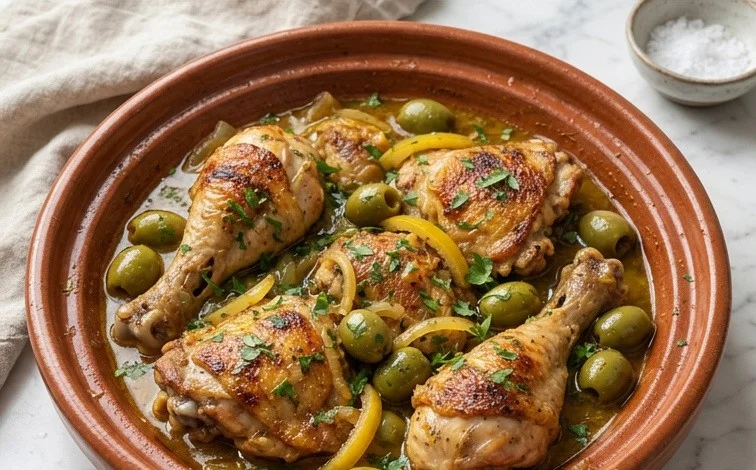
Chicken Tagine With Olives and Preserved Lemons
This chicken tagine is a wonderfully fragrant and comforting dish that’s surprisingly easy to make. The combination of tender chicken, the unique salty tang of preserved lemons, briny olives, and warm spices creates something truly special. It’s a dish that feels both rustic and elegant, perfect for a cozy weeknight meal or for sharing with friends. The aroma that fills your kitchen as it simmers is non-intoxicating.
Ingredients:
- 5 cloves garlic, finely chopped
- ¼ teaspoon saffron threads, pulverized
- ½ teaspoon ground ginger
- 1 teaspoon sweet paprika
- ½ teaspoon ground cumin
- ½ teaspoon turmeric
- Salt and freshly ground black pepper
- 1 chicken, cut in 8 to 10 pieces
- 2 tablespoons extra virgin olive oil
- 3 medium onions, sliced thin
- 1 cinnamon stick
- 8 calamata olives, pitted and halved
- 8 cracked green olives, pitted and halved
- 1 large or 3 small preserved lemons (sold in specialty food shops)
- 1 cup chicken stock
Cooking Instructions
Preparing the Chicken and Spices
The first step is to get our chicken seasoned and ready for the pot. In a bowl, combine the pulverized saffron threads, ground ginger, sweet paprika, ground cumin, turmeric, and a good pinch of salt and freshly ground black pepper. Add the chicken pieces to this spice mixture and toss them thoroughly to ensure each piece is well coated. Let it sit for about 10-15 minutes while you prepare the other ingredients; this short marination time helps the flavors penetrate the chicken. If you have more time, you can let it marinate in the refrigerator for up to a few hours.
Searing the Chicken and Sautéing the Onions
Heat the extra virgin olive oil in a large, heavy-bottomed pot or a tagine pot over medium-high heat. Carefully add the spiced chicken pieces, working in batches if necessary to avoid overcrowding the pot. Sear the chicken on all sides until it’s nicely browned. This browning process is important for developing depth of flavor in the final dish. Once browned, remove the chicken from the pot and set it aside. Reduce the heat to medium and add the thinly sliced onions to the same pot. Cook the onions, stirring occasionally, until they are softened and translucent, about 8-10 minutes. You want them to be tender but not overly browned. If any bits of chicken stuck to the bottom of the pot, scraping them up with the onions will add even more flavor.
Building the Flavor Base
Add the finely chopped garlic to the softened onions and cook for another minute until fragrant, being careful not to burn the garlic. Now, it’s time to bring in the aromatics. Add the cinnamon stick to the pot. If you’re using preserved lemons, you’ll need to prepare them. Rinse the preserved lemons under cold water to remove excess salt. Discard the pulp inside, as it can be very strong and bitter. Chop the rind into small pieces. The rind is where most of the preserved lemon flavor is. Add the chopped preserved lemon rind to the pot with the onions and garlic. Stir everything together and let it cook for about a minute to release its unique citrusy aroma.
Simmering the Tagine
Return the browned chicken pieces to the pot, nestling them amongst the onions and preserved lemon. Pour in the chicken stock. You want enough liquid to come about halfway up the sides of the chicken, but not to submerge it completely. The chicken will steam and cook through in the flavorful broth. Bring the liquid to a gentle simmer. Once simmering, reduce the heat to low, cover the pot tightly, and let the tagine cook.
Adding the Olives and Finishing
Allow the tagine to simmer gently for about 30-40 minutes, or until the chicken is cooked through and tender. The cooking time can vary depending on the size of your chicken pieces. About 10 minutes before the tagine is finished cooking, add the pitted and halved calamata olives and the cracked green olives to the pot. Stir them in gently. The olives will warm through and meld their briny flavor with the rest of the tagine. Taste the sauce and adjust seasoning with salt and pepper if needed. The preserved lemons are quite salty, so taste before adding more salt. The sauce should have thickened slightly. If it seems too thin, you can remove the lid for the last few minutes of cooking to allow some of the liquid to evaporate.
Serving Your Tagine
Serve the chicken tagine hot, spooning the flavorful sauce over the chicken. It’s traditionally served with couscous, which is perfect for soaking up all the delicious juices. You can also serve it with crusty bread. Garnish with fresh cilantro or parsley for a touch of freshness if you like. This dish is even better the next day, as the flavors have more time to meld together. Store any leftovers in an airtight container in the refrigerator for up to 3 days. Reheat gently on the stovetop or in the oven. Enjoy this incredibly satisfying and aromatic dish!

Conclusion:
This Chicken Tagine With Olives and Preserved Lemons truly delivers a wonderfully fragrant and comforting meal. The combination of tender chicken, salty preserved lemons, briny olives, and warm spices creates a dish that’s both rustic and elegant, perfect for any occasion. It’s surprisingly straightforward to make, making it a fantastic option for a weeknight dinner that feels special or for impressing guests. The aroma alone as it simmers is worth the effort.
Serving Suggestions: This tagine is wonderful served over fluffy couscous to soak up all the flavorful sauce. A side of fresh crusty bread is also excellent for mopping up every last bit. For a lighter option, serve with a simple green salad dressed with a lemon vinaigrette.
Variations: If you can’t find preserved lemons, you can substitute by simmering fresh lemon zest and juice with a pinch of salt for about 10 minutes to soften the flavor, though it won’t be quite the same. For a bit more heat, add a pinch of red pepper flakes along with the other spices. You could also add some chopped dried apricots or raisins in the last 30 minutes of cooking for a touch of sweetness.
Common Mistakes to Avoid: Ensure your preserved lemons are well rinsed and the pulp is finely chopped, as the rind is where most of the flavor resides. Don’t rush the simmering process; low and slow is key to tender chicken and a rich sauce.
FAQ: Where can I buy preserved lemons?
Preserved lemons are typically found in specialty food stores, Middle Eastern or North African markets, and often in the international aisle of larger supermarkets. If you can’t find them locally, they are readily available online from various gourmet food retailers.
FAQ: Can I make this tagine ahead of time?
Yes, absolutely! Tagines often taste even better the next day as the flavors have more time to meld. Let it cool completely, then store it in an airtight container in the refrigerator for up to 3 days. Reheat gently on the stovetop or in the oven.
FAQ: What kind of chicken should I use?
Bone-in, skin-on chicken pieces like thighs and drumsticks work best for tagine as they remain moist and flavorful during the long cooking time. You can use a whole chicken cut into pieces, or just thighs and drumsticks.
Chicken Tagine With Olives and Preserved Lemons
A fragrant and flavorful Moroccan chicken tagine featuring briny olives and tangy preserved lemons.
Ingredients
-
5 cloves garlic, finely chopped
-
¼ teaspoon saffron threads, pulverized
-
½ teaspoon ground ginger
-
1 teaspoon sweet paprika
-
½ teaspoon ground cumin
-
½ teaspoon turmeric
-
Salt and freshly ground black pepper
-
1 chicken, cut in 8 to 10 pieces
-
2 tablespoons extra virgin olive oil
-
3 medium onions, sliced thin
-
1 cinnamon stick
-
8 calamata olives, pitted and halved
-
8 cracked green olives, pitted and halved
-
1 large or 3 small preserved lemons, pulp discarded, rind cut into thin strips
-
1 cup chicken stock
Instructions
-
Step 1
In a small bowl, combine the pulverized saffron threads with a tablespoon of warm water and let it steep. In another small bowl, mix the ground ginger, sweet paprika, ground cumin, turmeric, salt, and pepper. -
Step 2
Pat the chicken pieces dry and rub them with the spice mixture. Heat the olive oil in a tagine or a heavy-bottomed pot over medium heat. Sear the chicken pieces on all sides until golden brown. -
Step 3
Remove the chicken from the pot and set aside. Add the sliced onions to the pot and cook, stirring occasionally, until softened and lightly golden, about 8-10 minutes. -
Step 4
Return the chicken to the pot. Add the cinnamon stick, saffron water, halved calamata olives, halved green olives, and the strips of preserved lemon rind. Pour in the chicken stock. -
Step 5
Bring the liquid to a simmer, then reduce the heat to low, cover the tagine or pot tightly, and cook for 45 minutes to 1 hour, or until the chicken is tender and cooked through. Stir occasionally, adding a little more chicken stock if it becomes too dry. -
Step 6
Remove the cinnamon stick before serving. Adjust seasoning with salt and pepper to taste. Serve hot, traditionally with couscous.
Important Information
Nutrition Facts (Per Serving)
It is important to consider this information as approximate and not to use it as definitive health advice.
Allergy Information
Please check ingredients for potential allergens and consult a health professional if in doubt.


Leave a Comment