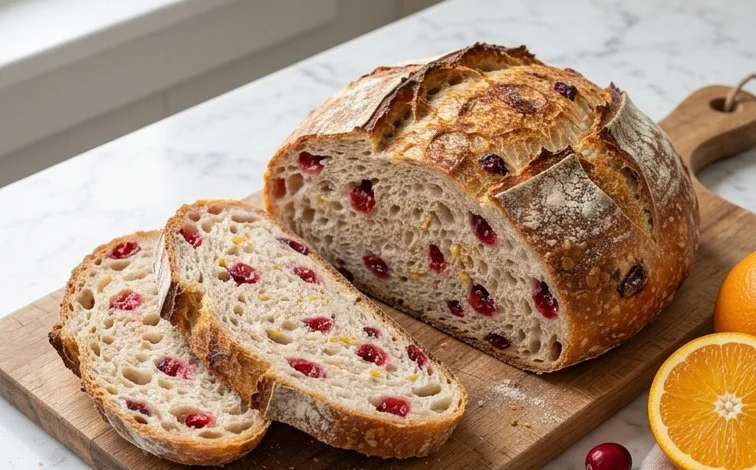
The tang of sourdough starter plays beautifully with the sweet-tart cranberries and the bright zest of orange in this Cranberry Orange Sourdough Bread. Making sourdough can seem a bit daunting, but breaking it down into manageable steps makes it entirely achievable for home bakers. The key is patience and observation, getting to know how your starter behaves and how the dough feels at each stage. This loaf is wonderfully fragrant and flavorful, perfect for any time of year, but especially delightful during autumn and winter. The combination of citrus and fruit with a naturally leavened crumb offers a unique flavor profile that elevates simple toast or complements a hearty meal.
Making the Levain
Before you start mixing your main dough, you need to build the levain. This is essentially a pre-ferment that wakes up your sourdough starter and gets it ready to leaven the bread. In a small bowl or jar, combine your 50 g of active sourdough starter, 50 g of bread flour, and 50 g water. Mix this together until there are no dry bits of flour visible. It should have a consistency similar to thick pancake batter. Cover the bowl loosely with a lid or plastic wrap and let it sit at room temperature for about 4 to 8 hours, or until it has doubled in volume and is bubbly and active. The exact time will depend on the temperature of your kitchen and the activity of your starter. You want to see it rise and t
Mixing the Dough
Once your levain is ready, it’s time to mix the main dough. In a large bowl, combine all of the active levain with 350 g water. Stir gently to break up the levain. Add the 500 g bread flour and 10 g salt. Mix everything together with your hands or a dough whisk until no dry flour remains. The dough will be shaggy and rough at this stage. Cover the bowl and let it rest for 30 minutes. This is called the autolyse period, allowing the flour to hydrate.
Ingredients:
- 50 g active sourdough starter
- 50 g bread flour
- 50 g water
- 350 g water
- all of the levain
- 500 g bread flour
- 10 g salt
- 100 g dried cranberries
- zest of one orange
- 20 g honey or maple syrup, optional
Cranberry Orange Sourdough Bread
This Cranberry Orange Sourdough Bread is a wonderfully fragrant and flavorful loaf, perfect for any time of year, but especially delightful during autumn and winter. The tang of the sourdough starter plays beautifully with the sweet-tart cranberries and the bright zest of orange. Making sourdough can seem a bit daunting, but breaking it down into manageable steps makes it entirely achievable for home bakers. The key is patience and observation, getting to know how your starter behaves and how the dough feels at each stage.
Making the Levain
Before you start mixing your main dough, you need to build the levain. This is essentially a pre-ferment that wakes up your sourdough starter and gets it ready to leaven the bread.
- In a small bowl or jar, combine your 50 g of active sourdough starter, 50 g of bread flour, and 50 g of water. Mix this together until there are no dry bits of flour visible. It should have a consistency similar to thick pancake batter.
- Cover the bowl loosely with a lid or plastic wrap and let it sit at room temperature for about 4 to 8 hours, or until it has doubled in volume and is bubbly and active. The exact time will depend on the temperature of your kitchen and the activity of your starter. You want to see it rise and then start to fall a little. This ensures it’s at its peak readiness to make your bread rise. If your kitchen is cool, this might take longer. You can also feed it a bit more flour and water if it seems sluggish.
Mixing the Dough
Once your levain is ready, it’s time to bring everything together for the main dough. This involves a bit of mixing and then a period of rest and stretching.
- In a large mixing bowl, combine the 350 g of water with all of the prepared levain. Whisk gently to break up the levain and incorporate it into the water. This helps to distribute the yeast and bacteria evenly throughout the liquid.
- Add the 500 g of bread flour and the 10 g of salt to the bowl. If you are using the optional honey or maple syrup for a touch of sweetness, add it now as well.
- Using your hands or a sturdy spatula, mix everything together until just combined. Don’t overmix at this stage; you’re just aiming to hydrate the flour. The dough will look shaggy and there might be some dry patches.
Developing the Dough (Bulk Fermentation)
This phase is where the magic of sourdough really happens. The dough will ferment, develop strength, and increase in volume.
- Let the dough rest, covered, in the mixing bowl for 30 minutes. This resting period is called autolyse, and it allows the flour to fully absorb the water, making the dough more extensible and easier to work with.
- After the 30-minute rest, it’s time for the first set of stretch and folds. Wet your hands slightly to prevent sticking. Grab one side of the dough, stretch it upwards gently, and fold it over the center of the dough. Rotate the bowl 90 degrees and repeat this process, stretching and folding the dough four times in total. You should feel the dough becoming smoother and more elastic with each fold.
- Cover the bowl and let the dough rest for another 30 minutes. Repeat the stretch and fold process. Continue this cycle of resting and stretching/folding every 30 minutes for a total of 3 to 4 sets. During these folds, you’ll notice the dough becoming smoother, more elastic, and it will start to build a nice structure.
- After the final set of stretch and folds, add the 100 g of dried cranberries and the zest of one orange to the dough. Gently incorporate them by performing a few more stretch and folds, ensuring they are evenly distributed throughout the dough. Be careful not to tear the dough too much at this point.
- Allow the dough to continue fermenting at room temperature for another 2 to 4 hours, or until it has increased in volume by about 30-50% and looks puffy. You should see some large bubbles on the surface. The exact time will vary greatly depending on your kitchen’s temperature. You want the dough to feel airy and alive.
Shaping and Proofing
This is where you give your loaf its final shape before it bakes.
- Gently tip the dough out onto a lightly floured surface. Be careful not to degas it too much. Perform a pre-shape by gently bringing the edges of the dough into the center to form a round. Let it rest, uncovered, for about 20-30 minutes. This brief rest allows the gluten to relax, making the final shaping easier.
- Now, perform your final shape. For a round loaf (boule), gently flatten the dough into a rough rectangle and then fold the top third down, the bottom third up, and then fold the sides in to create tension on the surface. Flip the dough over so the seam side is down and gently cup your hands around the dough to create surface tension, tucking the edges underneath.
- Place the shaped dough into a well-floured banneton or a bowl lined with a floured tea towel. If you don’t have a banneton, a bowl works fine, just make sure it’s well-floured so the dough doesn’t stick.
- Cover the banneton or bowl and place it in the refrigerator for an overnight cold proof, typically 12 to 18 hours. This cold proof develops more complex flavors and makes the dough easier to score.
Baking the Bread
The final and most satisfying step!
- Preheat your oven to 475°F (245°C) with a Dutch oven or a baking vessel inside for at least 30 minutes. The preheated vessel is key for creating that beautiful oven spring and a crisp crust.
- Once the oven is fully preheated, carefully take the dough out of the refrigerator. Invert the dough onto a piece of parchment paper.
- Using a sharp knife or a lame, score the top of the dough. A simple slash or a pattern will work. Scoring allows the bread to expand in a controlled way in the oven.
- Carefully remove the hot Dutch oven from the oven. Place the dough (using the parchment paper as handles) into the hot Dutch oven. Put the lid on.
- Bake with the lid on for 20 minutes. This traps the steam released from the dough, which helps the bread rise fully and develop a thin, crisp crust.
- After 20 minutes, remove the lid and continue baking for another 20-25 minutes, or until the crust is a deep golden brown and the internal temperature of the bread reaches 205-210°F (96-99°C).
- Carefully remove the bread from the Dutch oven and let it cool completely on a wire rack. This is perhaps the hardest part for any baker – resisting the urge to slice into it immediately! Cooling allows the internal structure of the bread to set.
Conclusion:
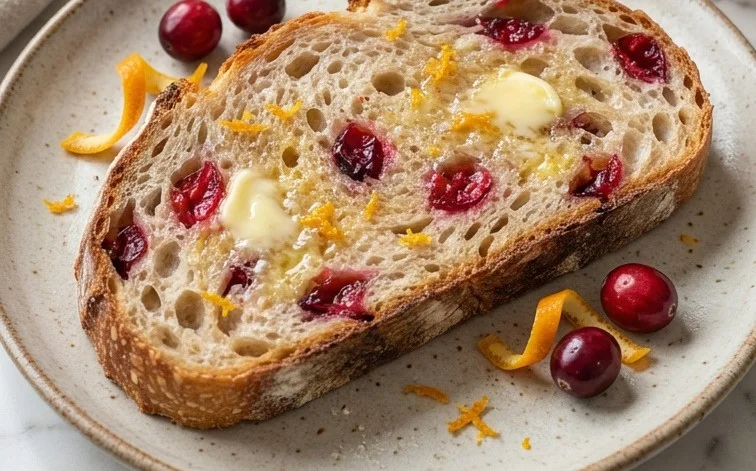
This Cranberry Orange Sourdough Bread is a testament to the wonderful complexity that natural leavening and simple, flavorful additions can bring to home baking. The satisfying chew, the open crumb, and the delightful bursts of cranberry and orange make each slice special. It’s a bread that tastes as good as it looks, and the aroma as it bakes is simply incredible. Enjoy this loaf toasted with butter, served alongside soup, or as part of a cheese board. You’ll find yourself reaching for the recipe again and again.
Serving Suggestions:
For a simple treat, toast thick slices and spread with butter or a good quality cream cheese. The sweetness of the honey or maple syrup, if used, complements the sourdough tang. It also makes a fantastic base for avocado toast or a light bruschetta topping. For a more substantial meal, serve slices alongside a hearty lentil soup or a warm salad.
Variations:
Feel free to adjust the amount of cranberries to your preference. You can also add a tablespoon of orange extract along with the zest for an even more pronounced orange flavor. If you don’t have dried cranberries, chopped dried cherries or even raisins can be substituted, though they will alter the flavor profile slightly.
Frequently Asked Questions:
Q: Can I use all-purpose flour instead of bread flour?
While bread flour provides the best structure for sourdough, you can use all-purpose flour. Your dough might be a bit softer, and the final loaf may not have as much lift or chew. If using all-purpose, consider adding a tablespoon of vital wheat gluten to help with structure.
Q: My levain didn’t double in 4 hours, what should I do?
Sourdough activity is very dependent on temperature. If your kitchen is cool, it can take longer for the levain to mature. Try finding a warmer spot, like near a lightly warm oven or on top of your refrigerator. You can also feed your starter a little more frequently to boost its activity before making the levain.
Cranberry Orange Sourdough Bread
A tangy and festive sourdough bread infused with the bright flavors of cranberry and orange.
Ingredients
-
50 g active sourdough starter
-
50 g bread flour
-
50 g water
-
350 g water
-
500 g bread flour
-
10 g salt
-
100 g dried cranberries
-
zest of one orange
-
20 g honey or maple syrup, optional
Instructions
-
Step 1
Prepare the levain: Mix 50g active sourdough starter, 50g bread flour, and 50g water. Let it ferment at room temperature for 4-8 hours, or until doubled in size and bubbly. -
Step 2
Combine ingredients: In a large bowl, mix 350g water with all of the levain until mostly dissolved. Add 500g bread flour and 10g salt. Mix until a shaggy dough forms. -
Step 3
Autolyse and incorporate add-ins: Let the dough rest for 30 minutes. Gently incorporate the dried cranberries and orange zest. Perform a series of stretch and folds every 30 minutes for 2 hours. -
Step 4
Bulk fermentation: Allow the dough to ferment at room temperature for another 4-6 hours, or until it has increased in volume by about 50-75% and shows good signs of fermentation. -
Step 5
Shaping and proofing: Gently shape the dough into a boule or batard. Place in a floured proofing basket and refrigerate for 12-24 hours for cold proofing. -
Step 6
Baking: Preheat your oven with a Dutch oven to 450°F (230°C). Score the dough and carefully place it in the hot Dutch oven. Bake for 20 minutes with the lid on, then remove the lid and bake for another 20-25 minutes, or until golden brown and the internal temperature reaches 200-210°F (93-99°C).
Important Information
Nutrition Facts (Per Serving)
It is important to consider this information as approximate and not to use it as definitive health advice.
Allergy Information
Please check ingredients for potential allergens and consult a health professional if in doubt.


Leave a Comment