
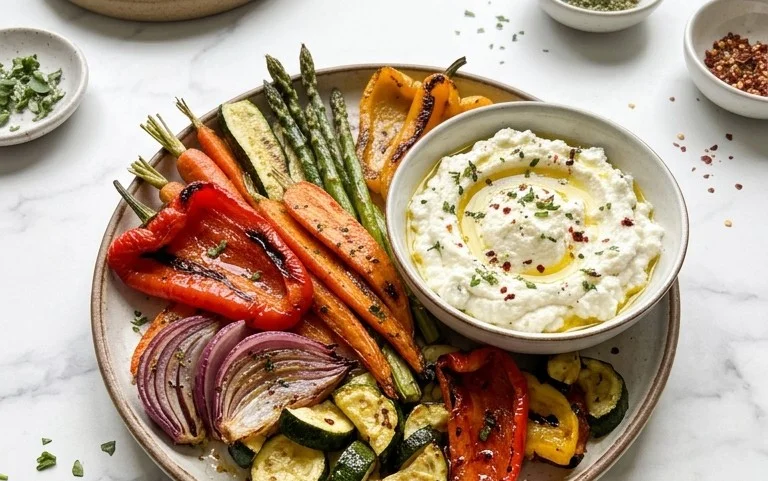
Roasted vegetable platters are my go-to for a beautiful and satisfying side dish that feels special without being complicated. This Roasted Vegetable Platter with Whipped Feta Dip brings together naturally sweet, slightly charred vegetables with a creamy, tangy dip that gets rave reviews every time. I love how the roasting process intensifies the flavor of everything, from the earthy broccoli and cauliflower to the sweet carrots and tender mushrooms. The radicchio and endive add a welcome hint of bitterness that cuts through the richness. It’s a colorful and healthy option that works for weeknight dinners or impressive gatherings. The whipped feta dip is incredibly simple to make but adds a luxurious touch that pulls the whole dish together. This is a platter that looks as good as it tastes, and it’s one of my favorite ways to showcase seasonal produce.
Ingredients:
- 1 small head broccoli (cut into 1-inch florets)
- 1/2 head of cauliflower (purple, yellow, or white), cut into 1-inch florets
- 1 small bunch carrots with greens attached, greens trimmed, scrubbed, and halved lengthwise
- 4 hakurei turnips, greens trimmed, halved or quartered, depending on size
- 2 portobello mushroom caps, sliced ½-inch thick
- 1 head radicchio, quartered
- 2 endive, halved or quartered, depending on size
- Extra virgin olive oil
- Sea salt
- Red pepper flakes
- Black pepper
- 8 ounces chopped feta cheese
- 3/4 cup full-fat Greek yogurt
- 2 cloves garlic, smashed, peeled, and minced
- 3 tablespoons extra virgin olive oil, divided
Roasting the Vegetables
This roasted vegetable platter is all about bringing out the natural sweetness and slightly charred edges of each ingredient. The key is to give them enough space on the baking sheet so they roast rather than steam. I like to make this when I have a variety of seasonal vegetables on hand, but this combination is particularly satisfying. It’s a beautiful and flavorful way to enjoy a medley of textures and colors.
Preparing the Vegetables
First, we need to get all our vegetables prepped and ready for the oven. Start with the broccoli and cauliflower. Make sure to cut them into roughly equal-sized florets, about 1 inch across. This helps them cook evenly. For the carrots, after trimming the greens, give them a good scrub. Halving them lengthwise helps expose more surface area to the heat, encouraging a nice roast. Hakurei turnips are wonderfully tender and sweet. Trim off the greens, but don’t discard them if you want to roast them too – just make sure they’re well-washed. Halve or quarter them depending on their size. Portobello mushrooms are next; slice them about half an inch thick. These will become wonderfully meaty when roasted. The radicchio needs to be cored and then cut into quarters. Don’t be afraid of the slight bitterness of radicchio; roasting mellows it out beautifully and brings out a delightful sweetness. Finally, prepare the endive by halving or quartering them, depending on their size. Like radicchio, roasting transforms the endive, making it tender and sweet.
Seasoning for Roasting
Once all your vegetables are prepped, it’s time to season them. You’ll want to place them all in a large bowl or directly onto your baking sheets. Drizzle generously with extra virgin olive oil. You want enough oil to lightly coat everything, but not so much that it pools at the bottom. Then, season well with sea salt and freshly ground black pepper. I also like to add a pinch of red pepper flakes for a gentle warmth that complements the sweetness of the roasted vegetables. Toss everything thoroughly to ensure each piece is coated. This step is important for even browning and flavor development.
Roasting Process
Preheat your oven to 400°F (200°C). Arrange the seasoned vegetables in a single layer on one or two large baking sheets. If you overcrowd the pans, the vegetables will steam instead of roast, and you won’t get those lovely caramelized edges. If necessary, use two pans. Roast for 25-35 minutes, or until the vegetables are tender and nicely browned. You’ll want to give them a toss or flip halfway through the roasting time to ensure even cooking. Keep an eye on them, as cooking times can vary depending on your oven and the size of your vegetable pieces. The carrots and broccoli florets should be fork-tender and slightly charred in places. The portobellos will be softened and a bit juicy, and the radicchio and endive will have wilted and caramelized.
Whipped Feta Dip
While the vegetables are roasting, let’s make the whipped feta dip. This dip is incredibly simple but tastes incredibly luxurious. The saltiness of the feta, balanced by the creamy Greek yogurt and the subtle bite of garlic, makes it the perfect counterpoint to the roasted vegetables.
Making the Dip
- In a food processor, combine the 8 ounces of chopped feta cheese, 3/4 cup of full-fat Greek yogurt, and the 2 smashed and minced garlic cloves.
- Pulse the ingredients a few times to break down the feta. Then, with the food processor running, slowly drizzle in 2 tablespoons of extra virgin olive oil. Continue to process until the mixture is smooth and creamy. If it seems too thick, you can add another tablespoon of olive oil or a tiny splash of water. You’re looking for a consistency that is light and airy, almost like a thick frosting.
- Taste the whipped feta and adjust seasoning if needed. Feta cheese can vary in saltiness, so you might not need any additional salt, but you can add a tiny pinch if you like. A bit more black pepper can also be nice.
- Transfer the whipped feta to a serving bowl. Drizzle the remaining 1 tablespoon of extra virgin olive oil over the top. You can also garnish with a sprinkle of red pepper flakes or some fresh herbs if you have them on hand, though it’s not essential.
Serving the Platter
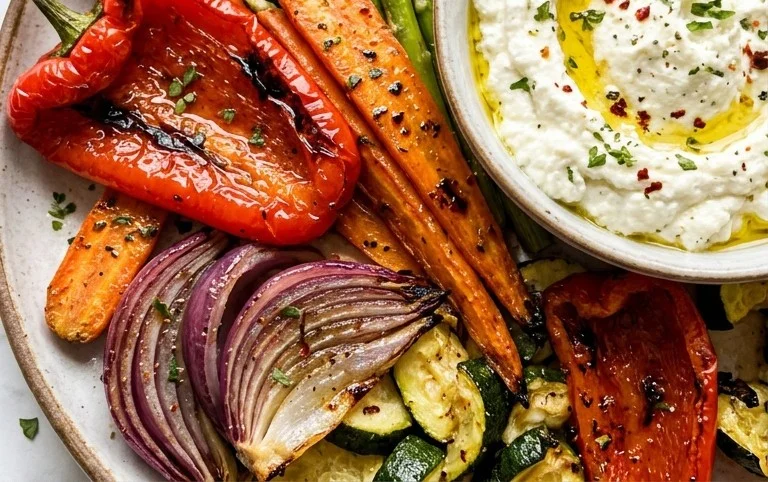
Once the vegetables are perfectly roasted and the feta dip is ready, it’s time to assemble. Arrange the hot roasted vegetables attractively on a large platter or board. Make sure to showcase the variety of colors and shapes. Place the bowl of whipped feta dip in the center or alongside the vegetables, inviting everyone to dive in. This dish is fantastic served warm. It makes for a stunning appetizer, a light lunch, or a beautiful side dish. The combination of the warm, caramelized vegetables and the cool, tangy feta dip is truly delightful.
Conclusion:
This roasted vegetable platter with whipped feta dip is a versatile and crowd-pleasing dish that’s as beautiful as it is delicious. Roasting the vegetables brings out their natural sweetness and creates lovely caramelized edges, while the whipped feta dip adds a creamy, tangy counterpoint. It’s a fantastic way to enjoy a variety of vegetables and works well as a side dish for any meal, or even as a light main course with some crusty bread. Don’t hesitate to experiment with different seasonal vegetables; asparagus, bell peppers, or sweet potatoes would also be wonderful additions.
Serving Suggestions: Serve warm as a side dish to grilled chicken or fish, or as part of a larger mezze-style spread with hummus and pita bread. It also makes a satisfying vegetarian lunch or light dinner.
Variations: For a different flavor profile, try adding a sprinkle of smoked paprika to the vegetables before roasting, or mix in some fresh herbs like rosemary or thyme. You can also adjust the garlic in the feta dip to your liking.
Frequently Asked Questions:
Can I make the whipped feta dip ahead of time?
Yes, the whipped feta dip can be made up to 2 days in advance. Store it in an airtight container in the refrigerator. You may need to give it a good stir before serving to restore its creamy texture.
What are the best vegetables for roasting?
Almost any firm vegetable roasts well. Broccoli, cauliflower, carrots, Brussels sprouts, sweet potatoes, bell peppers, onions, zucchini, and mushrooms are all excellent choices. Aim for vegetables that have similar cooking times, or cut larger, denser vegetables into smaller pieces.
How do I prevent vegetables from steaming instead of roasting?
Ensure your vegetables have enough space on the baking sheet. Don’t overcrowd the pan, as this will cause them to steam rather than roast and caramelize. Use a large enough baking sheet, or roast in batches if necessary.
Roasted Vegetable Platter with Whipped Feta Dip
A vibrant and flavorful platter of roasted seasonal vegetables served with a creamy and tangy whipped feta dip. Perfect for a healthy and delicious appetizer or side dish.
Ingredients
-
1 small head broccoli, cut into 1-inch florets
-
1/2 head of cauliflower (purple, yellow, or white), cut into 1-inch florets
-
1 small bunch carrots with greens attached, greens trimmed, scrubbed, and halved lengthwise
-
4 hakurei turnips, greens trimmed, halved or quartered, depending on size
-
2 portobello mushroom caps, sliced ½-inch thick
-
1 head radicchio, quartered
-
2 endive, halved or quartered, depending on size
-
Extra virgin olive oil
-
Sea salt
-
Red pepper flakes
-
Black pepper
-
8 ounces chopped feta cheese
-
¾ cup full-fat Greek yogurt
-
2 cloves garlic, smashed, peeled, and minced
-
3 tablespoons extra virgin olive oil, divided
Instructions
-
Step 1
Preheat oven to 400°F (200°C). Line two large baking sheets with parchment paper. -
Step 2
In a large bowl, toss broccoli, cauliflower, carrots, turnips, portobello mushrooms, radicchio, and endive with enough extra virgin olive oil to lightly coat. Season generously with sea salt, red pepper flakes, and black pepper. -
Step 3
Spread the vegetables in a single layer on the prepared baking sheets. Roast for 25-30 minutes, or until tender and lightly caramelized, flipping halfway through. -
Step 4
While the vegetables are roasting, prepare the whipped feta dip. In a food processor, combine the chopped feta cheese, Greek yogurt, minced garlic, and 3 tablespoons of extra virgin olive oil. -
Step 5
Process until smooth and creamy, scraping down the sides as needed. Taste and adjust seasoning if necessary. -
Step 6
Arrange the roasted vegetables on a large platter. Serve immediately with the whipped feta dip on the side.
Important Information
Nutrition Facts (Per Serving)
It is important to consider this information as approximate and not to use it as definitive health advice.
Allergy Information
Please check ingredients for potential allergens and consult a health professional if in doubt.


Leave a Comment