Rustic No-Knead Cranberry Orange Bread is a delightful bake that fills your kitchen with the warm scent of citrus and berries. This bread starts with the beautiful aroma of orange zest and the cheerful pop of dried cranberries. It’s the kind of bread that feels special enough for a holiday morning but is so simple to make, you’ll find yourself baking it all year round. The beauty of this recipe is its “no-knead” nature. We rely on time and a bit of yeast to do the heavy lifting, creating a loaf with a wonderfully chewy interior and a satisfyingly rustic crust. The dried cranberries are plumped before being added, ensuring they remain moist and add bursts of tartness throughout the tender crumb, while the orange zest provides a bright, fragrant counterpoint. This loaf is fantastic on its own, toasted with a smear of butter, or even as a base for French toast. It’s a straightforward method that yields impressive results, making it a go-to for bakers of all levels. The combination of tart cranberries and fragrant orange is truly a classic for a reason.
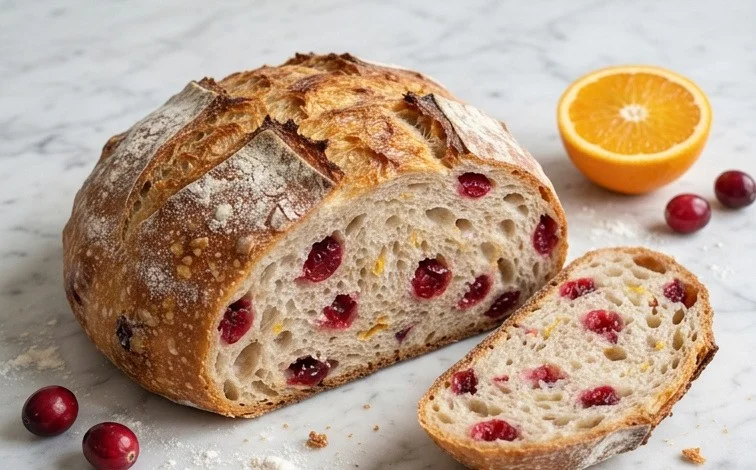
Rustic No-Knead Cranberry Orange Bread
This bread starts with the beautiful aroma of orange zest and the cheerful pop of dried cranberries. It’s the kind of bread that feels special enough for a holiday morning but is so simple to make, you’ll find yourself baking it all year round. The beauty of this recipe is its “no-knead” nature. We rely on time and a bit of yeast to do the heavy lifting, creating a loaf with a wonderfully chewy interior and a satisfyingly rustic crust. The dried cranberries are plumped before being added, ensuring they remain moist and add bursts of tartness throughout the tender crumb, while the orange zest provides a bright, fragrant counterpoint. This loaf is fantastic on its own, toasted with a smear of butter, or even as a base for French toast.
Ingredients:
- 3 cups all purpose flour
- ½ tsp. active dry yeast
- 2 tsp. salt
- 1½ cups water
- zest of 2 oranges
- ¾ cup “plumped” dried cranberries
Preparing the Dough: The Gentle Beginning
The magic of no-knead bread lies in its simplicity and patience. We’re not developing gluten through vigorous kneading; instead, we let the ingredients mingle and hydrate over a long period.
The first step is to combine the dry ingredients in a large mixing bowl. I usually use a sturdy wooden spoon or a silicone spatula for this. Add your 3 cups of all-purpose flour, the ½ teaspoon of active dry yeast, and the 2 teaspoons of salt. Give everything a good stir to ensure the yeast and salt are evenly distributed throughout the flour. This even distribution is important so the yeast can start working its magic uniformly.
Next, pour in the 1½ cups of lukewarm water. The water shouldn’t be hot, as that can kill the yeast, but it should feel comfortably warm to the touch, like a baby’s bathwater. Add the zest of your 2 oranges to the bowl. The zest releases its fragrant oils, infusing the dough with that lovely citrus aroma right from the start. Now, stir everything together until just combined. Don’t worry about developing a smooth dough; it will be shaggy and rough, and that’s perfectly okay. You just want to make sure there are no dry pockets of flour remaining.
Now for the waiting game. Cover the bowl tightly with plastic wrap or a damp kitchen towel. Let it sit at room temperature for at least 12 hours, or preferably up to 18 hours. This long, slow fermentation is what develops the flavor and the characteristic open crumb of no-knead bread. During this time, the yeast will consume sugars in the flour and produce carbon dioxide gas, which makes the dough rise and creates those airy pockets. You’ll notice the dough will become bubbly and significantly increase in volume.
Incorporating the Flavor: Cranberries and Citrus
After the initial long rise, it’s time to incorporate the stars of our flavor profile: the plumped cranberries and the vibrant orange zest. Before you start the final rise, you need to prepare your cranberries. “Plumping” them simply means rehydrating them a bit so they don’t absorb moisture from the dough and become dry or tough. I usually do this by placing the ¾ cup of dried cranberries in a small bowl and covering them with hot water. Let them sit for about 10-15 minutes while you prepare the rest of your workstation. Drain them well before adding them to the dough.
Once your dough has had its long rest and is looking bubbly and alive, gently fold in the drained, plumped dried cranberries. You can do this directly in the bowl. Use your spatula or spoon to fold them into the dough a few times, just enough to distribute them evenly. Try not to overwork the dough at this stage. The goal is simply to incorporate the cranberries without deflating all the air that the yeast has worked so hard to create. The zest you added earlier will have already begun to infuse its flavor, and the cranberries will add their tart sweetness.
Shaping and the Final Rise: Preparing for the Oven
Now that the cranberries are incorporated, it’s time for the dough to have its final rise and prepare for baking. Generously flour a clean work surface. Carefully turn out the dough onto the floured surface. It will be sticky and still quite soft, so don’t be tempted to add too much extra flour.
Gently shape the dough into a rough ball or a rustic round loaf. You can do this by gently pulling the edges of the dough towards the center and then flipping it over so the seam is on the bottom. The less you handle it, the better.
Lightly dust your shaped loaf with a bit more flour. You can also transfer the loaf to a piece of parchment paper for easier handling later. Cover the loaf loosely with plastic wrap or a clean kitchen towel and let it rest for another 30 to 60 minutes. This second, shorter rise allows the dough to relax and puff up a bit more before hitting the heat. You’ll see it become slightly puffier.
Baking to Perfection: The Dutch Oven Method
For this rustic bread, I highly recommend baking it in a preheated Dutch oven. This method traps steam, which is essential for achieving that beautiful, crackly crust and an airy interior.
About 30 minutes before you plan to bake, preheat your oven to 450°F (230°C). Place your empty Dutch oven, with its lid on, into the oven as it preheats. Getting the Dutch oven screaming hot is key.
Once the oven and Dutch oven are preheated, carefully remove the hot Dutch oven from the oven. Be very cautious as it will be extremely hot. You can remove the lid. Carefully lift your dough (using the parchment paper if you used it) and gently place it into the preheated Dutch oven. If you’re not using parchment paper, carefully slide the dough into the hot pot. Be careful not to burn yourself.
Place the lid back on the Dutch oven. This will create a steamy environment for the first part of the baking. Bake with the lid on for 30 minutes. This trapped steam will allow the crust to expand without hardening too quickly.
After 30 minutes, carefully remove the lid from the Dutch oven. You’ll see a beautifully risen loaf. Continue to bake for another 15 to 25 minutes, or until the crust is a deep golden brown and the internal temperature of the bread reaches about 200-210°F (93-99°C) when tested with an instant-read thermometer. The exact time will depend on your oven.
Cooling and Enjoying: The Final Reward
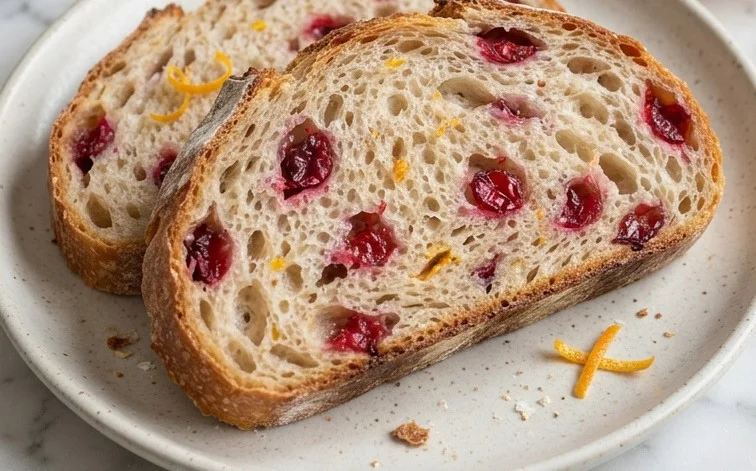
Once baked, carefully remove the bread from the Dutch oven and transfer it to a wire rack to cool completely. This step is surprisingly important. Resist the urge to cut into it immediately. As the bread cools, the internal structure continues to set, and the crust firms up. If you cut into it too soon, the inside can be gummy. Allowing it to cool for at least an hour, or even longer, will yield the best texture. Once cooled, slice and enjoy your delicious, homemade Rustic No-Knead Cranberry Orange Bread!
Conclusion:
Rustic No-Knead Cranberry Orange Bread truly is a joy to make and to eat. Its simple preparation method, relying on time rather than effort, means you get a wonderfully textured loaf with minimal fuss. The bright citrus notes from the orange zest mingle beautifully with the tart sweetness of the plumped cranberries, creating a bread that’s both comforting and exciting. It has a satisfyingly chewy interior and a crust that gives way with a pleasant crunch. This loaf is so versatile, making it a welcome addition to any breakfast table, afternoon snack, or even as part of a festive meal. Try it toasted with a thick spread of butter, alongside a cup of hot tea, or as the star of your next French toast brunch. You’ll find that the aroma alone is worth the minimal effort involved. Bake it for a special occasion or just because – it’s a recipe that brings a touch of handmade goodness to everyday life.
Frequently Asked Questions:
Q: Can I use fresh cranberries instead of dried?
A: While dried cranberries are specified for their concentrated flavor and texture, you can experiment with fresh ones. If using fresh cranberries, you might need to reduce the liquid slightly and be aware that they will release more moisture during baking, potentially altering the crumb. It’s best to start with the dried variety for this specific recipe’s intended outcome. If you do use fresh, add them whole or roughly chopped and keep an eye on the dough’s hydration.
Q: What kind of orange should I use for the zest?
A: A navel orange or a Valencia orange works wonderfully here. The key is to use an orange that has a good amount of fragrant zest and is preferably unwaxed. You want to zest the outer layer of the peel, avoiding the bitter white pith underneath. The zest provides an aromatic depth that complements the cranberries perfectly in this no-knead bread.
Q: How should I store the bread?
A: Once completely cooled, store this Rustic No-Knead Cranberry Orange Bread in an airtight container or bread bag at room temperature for up to 3 days. For longer storage, you can wrap it tightly in plastic wrap followed by a layer of aluminum foil and freeze it for up to 3 months. Thaw at room temperature or warm slices gently in the oven.
Rustic No-Knead Cranberry Orange Bread
A simple and delicious no-knead bread with bright citrus and tart cranberry flavors, perfect for any occasion.
Ingredients
-
3 cups all purpose flour
-
½ tsp. active dry yeast
-
2 tsp. salt
-
1½ cups water
-
zest of 2 oranges
-
¾ cup plumped dried cranberries
Instructions
-
Step 1
In a large bowl, whisk together the flour, yeast, and salt. -
Step 2
Add the water and orange zest. Stir until just combined, forming a shaggy dough. Fold in the plumped cranberries. -
Step 3
Cover the bowl tightly with plastic wrap and let it rest at room temperature for at least 8 hours, or up to 24 hours. -
Step 4
When ready to bake, lightly flour a work surface and gently turn the dough out. Fold it over on itself a few times to form a round ball. -
Step 5
Place the dough on a piece of parchment paper and cover loosely with plastic wrap. Let it rest for 30 minutes. -
Step 6
Preheat oven to 450°F (230°C) with a Dutch oven inside for at least 30 minutes. -
Step 7
Carefully remove the hot Dutch oven from the oven. Gently place the dough (with parchment paper) into the hot Dutch oven. Cover and bake for 30 minutes. -
Step 8
Remove the lid and bake for an additional 10-15 minutes, or until the crust is deep golden brown and the internal temperature reaches 200-210°F (93-99°C). -
Step 9
Remove from the Dutch oven and let cool completely on a wire rack before slicing.
Important Information
Nutrition Facts (Per Serving)
It is important to consider this information as approximate and not to use it as definitive health advice.
Allergy Information
Please check ingredients for potential allergens and consult a health professional if in doubt.


Leave a Comment