The smell of warm, tangy sourdough mingling with the bright zest of orange and sweet bursts of cranberry is one of my favorite aromas. This Cranberry Orange Sourdough Bread is perfect for a cozy breakfast, a festive holiday bake, or simply whenever you crave something special. It has a wonderfully soft crumb with a delightful chew, and the combination of flavors is both comforting and refreshing. Making sourdough can seem intimidating, but with a little patience and this guide, you’ll be enjoying your own homemade loaf in no time. The dough itself is a joy to work with, developing a beautiful open crumb as it ferments. The dried cranberries plump up during baking, offering little pockets of sweetness that complement the slight tang of the sourdough starter. Orange zest is folded in gently to preserve its fragrant oils, ensuring every slice carries that unmistakable citrus aroma. It’s a bread that feels both rustic and elegant, making it a standout on any table. The process builds flavor slowly, which is the magic of sourdough.
Ingredients:
50 g active sourdough starter (($0.05))
50 g bread flour (($0.09))
50 g water (($0.00))
350 g water (($0.00))
all of the levain
500 g bread flour (($0.86))
10 g salt (($0.01))
100 g dried cranberries (($1.09))
zest of one orange (($0.77))
20 g honey or maple syrup, optional (($0.22))
Making the Levain
The first step is to create your levain, which is essentially a preferment that gives your sourdough its characteristic tang and rise. In a small bowl or jar, combine your active sourdough starter, 50 g of bread flour, and 50 g of water. Stir it until it’s well incorporated and there are no dry bits of flour. Cover this loosely with a lid or plastic wrap and let it sit at room temperature for about 4 to 8 hours, or until it has doubled in size and is bubbly and active. This usually happens overnight for me, but the exact time depends on the warmth of your kitchen. You’ll know it’s ready when a small dollop floats in water.
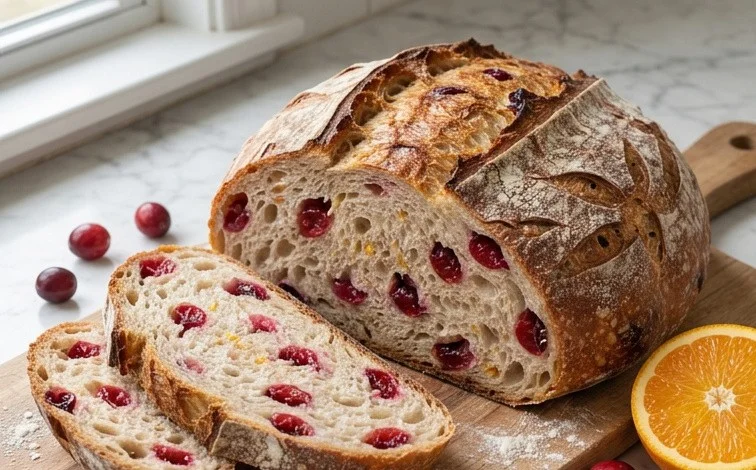
Cranberry Orange Sourdough Bread
The smell of warm, tangy sourdough mingling with the bright zest of orange and sweet bursts of cranberry is one of my favorite aromas. This Cranberry Orange Sourdough Bread is perfect for a cozy breakfast, a festive holiday bake, or simply whenever you crave something special. It has a wonderfully soft crumb with a delightful chew, and the combination of flavors is both comforting and refreshing. Making sourdough can seem intimidating, but with a little patience and this guide, you’ll be enjoying your own homemade loaf in no time.
Ingredients:
- 50 g active sourdough starter (($0.05))
- 50 g bread flour (($0.09))
- 50 g water (($0.00))
- 350 g water (($0.00))
- all of the levain
- 500 g bread flour (($0.86))
- 10 g salt (($0.01))
- 100 g dried cranberries (($1.09))
- zest of one orange (($0.77))
- 20 g honey or maple syrup, optional (($0.22))
Making the Levain
The first step is to create your levain, which is essentially a preferment that gives your sourdough its characteristic tang and rise. In a small bowl or jar, combine your active sourdough starter, 50 g of bread flour, and 50 g of water. Stir it until it’s well incorporated and there are no dry bits of flour. Cover this loosely with a lid or plastic wrap and let it sit at room temperature for about 4 to 8 hours, or until it has doubled in size and is bubbly and active. This usually happens overnight for me, but the exact time depends on the warmth of your kitchen. You’ll know it’s ready when a small dollop floats in a glass of water.
Mixing the Dough
Once your levain is ready, it’s time to mix the main dough. In a large mixing bowl, combine the remaining 350 g of water with all of the prepared levain. Whisk them together until the levain is mostly dissolved. Then, add the 500 g of bread flour and the 10 g of salt. If you’re using honey or maple syrup, add it now as well. Mix everything together with your hands or a spatula until a shaggy dough forms and there are no dry patches of flour. It will be quite sticky at this stage, which is perfectly normal for sourdough.
Bulk Fermentation and Folds
This is where the magic of sourdough really begins. Cover the bowl and let the dough rest for about 30 minutes. This initial rest period is called autolyse and helps the flour absorb the water, making the dough easier to work with. After the rest, it’s time for a series of “stretch and folds” to develop the gluten structure. Wet your hands slightly to prevent sticking. Grab one side of the dough, stretch it up gently, and fold it over the center of the dough. Rotate the bowl 90 degrees and repeat this process three more times, so you’ve folded all four sides. Perform these stretch and folds every 30-60 minutes for the next 2 to 3 hours. You’ll notice the dough becoming smoother and more elastic with each set of folds.
During the bulk fermentation, you’ll also incorporate the cranberries and orange zest. About halfway through your stretch and folds, gently fold in the 100 g of dried cranberries and the zest of one orange. Try to distribute them evenly without degassing the dough too much. The dough should increase in volume by about 30-50% and feel airy.
Shaping the Loaf
After the bulk fermentation is complete, it’s time to shape your loaf. Lightly flour your work surface and gently turn the dough out onto it. Be careful not to knock out all the air you’ve worked to build. Shape the dough into a round (boule) or an oval (batard). To do this, gently pull the edges of the dough towards the center, creating surface tension on the top. Once shaped, place the dough seam-side down into a floured banneton or a bowl lined with a floured tea towel. If you don’t have a banneton, a regular bowl lined with a well-floured tea towel will work.
Cold Fermentation (Retarding)
Cover the shaped dough and place it in the refrigerator for at least 12 hours, and up to 24 hours. This cold fermentation period allows the flavors to develop further and makes the dough easier to handle for scoring and baking. The cold also slows down the yeast activity, allowing the wild yeast and bacteria to work their magic, resulting in a more complex flavor and a better crust.
Baking the Bread
When you’re ready to bake, preheat your oven to 240°C (465°F) with a Dutch oven or baking vessel inside for at least 30 minutes. This ensures the Dutch oven is screaming hot, which is key for a good oven spring and crust. Carefully remove the hot Dutch oven from the oven. Gently turn your dough out onto a piece of parchment paper, seam-side down. Score the top of the dough with a sharp knife or a lame to allow it to expand evenly in the oven. Carefully lift the parchment paper with the dough and place it into the hot Dutch oven. Cover with the lid and bake for 20 minutes.
After 20 minutes, remove the lid of the Dutch oven and reduce the oven temperature to 220°C (425°F). Continue to bake for another 20-25 minutes, or until the crust is a deep golden brown and the internal temperature of the bread reaches around 96°C (205°F). Carefully remove the bread from the Dutch oven and let it cool completely on a wire rack before slicing. This cooling period is essential for the crumb to set properly. Enjoy the incredible aroma filling your kitchen as it cools!
Conclusion:
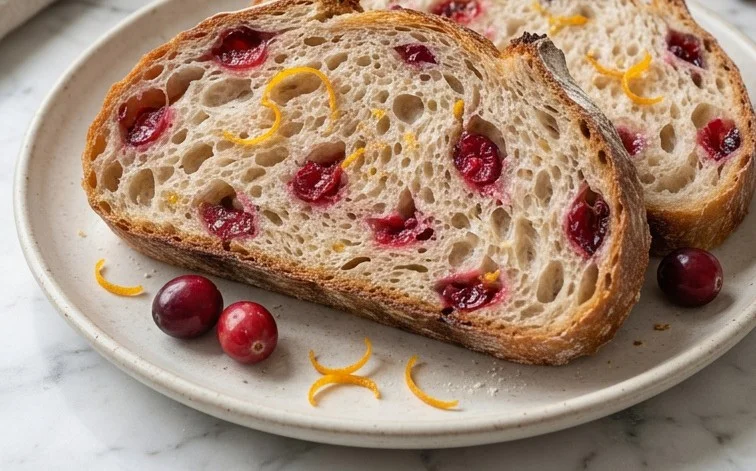
This Cranberry Orange Sourdough Bread truly brings together the best of sourdough baking with bright, festive flavors. The tang of the sourdough, the sweetness of the cranberries, and the perfume of orange zest create a loaf that’s comforting and utterly delicious. It has a chewy crust and a soft, open crumb that makes it perfect for any occasion, from a simple breakfast toast to a showstopping addition to your holiday table. Don’t be afraid to try it; the process, while requiring patience, is rewarding, and the result is a bread far superior to anything store-bought. The aroma alone as it bakes will fill your home with warmth.
Serving Suggestions: Enjoy it toasted with butter, cream cheese, or a drizzle of honey. It’s also fantastic alongside a warm bowl of soup or as part of a cheese board. For breakfast, a thick slice topped with Greek yogurt and a few extra berries is divine.
Variations: For an extra hint of spice, add a teaspoon of ground cinnamon or cardamom to the dough along with the cranberries and zest. You could also swap some of the dried cranberries for chopped dried apricots or cherries.
FAQs:
Can I use fresh cranberries?
You can use fresh cranberries, but you might need to reduce the water in the main dough slightly, as they release liquid as they bake. About 75g of fresh cranberries is a good starting point, and you may want to toss them with a little extra sugar before adding to the dough to help them soften.
How do I store this bread?
Store the cooled bread in a bread box or a paper bag at room temperature for up to 3 days. If you need to store it longer, slice it and freeze the slices in an airtight bag for up to 3 months. Toast frozen slices directly from the freezer.
My sourdough starter isn’t very active. What should I do?
Ensure your starter is being fed regularly (daily if kept at room temperature) and is at its peak activity before using it for the levain. A warm spot, around 75-80°F (24-27°C), helps speed up fermentation.
Cranberry Orange Sourdough Bread
A delightfully tangy sourdough bread infused with tart cranberries and bright orange zest.
Ingredients
-
50 g active sourdough starter
-
50 g bread flour
-
50 g water
-
350 g water
-
500 g bread flour
-
10 g salt
-
100 g dried cranberries
-
zest of one orange
-
20 g honey or maple syrup, optional
Instructions
-
Step 1
Combine 50g active sourdough starter, 50g bread flour, and 50g water. Let it sit for 4-8 hours at room temperature until active and bubbly (this is your levain). -
Step 2
In a large bowl, mix 500g bread flour and 350g water. Autolyse for 30 minutes. -
Step 3
Add the active levain and 10g salt to the autolysed dough. Mix until well incorporated. -
Step 4
Perform stretch and folds every 30 minutes for the first 2 hours. Add 100g dried cranberries and the zest of one orange during the last set of stretch and folds. -
Step 5
Allow the dough to bulk ferment at room temperature for 4-6 hours, or until it has increased by 50-75% in volume and feels airy. If using, incorporate 20g honey or maple syrup during the last hour of bulk fermentation. -
Step 6
Shape the dough and place it in a proofing basket. Cold proof in the refrigerator for 12-24 hours. -
Step 7
Preheat your oven and Dutch oven to 500°F (260°C). Score the dough and bake covered for 20 minutes, then uncovered for another 20-25 minutes, or until golden brown and the internal temperature reaches 200-210°F (93-99°C).
Important Information
Nutrition Facts (Per Serving)
It is important to consider this information as approximate and not to use it as definitive health advice.
Allergy Information
Please check ingredients for potential allergens and consult a health professional if in doubt.



Leave a Comment