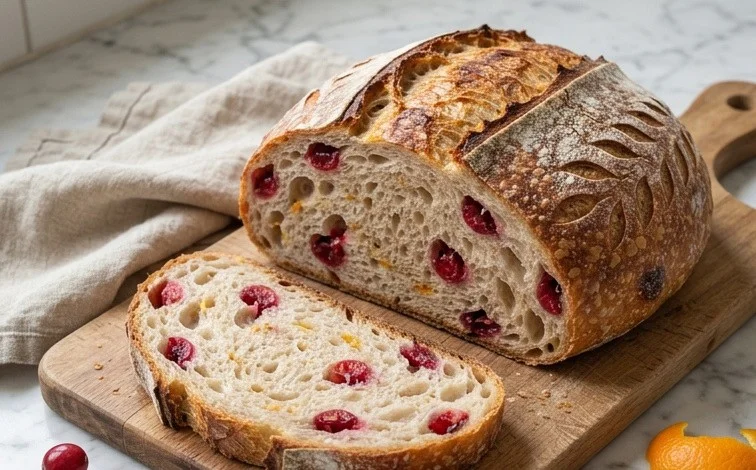
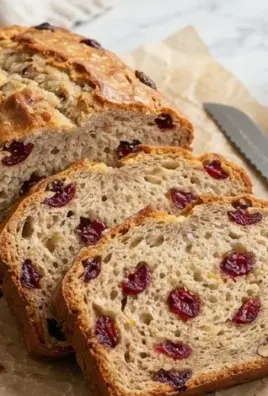
Cranberry Orange Sourdough Bread brings a cheerful burst of color and flavor to any table, especially when the weather turns cooler. I love the way the tart cranberries and bright orange zest mingle with the tangy depth of sourdough. This isn’t just bread; it’s an experience. The chew of the crust, the soft, open crumb, and those little pops of fruit make every slice a moment to savor. It’s special because it combines familiar, comforting flavors with the wonderfully complex character of naturally leavened bread. Making your own sourdough starter is a rewarding process, and this recipe builds on that foundation with simple additions that create something truly festive and delicious. You’ll find that the slight sweetness from the optional honey or maple syrup balances the tang beautifully, making it a versatile loaf that’s perfect for holidays, brunches, or just a special treat with your afternoon tea. The aroma alone as it bakes is enough to make your home feel instantly cozier.
Ingredients:
- 50 g active sourdough starter (($0.05))
- 50 g bread flour (($0.09))
- 50 g water (($0.00))
- 350 g water (($0.00))
- all of the levain
- 500 g bread flour (($0.86))
- 10 g salt (($0.01))
- 100 g dried cranberries (($1.09))
- zest of one orange (($0.77))
- 20 g honey or maple syrup, optional (($0.22))
Making the Levain
The first step in creating this delightful Cranberry Orange Sourdough Bread is to prepare your levain, which is essentially a small starter mixture that gets the main dough going. In a small bowl or jar, combine the 50 g of active sourdough starter, 50 g of bread flour, and 50 g of water. Give it a good stir until it’s well combined and there are no dry pockets of flour. Cover this loosely and let it sit at room temperature for about 4 to 8 hours, or until it has doubled in size and is bubbly and active. You’ll know it’s ready when a small spoonful floats in water. This overnight or morning prep ensures your levain is ready when you are. The cost for this initial stage is minimal, reflecting the small quantities used.
Mixing the Dough
Once your levain is ready and active, it’s time to build the main dough. In a large mixing bowl, combine the 350 g of water with all of the prepared levain. Stir gently to help break up the levain a bit. Add the 500 g of bread flour and the optional 20 g of honey or maple syrup (if you’re using it for a touch of sweetness and a softer crumb). Mix everything together with your hands or a sturdy spatula until it just comes together into a shaggy mass. Don’t worry about developing the gluten at this stage; we’re just aiming for hydration. Cover the bowl and let it rest for about 20 to 30 minutes. This resting period is called autolyse, and it allows the flour to absorb the water fully, making the dough more pliable and easier to work with later.
Adding Salt and Inclusions
After the autolyse, it’s time to add the salt and those wonderful flavourings. Sprinkle the 10 g of salt evenly over the surface of the dough. Gently pinch and fold the salt into the dough to distribute it. Now, add the zest of one orange and the 100 g of dried cranberries. If you’re adding honey or maple syrup, you would have added it in the previous step. Again, use your hands to gently fold and incorporate the salt, cranberries, and orange zest into the dough. The goal is to distribute them as evenly as possible without tearing the dough too much. The scent of the orange zest will already start to perfume the dough.
Bulk Fermentation and Folding
This is where the magic of sourdough happens. Cover the bowl and let the dough rest in a warm place (around 75-80°F or 24-27°C) for bulk fermentation. Over the next 3 to 5 hours, you will perform a series of “stretch and folds” every 30 to 45 minutes. To do a stretch and fold, wet your hands slightly, grab one side of the dough, gently stretch it upwards, and then fold it over onto itself. Rotate the bowl a quarter turn and repeat this process three more times, so you’ve folded all four sides of the dough. This technique develops the gluten structure without aggressive kneading, which is important for sourdough. You’ll notice the dough becoming smoother and more elastic with each set of folds. The dough should increase in volume by about 50% during this phase.
Shaping the Loaf
Once the bulk fermentation is complete and the dough has visibly increased in size and shows signs of fermentation (like a slightly domed surface and small bubbles), it’s time to shape your loaf. Turn the dough out onto a lightly floured surface. Gently pre-shape the dough into a rough round or oval, depending on how you plan to bake it (in a Dutch oven or on a baking sheet). Let the dough rest, covered, for about 20 to 30 minutes to relax the gluten. Then, perform your final shaping. For a round loaf, gently cup your hands around the dough and pull it towards you, creating surface tension. For an oval, fold the sides into the center and then roll it up. Place the shaped dough, seam-side down, into a floured banneton (proofing basket) or a bowl lined with a floured tea towel.
Cold Proofing and Baking
Cover the shaped dough and place it in the refrigerator for a cold proof. This overnight ferment (12-24 hours) develops fantastic flavour and makes the dough easier to handle and score. When you’re ready to bake, preheat your oven to 450°F (230°C) with a Dutch oven inside, if you’re using one. If baking on a sheet, place a baking stone or steel in the oven to preheat. Carefully turn the dough out of the banneton onto a piece of parchment paper or directly onto your baking surface. Score the top of the loaf with a sharp knife or lame to allow it to expand evenly. If using a Dutch oven, carefully place the dough inside, cover it, and bake for 20 minutes. Then, remove the lid and bake for another 20-25 minutes, or until the crust is a deep golden brown and the internal temperature reaches about 205-210°F (96-99°C). If baking on a sheet, place it directly in the oven and bake for 40-45 minutes, reducing the temperature to 425°F (220°C) after the first 20 minutes if the crust is browning too quickly. Let the bread cool completely on a wire rack before slicing to allow the crumb to set.
Conclusion:
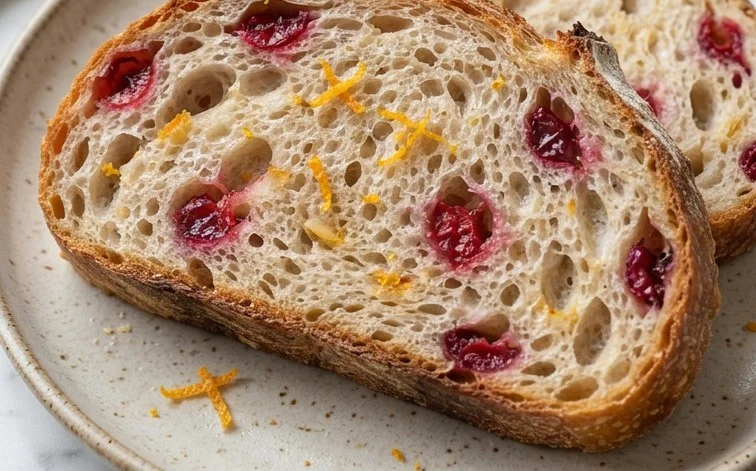
This Cranberry Orange Sourdough Bread is a testament to the magic of simple ingredients transformed by time and natural leavening. The interplay of tart cranberries, aromatic orange zest, and the signature tang of sourdough creates a loaf that’s both festive and deeply satisfying. It’s a bread that looks beautiful, smells amazing, and tastes even better. Don’t be intimidated by sourdough; the process is patient but rewarding, and the result is a loaf you’ll be proud to share. It’s wonderful served simply with butter, or toasted for breakfast. For a variation, try adding a handful of chopped walnuts for extra crunch or a pinch of cinnamon for warmth.
Frequently Asked Questions:
Can I make this bread without a sourdough starter?
This recipe specifically relies on an active sourdough starter for its leavening and characteristic tang. If you don’t have one, you’d need to adapt it significantly, likely using commercial yeast and adjusting hydration and fermentation times. However, the soul of this Cranberry Orange Sourdough Bread comes from the starter.
How should I store this bread?
Once completely cooled, store the bread in a bread bag or a loosely closed plastic bag at room temperature for up to 3 days. For longer storage, you can slice the bread and freeze it in an airtight container for up to 3 months. Just toast the slices directly from frozen.
What makes the cranberries and orange so flavorful?
The dried cranberries rehydrate slightly during the baking process, softening their chew and releasing a pleasant tartness. The orange zest, added just before baking, infuses the dough with its bright, aromatic oils. Together, they provide a beautiful contrast to the sourdough’s tang and a lovely festive feel.
Cranberry Orange Sourdough Bread
A delicious and tangy sourdough bread bursting with the flavors of cranberry and orange.
Ingredients
-
50 g active sourdough starter
-
50 g bread flour
-
50 g water
-
350 g water
-
500 g bread flour
-
10 g salt
-
100 g dried cranberries
-
zest of one orange
-
20 g honey or maple syrup, optional
Instructions
-
Step 1
For the levain: In a small bowl, combine 50 g active sourdough starter, 50 g bread flour, and 50 g water. Mix well and let it ferment at room temperature for 4-8 hours, or until doubled in size and bubbly. -
Step 2
Autolyse: In a large bowl, combine 500 g bread flour and 350 g water. Mix until just combined and no dry flour remains. Let it rest for 30 minutes. -
Step 3
Add Levain and Salt: Add the ripe levain and 10 g salt to the autolysed dough. Mix thoroughly until well incorporated. -
Step 4
Bulk Fermentation: Perform a series of stretch and folds every 30 minutes for the first 2 hours. Incorporate the dried cranberries and orange zest during the last set of stretch and folds. Continue bulk fermentation for another 2-4 hours, or until the dough has increased in volume by about 50% and shows signs of aeration. -
Step 5
Shaping and Cold Proofing: Gently shape the dough into a boule or batard. Place it seam-side up in a floured banneton. Cover and refrigerate for 12-24 hours. -
Step 6
Baking: Preheat your oven with a Dutch oven to 450°F (230°C). Carefully turn the dough out onto parchment paper, score it, and transfer it into the preheated Dutch oven. Bake with the lid on for 20 minutes, then remove the lid and bake for another 20-25 minutes, or until the crust is deep golden brown and the internal temperature reaches 205-210°F (96-99°C). -
Step 7
Cooling: Let the bread cool completely on a wire rack before slicing.
Important Information
Nutrition Facts (Per Serving)
It is important to consider this information as approximate and not to use it as definitive health advice.
Allergy Information
Please check ingredients for potential allergens and consult a health professional if in doubt.
Leave a Comment