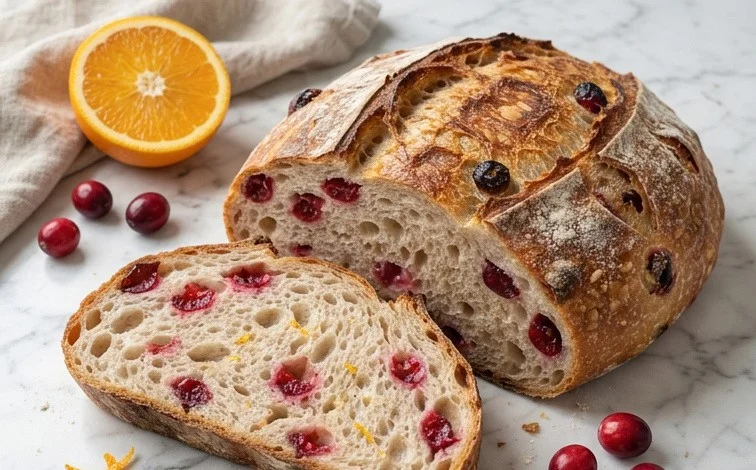
Cranberry Orange Sourdough Bread brings a delightful combination of tart cranberries and bright orange zest into a naturally leavened loaf. This bread is a fantastic way to bring a little sunshine and tartness into your day, especially during colder months. The tang of the sourdough starter pairs beautifully with the bright, zesty notes of orange and the chewy sweetness of dried cranberries. It makes for a wonderful breakfast toast, a delightful addition to a cheese board, or simply a comforting snack. Making sourdough can seem a bit daunting at first, but this recipe breaks it down into manageable steps. Remember, sourdough is a living thing, so patience and observation are key. Don’t be discouraged if your first loaf isn’t perfect; each bake is a learning experience, and this cranberry orange sourdough bread is very forgiving.
Levain Build
This is where we get our sourdough starter nice and active and ready to work its magic. It’s essentially feeding your starter a specific amount of flour and water to create a dough that’s bubbly and eager to leaven the bread.
Prepare the Levain:
In a small bowl or jar, combine the 50 g active sourdough starter, 50 g bread flour, and 50 g water. Mix this thoroughly until there are no dry pockets of flour. Cover the bowl loosely and let it sit at room temperature for 4-8 hours, or until it has doubled in size, is bubbly, and smells pleasant.
Ingredients:
- 50 g active sourdough starter
- 50 g bread flour
- 50 g water
- 350 g water
- all of the levain
- 500 g bread flour
- 10 g salt
- 100 g dried cranberries
- zest of one orange
- 20 g honey or maple syrup, optional
Cranberry Orange Sourdough Bread
This cranberry orange sourdough bread is a fantastic way to bring a little sunshine and tartness into your day, especially during colder months. The tang of the sourdough starter pairs beautifully with the bright, zesty notes of orange and the chewy sweetness of dried cranberries. It makes for a wonderful breakfast toast, a delightful addition to a cheese board, or simply a comforting snack. Making sourdough can seem a bit daunting at first, but this recipe breaks it down into manageable steps. Remember, sourdough is a living thing, so patience and observation are key. Don’t be discouraged if your first loaf isn’t perfect; each bake is a learning experience, and this bread is very forgiving.
Levain Build
This is where we get our sourdough starter nice and active and ready to work its magic. It’s essentially feeding your starter a specific amount of flour and water to create a dough that’s bubbly and eager to leaven the bread.
- Prepare the Levain: In a small bowl or jar, combine the 50 g active sourdough starter, 50 g bread flour, and 50 g water. Mix this thoroughly until there are no dry pockets of flour. Cover the bowl loosely and let it sit at room temperature for 4-8 hours, or until it has doubled in size, is bubbly, and smells pleasantly sour. The exact time will depend on the warmth of your kitchen and the activity of your starter. You want it to be active and lively before you proceed to the main dough. This is your levain.
Mixing the Dough
Now we’ll bring everything together to form our main dough. This stage involves combining the levain with the rest of the ingredients and developing the gluten structure.
- Autolyse: In a large mixing bowl, combine the 350 g water with the 500 g bread flour. Mix until just combined; it will be shaggy and rough. Cover the bowl and let it rest for 30 minutes to 1 hour. This process, called autolyse, allows the flour to fully hydrate, which helps develop gluten with less kneading and makes the dough more extensible.
- Incorporate Levain and Salt: After the autolyse period, add all of the prepared levain to the dough. Dimple it in with your fingers. Then, sprinkle the 10 g salt over the dough. Add the optional 20 g honey or maple syrup at this stage if you’re using it for a touch of sweetness. Begin mixing the dough by hand, squeezing and folding it in the bowl. Continue mixing until the levain and salt are fully incorporated and the dough starts to feel a bit more cohesive. It will still be sticky.
Bulk Fermentation and Inclusions
This is the longest stage of sourdough making, where the dough ferments and develops flavor and strength. We’ll also incorporate the add-ins during this phase.
- Develop Strength and Add Inclusions: For the next 3-4 hours (or longer, depending on your room temperature), perform a series of stretch and folds every 30-60 minutes. To do this, wet your hands slightly, grab one side of the dough, stretch it upwards, and fold it over onto itself. Rotate the bowl and repeat this process with all four sides of the dough. This builds gluten strength. About 1 hour before you plan to do your final stretch and fold, gently incorporate the 100 g dried cranberries and the zest of one orange. Try to distribute them as evenly as possible without overworking the dough. The dough should become noticeably smoother and more elastic with each set of folds. You’re looking for signs of fermentation like a slight increase in volume and some visible bubbles on the surface.
Shaping and Proofing
Once the bulk fermentation is complete, we’ll shape the dough and let it rest to develop its final structure before baking.
- Pre-shape and Bench Rest: Gently tip the dough out onto a lightly floured surface. Try not to deflate it too much. Lightly shape the dough into a rough round, being careful not to degas it. Let it rest, uncovered, for 20-30 minutes. This bench rest allows the gluten to relax, making the final shaping easier.
- Final Shape: After the bench rest, perform your final shape. Whether you’re making a round loaf (boule) or an oval loaf (bâtard), aim to create surface tension. For a boule, gently pull the edges towards the center, then flip the dough over and use your hands to cup and rotate it against the surface, creating a taut skin on top. Place the shaped dough seam-side up into a floured proofing basket (banneton) or a bowl lined with a floured tea towel.
- Cold Proof: Cover the proofing basket tightly with plastic wrap or place it inside a plastic bag. Refrigerate the dough for at least 12 hours, and up to 24 hours. This slow, cold fermentation develops a more complex flavor and makes the dough easier to score and handle.
Baking
The final, exciting stage! Baking sourdough in a Dutch oven or similar covered pot creates the ideal steamy environment for a great crust and oven spring.
- Preheat Oven and Dutch Oven: About 45 minutes before you plan to bake, place a Dutch oven (or a large oven-safe pot with a lid) into your oven and preheat it to 230°C (450°F). It’s essential that the Dutch oven is fully preheated.
- Score and Bake: Carefully remove the hot Dutch oven from the oven. Gently invert your cold dough onto a piece of parchment paper, then use a sharp knife or a lame to score the top of the loaf. A simple slash or a more decorative pattern works well. Carefully lift the parchment paper with the dough and lower it into the hot Dutch oven. Place the lid back on the Dutch oven. Bake for 20 minutes with the lid on.
- Finish Baking: After 20 minutes, carefully remove the lid from the Dutch oven. Reduce the oven temperature to 220°C (425°F). Continue to bake for another 20-25 minutes, or until the crust is a deep golden brown and the internal temperature of the bread reaches at least 93°C (200°F). The wonderful aroma of cranberry and orange will fill your kitchen!
- Cooling: Once baked, carefully remove the bread from the Dutch oven and place it on a wire rack to cool completely. This is a tough step, as the bread smells amazing, but it’s crucial for the internal structure to set properly. Resist the urge to slice into it for at least 2-3 hours.
Conclusion:
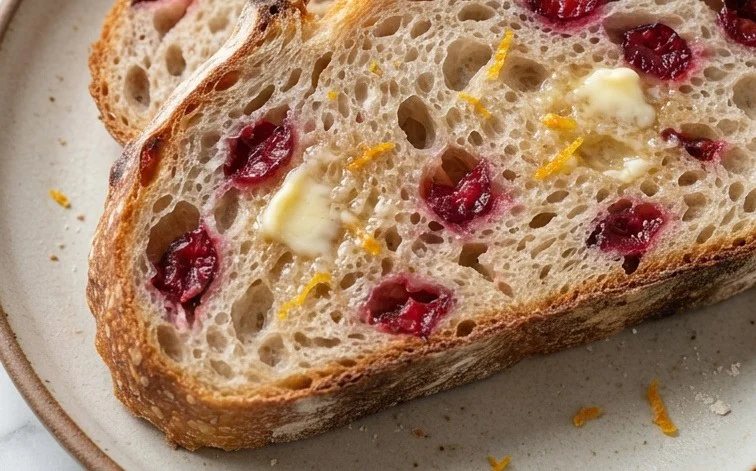
This Cranberry Orange Sourdough Bread is a rewarding bake that brings together tangy, sweet, and citrusy notes in a beautifully risen loaf. The chewiness of the cranberries and the subtle perfume of orange zest make every slice a pleasure, perfect for your morning table or alongside a warm drink. Don’t shy away from sourdough; this recipe is designed to guide you through the process, and the final result is well worth the effort. Experiment with the optional honey or maple syrup for a touch more sweetness, but I find it bakes beautifully without it too. Enjoy this loaf warm from the oven, toasted with butter, or as a base for your favorite toppings.
Frequently Asked Questions:
Can I use fresh cranberries instead of dried?
You can use fresh cranberries, but reduce the amount to about 60-70g, as they contain more moisture and can make the dough sticky. It’s best to toss them with a little flour before adding them to the dough to help prevent them from sinking.
How should I store this bread?
Once completely cooled, store the Cranberry Orange Sourdough Bread in a bread box or a paper bag at room temperature for up to 3-4 days. For longer storage, you can slice it and freeze it in an airtight container for up to 3 months.
What kind of flour is best for this recipe?
Bread flour is recommended for its higher protein content, which develops the gluten structure needed for a good sourdough rise. If you can’t find bread flour, you can substitute with all-purpose flour, but the crumb might be a bit softer and the rise slightly less pronounced.
Cranberry Orange Sourdough Bread
A delightfully tangy and fragrant sourdough bread infused with the bright flavors of cranberries and orange zest.
Ingredients
-
50 g active sourdough starter
-
50 g bread flour
-
50 g water
-
350 g water
-
all of the levain
-
500 g bread flour
-
10 g salt
-
100 g dried cranberries
-
zest of one orange
-
20 g honey or maple syrup, optional
Instructions
-
Step 1
Prepare the levain: Combine 50g active sourdough starter, 50g bread flour, and 50g water. Let it ferment at room temperature for 4-12 hours until bubbly and doubled. -
Step 2
Autolyse: In a large bowl, combine 500g bread flour and 350g water. Mix until just combined. Let rest for 30 minutes. -
Step 3
Mix dough: Add the prepared levain and 10g salt to the autolysed dough. Mix thoroughly until well incorporated. Perform 3-4 sets of stretch and folds every 30 minutes. -
Step 4
Incorporate add-ins: Gently fold in 100g dried cranberries and the zest of one orange. If using, add 20g honey or maple syrup. -
Step 5
Bulk fermentation: Allow the dough to ferment at room temperature for 3-5 hours, or until it has increased in volume by about 30-50% and shows signs of aeration. -
Step 6
Shaping and proofing: Shape the dough into a boule or batard. Place in a banneton and refrigerate for 12-24 hours for cold proofing. -
Step 7
Baking: Preheat oven with a Dutch oven to 475°F (245°C). Score the dough and bake covered for 20 minutes, then uncovered for another 25-30 minutes, or until the crust is deep golden brown.
Important Information
Nutrition Facts (Per Serving)
It is important to consider this information as approximate and not to use it as definitive health advice.
Allergy Information
Please check ingredients for potential allergens and consult a health professional if in doubt.


Leave a Comment