
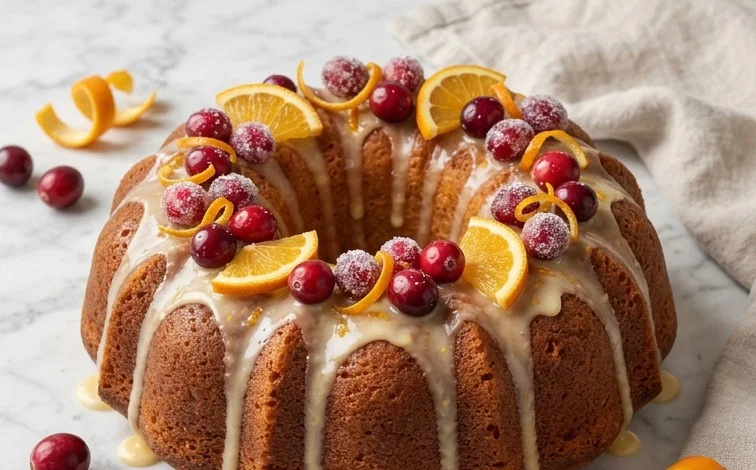
This Cranberry Orange Bundt cake is a wonderful treat, especially when the weather turns cooler and we start thinking about cozy baking. The bright zest and juice from the orange, combined with the tart burst of fresh cranberries, make for a beautifully balanced cake. It’s moist, fragrant, and has a lovely texture thanks to the sour cream. Making a Bundt cake is always a bit of an event, and the beautiful ring shape means it looks impressive with minimal fuss, especially with a simple drizzle of icing. I like to make this for family gatherings or just as a special weekend bake. The combination of tart cranberries and sweet orange is a classic pairing that just feels right for autumn and winter celebrations. It’s a forgiving cake to make, and the visual appeal of the Bundt shape means it’s always a showstopper on the dessert table. Even if you’re new to baking, a Bundt cake is a great way to impress without needing advanced decorating skills. The ingredients are simple and readily available, making this Cranberry Orange Bundt cake an accessible recipe for any home baker wanting to create something special.
Ingredients:
1 1/2 cups flour
2 teaspoons baking powder
1/4 teaspoon salt
1 cup sour cream
1 cup sugar
3 large eggs
zest of one orange – about 1 tablespoon
juice of an orange
1/2 cup butter
2 tablespoons sugar
1 1/2 cups fresh cranberries
For the Icing:
1 cup powdered sugar
2 – 3 tablespoons water, milk or orange juice.
Making the Cake Batter
The first step is to get your dry ingredients ready. In a medium bowl, whisk together the 1 1/2 cups of flour, 2 teaspoons of baking powder, and 1/4 teaspoon of salt. Whisking them together helps to distribute the leavening agent and salt evenly throughout the flour, ensuring a consistent rise and flavor in your cake. Set this bowl aside. Next, in a separate large bowl, you’ll cream the butter and sugar. I like to use softened butter for this, as it makes it much easier to get a light and fluffy mixture. Take your 1/2 cup of butter and 2 tablespoons of sugar and beat them together until the mixture is pale and creamy. This step is important for incorporating air into the batter, which contributes to a tender crumb. You can use an electric mixer for this, or a whisk and some elbow grease.
Once the butter and sugar are well combined, add the sour cream and eggs one at a time. Mix well after each addition, making sure everything is fully incorporated. Next, add the zest and juice of one orange to the wet ingredients. The orange zest provides a wonderful fragrance and a concentrated citrus punch that balances the tartness of the cranberries. Stir until just combined. Now, gradually add the dry ingredients to the wet ingredients, mixing on low speed or by hand until just combined. Be careful not to overmix, as this can lead to a tough cake. Overmixing develops the gluten in the flour too much. Gently fold in the fresh cranberries. It’s helpful to toss the cranberries with a tablespoon of the flour mixture before adding them to the batter; this prevents them from sinking to the bottom of the cake.
Preparing the Pan and Baking
Preheat your oven to 350°F (175°C). It’s crucial to preheat the oven properly so the cake bakes evenly from the moment it goes in. Grease and flour your Bundt pan thoroughly. For a Bundt pan, paying extra attention to all the nooks and crannies is key to ensuring the cake releases cleanly. You can use butter or shortening for greasing, and then dust it with flour, tapping out any excess. Alternatively, a baking spray designed for Bundt pans works well. Pour the cake batter into the prepared Bundt pan, spreading it evenly. Tap the pan gently on the counter a couple of times to release any large air bubbles. Bake for 45-55 minutes, or until a wooden skewer or toothpick inserted into the center of the cake comes out clean. The baking time can vary depending on your oven, so start checking around the 45-minute mark. Let the cake cool in the pan for about 15-20 minutes before inverting it onto a wire rack to cool completely. This resting period in the pan allows the cake to firm up slightly, reducing the risk of it breaking when you turn it out.
Making the Icing and Finishing
While the cake is cooling, prepare the icing. In a small bowl, whisk together the 1 cup of powdered sugar with 2 to 3 tablespoons of water, milk, or orange juice. Start with 2 tablespoons and add more liquid, a teaspoon at a time, until you reach your desired drizzling consistency. You want it thin enough to drizzle but thick enough not to run off the cake completely. Once the cake is completely cool, drizzle the icing over the top of the Bundt cake. Let the icing set slightly before slicing and serving. For an extra touch, you can garnish the cake with a few extra fresh cranberries or some orange zest. This Cranberry Orange Bundt cake is best enjoyed within a few days of baking and can be stored at room temperature in an airtight container.
Cranberry Orange Bundt Cake
This Cranberry Orange Bundt cake is a wonderful treat, especially when the weather turns cooler and we start thinking about cozy baking. The bright zest and juice from the orange, combined with the tart burst of fresh cranberries, make for a beautifully balanced cake. It’s moist, fragrant, and has a lovely texture thanks to the sour cream. Making a Bundt cake is always a bit of an event, and the beautiful ring shape means it looks impressive with minimal fuss, especially with a simple drizzle of icing. I like to make this for family gatherings or just as a special weekend bake.
Ingredients:
- 1 1/2 cups flour
- 2 teaspoons baking powder
- 1/4 teaspoon salt
- 1 cup sour cream
- 1 cup sugar
- 3 large eggs
- zest of one orange – about 1 tablespoon
- juice of an orange
- 1/2 cup butter
- 2 tablespoons sugar
- 1 1/2 cups fresh cranberries
- For the Icing:
- 1 cup powdered sugar
- 2 – 3 tablespoons water, milk or orange juice.
Making the Cake Batter
The first step is to get your dry ingredients ready. In a medium bowl, whisk together the 1 1/2 cups of flour, 2 teaspoons of baking powder, and 1/4 teaspoon of salt. Whisking them together helps to distribute the leavening agent and salt evenly throughout the flour, ensuring a consistent rise and flavor in your cake. Set this bowl aside.
Next, in a separate large bowl, you’ll cream the butter and sugar. I like to use softened butter for this, as it makes it much easier to get a light and fluffy mixture. Take your 1/2 cup of butter and the 2 tablespoons of sugar. Beat them together with an electric mixer until the mixture is pale and creamy. This process incorporates air, which contributes to a tender cake crumb.
Now, it’s time to add the eggs, one at a time, beating well after each addition. This ensures each egg is fully incorporated before you add the next. After the eggs are mixed in, you’ll add the sour cream, the zest of one orange (which is about 1 tablespoon), and the juice of the orange. I usually like to get my orange zest and juice before I start creaming the butter and sugar, just to have everything prepped and ready. Mix these wet ingredients until they are just combined. Don’t overmix at this stage.
Now, we’ll gradually add the dry ingredients to the wet ingredients. Add about half of the flour mixture to the wet ingredients and mix on low speed until just combined. Then, add the remaining dry ingredients and mix again until there are no dry streaks of flour visible. Be careful not to overmix the batter once the flour is added, as this can develop the gluten too much and result in a tough cake. Just mix until everything comes together.
Finally, gently fold in the fresh cranberries. I like to give the cranberries a quick rinse and pat them dry before adding them. You don’t need to chop them; their natural shape adds a lovely texture and bursts of flavor throughout the cake. Make sure they are evenly distributed throughout the batter.
Baking the Bundt Cake
Preheating your oven is essential for even baking. Set your oven to 350 degrees Fahrenheit (175 degrees Celsius). Preparing your Bundt pan is also a very important step to ensure your cake releases cleanly. I always generously grease and flour my Bundt pan. You can use butter or baking spray for greasing, and then dust it thoroughly with flour, making sure to get into all the nooks and crannies. Tap out any excess flour. Some people also like to use a baking spray that contains flour.
Pour the prepared batter evenly into the greased and floured Bundt pan. Smooth the top with a spatula.
Place the Bundt pan in the preheated oven. Bake for about 35 to 45 minutes. The exact baking time can vary depending on your oven and the size and material of your Bundt pan. You’ll know the cake is done when a wooden skewer or toothpick inserted into the center of the cake comes out clean, with no wet batter attached. If you see any moist crumbs, it’s perfectly fine and usually indicates a moist cake. If you see wet batter, continue baking for a few more minutes and check again.
Once the cake is baked, carefully remove it from the oven. Let the cake cool in the Bundt pan on a wire rack for about 10 to 15 minutes. This cooling period is important because it allows the cake to set up slightly, making it less likely to break when you invert it. After the initial cooling in the pan, carefully invert the Bundt cake onto the wire rack. If you’ve greased and floured your pan well, it should release easily. Let the cake cool completely on the wire rack before you decorate it. Trying to ice a warm cake will result in the icing melting and sliding off.
Making the Icing and Finishing Touches
While the cake is cooling, you can prepare the simple icing. In a small bowl, combine the 1 cup of powdered sugar. Gradually add 2 to 3 tablespoons of your chosen liquid – water, milk, or orange juice. I prefer using orange juice for an extra hint of citrus flavor. Start with 2 tablespoons and whisk until you have a smooth, drizzly consistency. If it’s too thick, add a little more liquid, a teaspoon at a time, until it’s the consistency you like. You want it thin enough to drizzle easily but not so thin that it runs off the cake entirely.
Once the cake is completely cool, you can drizzle the icing over the top. You can use a spoon or a piping bag to create a pretty pattern. You can also add a few extra fresh cranberries or a bit of orange zest on top of the icing for decoration, if you like.
This Cranberry Orange Bundt cake keeps well at room temperature for a few days if stored in an airtight container. It also freezes well; just wrap it tightly in plastic wrap and then aluminum foil. Enjoy this delightful cake with a cup of tea or coffee!
Conclusion:
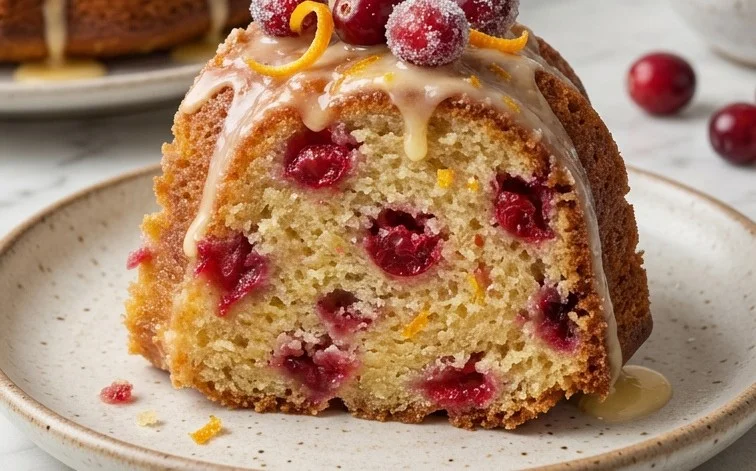
This Cranberry Orange Bundt cake is a delightful bake that brings together the tartness of cranberries and the bright citrus notes of orange in a perfectly moist and fragrant cake. The sour cream in the batter contributes to its tender crumb and lovely texture, making it a real treat for any occasion. Its beautiful Bundt shape means it always looks impressive with minimal effort, and a simple drizzle of icing is all you need to finish it off. It’s a wonderfully comforting cake, ideal for cozy afternoons or for sharing at family gatherings. Don’t be intimidated by the Bundt pan; the recipe is straightforward and forgiving, making it a great choice for bakers of all levels.
Serving Suggestions:
This cake is wonderful on its own with a cup of tea or coffee. For a more decadent dessert, serve slices warm with a dollop of whipped cream or a scoop of vanilla ice cream. A small scattering of extra fresh cranberries or a dusting of powdered sugar also makes for a beautiful presentation.
Variations:
If fresh cranberries are not available, you can use frozen cranberries, just don’t thaw them before adding to the batter. For a different citrus note, try using lemon zest and juice instead of orange. A pinch of cinnamon or nutmeg can add a warm spice to the cake, especially nice for holiday baking.
Frequently Asked Questions:
How do I prevent my Bundt cake from sticking?
Ensuring your Bundt pan is thoroughly greased and floured is key. Pay close attention to every groove and crevice. Using a baking spray specifically designed for Bundt pans can also help. Letting the cake cool in the pan for 15-20 minutes before inverting it also helps it release cleanly.
Can I use dried cranberries instead of fresh?
Yes, you can, but you’ll need to adjust the amount and potentially the liquid. Dried cranberries are sweeter and chewier. If using dried, you might want to reduce the sugar slightly and consider soaking them in a little orange juice for about 15 minutes before draining and tossing them in flour. They will provide a different texture and a more concentrated sweetness compared to fresh ones.
How long does this Cranberry Orange Bundt cake last?
Stored in an airtight container at room temperature, the cake should stay fresh for about 3-4 days. If your kitchen is very warm, you might consider refrigerating it, but be aware that refrigeration can sometimes dry out cakes. Ensure it’s fully cooled before storing.
Cranberry Orange Bundt Cake
A moist and flavorful bundt cake bursting with the bright, festive flavors of cranberry and orange, finished with a simple glaze.
Ingredients
-
1 1/2 cups flour
-
2 teaspoons baking powder
-
1/4 teaspoon salt
-
1 cup sour cream
-
1 cup sugar
-
3 large eggs
-
zest of one orange – about 1 tablespoon
-
juice of an orange
-
1/2 cup butter, softened
-
2 tablespoons sugar
-
1 1/2 cups fresh cranberries
-
1 cup powdered sugar
-
2 – 3 tablespoons water, milk or orange juice
Instructions
-
Step 1
Preheat oven to 350°F (175°C). Grease and flour a 10-cup bundt pan. -
Step 2
In a medium bowl, whisk together flour, baking powder, and salt. Set aside. -
Step 3
In a large bowl, cream together the softened butter and 1 cup sugar until light and fluffy. Beat in eggs one at a time, then stir in orange zest and orange juice. -
Step 4
Gradually add the dry ingredients to the wet ingredients, alternating with the sour cream, beginning and ending with the dry ingredients. Mix until just combined. -
Step 5
Gently fold in the fresh cranberries and 2 tablespoons of sugar. -
Step 6
Pour batter into the prepared bundt pan and spread evenly. -
Step 7
Bake for 45-55 minutes, or until a wooden skewer inserted into the center comes out clean. -
Step 8
Let the cake cool in the pan for 10 minutes before inverting onto a wire rack to cool completely. -
Step 9
While the cake cools, whisk together powdered sugar and 2-3 tablespoons of water, milk, or orange juice until a smooth glaze forms. Add more liquid if needed for desired consistency. -
Step 10
Drizzle the glaze over the cooled bundt cake.
Important Information
Nutrition Facts (Per Serving)
It is important to consider this information as approximate and not to use it as definitive health advice.
Allergy Information
Please check ingredients for potential allergens and consult a health professional if in doubt.

Leave a Comment