
This Cranberry Orange Bundt Cake is a perfect treat for the holidays or any time you crave a bright, citrusy, and slightly tart dessert. The combination of tart cranberries and zesty orange is classic for a reason, and baking it in a Bundt pan gives it an elegant presentation with minimal effort. It’s a cake that looks as good as it tastes, and it’s surprisingly straightforward to make. The tender crumb, studded with bursts of cranberry, is absolutely delightful. Ingredients: 1 1/2 cups flour 2 teaspoons baking powder 1/4 teaspoon salt 1 cup sour cream 1 cup sugar 3 large eggs zest of one orange – about 1 tablespoon juice of an orange 1/2 cup butter 2 tablespoons sugar 1 1/2 cups fresh cranberries For the Icing: 1 cup powdered sugar 2 – 3 tablespoons water, milk or orange juice. Instructions: Preparing the Bundt Pan and Dry Ingredients Before you even think about mixing wet ingredients, the first and most important step is to prepare your Bundt pan. A Bundt pan has a lot of nooks and crannies, and a well-greased and floured pan is key to ensuring your beautiful cake releases cleanly. I like to use softened butter to generously grease the inside of the pan, making sure to get into every single ridge and the center tube. Then, I dust the greased pan with flour, tapping out any excess. This double coating ensures a smooth, intact cake. Next, in a medium bowl, whisk together your dry ingredients: 1 1/2 cups of flour, 2 teaspoons of baking powder, and 1 teaspoon of salt. Whisking them together ensures the leavening agent and salt are evenly distributed, which helps the cake rise evenly. In a separate large bowl, cream together the softened butter and sugar until light and fluffy. This process incorporates air, which contributes to the cake’s tender texture. Beat in the eggs one at a time, making sure each is fully incorporated before adding the next. Stir in the orange zest and juice, which will perfume the batter with that wonderful citrus aroma. Then, alternate adding the dry ingredients and the sour cream to the wet ingredients, beginning and ending with the dry. Mix until just combined; overmixing can lead to a tough cake. Finally, gently fold in the fresh cranberries. Be careful not to crush them too much, as you want those bright bursts of flavor throughout the cake. Pour the batter into your prepared Bundt pan, spreading it evenly. Bake at 350°F (175°C) for 45-55 minutes, or until a wooden skewer inserted into the center comes out clean. Let the cake cool in the pan for 10-15 minutes before inverting it onto a wire rack to cool completely. Once cooled, prepare the simple icing by whisking together powdered sugar and your chosen liquid (water, milk, or orange juice) until smooth. Drizzle the icing over the cooled cake. This Cranberry Orange Bundt Cake is a festive and flavorful bake that brings together seasonal fruits with comforting cake. The tang of the cranberries and the brightness of the orange zest make this cake a refreshing alternative to heavier holiday bakes, while its simple elegance makes it suitable for any occasion.
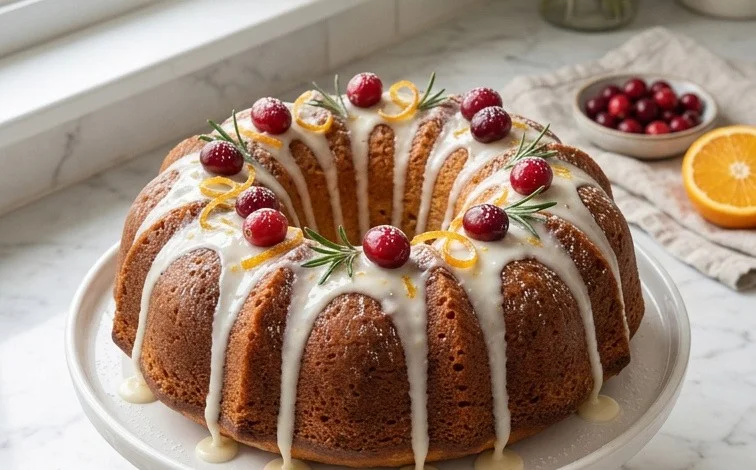
Cranberry Orange Bundt Cake
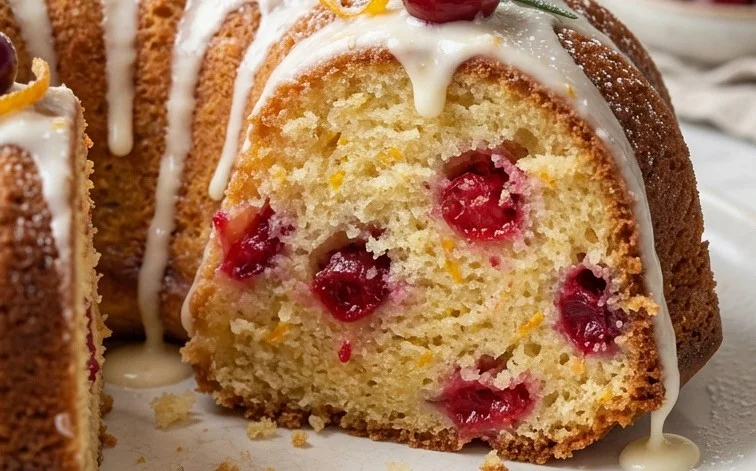
This Cranberry Orange Bundt Cake is a perfect treat for the holidays or any time you crave a bright, citrusy, and slightly tart dessert. The combination of tart cranberries and zesty orange is classic for a reason, and baking it in a Bundt pan gives it an elegant presentation with minimal effort. It’s a cake that looks as good as it tastes, and it’s surprisingly straightforward to make. The tender crumb, studded with bursts of cranberry, is absolutely delightful.
Ingredients:
- 1 1/2 cups flour
- 2 teaspoons baking powder
- 1/4 teaspoon salt
- 1 cup sour cream
- 1 cup sugar
- 3 large eggs
- zest of one orange – about 1 tablespoon
- juice of an orange
- 1/2 cup butter
- 2 tablespoons sugar
- 1 1/2 cups fresh cranberries
- For the Icing:
- 1 cup powdered sugar
- 2 – 3 tablespoons water, milk or orange juice.
Instructions:
Preparing the Bundt Pan and Dry Ingredients
Before you even think about mixing wet ingredients, the first and most important step is to prepare your Bundt pan. A Bundt pan has a lot of nooks and crannies, and a well-greased and floured pan is key to ensuring your beautiful cake releases cleanly. I like to use softened butter to generously grease the inside of the pan, making sure to get into every single ridge and the center tube. Then, I dust the greased pan with flour, tapping out any excess. This double coating ensures a smooth, intact cake. Next, in a medium bowl, whisk together your dry ingredients: 1 1/2 cups of flour, 2 teaspoons of baking powder, and 1/4 teaspoon of salt. Whisking them together helps distribute the leavening agent and salt evenly, which is important for a consistent rise and flavor. Set this bowl aside.
Creaming Butter and Sugar, Adding Eggs and Citrus
In a large bowl, cream together the 1/2 cup of butter and 1 cup of sugar until the mixture is light and fluffy. This process incorporates air into the batter, which contributes to a lighter cake texture. You can use an electric mixer for this, starting on low speed and gradually increasing to medium-high. Once creamy, add the three large eggs one at a time, beating well after each addition. It’s important to ensure each egg is fully incorporated before adding the next to prevent the batter from separating. Next, stir in the zest of one orange, which is about 1 tablespoon. This is where the wonderful orange aroma starts to come through. After the zest, add the juice of one orange. Don’t worry if the mixture looks a little curdled at this point; it will come together as you add the dry ingredients.
Combining Wet and Dry Ingredients, Incorporating Cranberries
Now it’s time to bring the wet and dry ingredients together. You’ll alternate adding portions of the dry ingredient mixture to the wet ingredients, along with the sour cream. Start by adding about one-third of the dry ingredients to the butter-egg mixture and mix on low speed until just combined. Then, add half of the sour cream and mix again until just incorporated. Repeat this process, adding another third of the dry ingredients, then the remaining sour cream, and finally the last of the dry ingredients. Be careful not to overmix the batter once the flour is added; overmixing can develop the gluten too much, resulting in a tough cake. Mix only until no dry streaks of flour remain. Once the batter is smooth and uniform, gently fold in 1 1/2 cups of fresh cranberries and the additional 2 tablespoons of sugar. The extra sugar helps to coat the cranberries, preventing them from sinking to the bottom of the cake and adding a lovely sweet-tart element. Some of the cranberries will break as you fold them in, which is perfectly fine and contributes to the color and flavor throughout the cake.
Baking the Cake
Preheat your oven to 350 degrees Fahrenheit (175 degrees Celsius). Pour the batter evenly into the prepared Bundt pan, smoothing the top if necessary. Place the pan on the center rack of your preheated oven. Bake for approximately 45-55 minutes, or until a wooden skewer or toothpick inserted into the thickest part of the cake comes out clean. The exact baking time can vary depending on your oven and the specifics of your Bundt pan, so start checking around the 45-minute mark. If the top of the cake starts to brown too quickly before it’s cooked through, you can loosely tent it with aluminum foil. Once baked, carefully remove the cake from the oven and let it cool in the pan on a wire rack for about 10-15 minutes. This cooling period in the pan is essential for the cake to set up slightly and makes it easier to invert without breaking.
Cooling and Glazing
After the initial cooling period in the Bundt pan, it’s time to invert the cake onto the wire rack. Place the wire rack over the Bundt pan and, holding them together firmly, quickly flip them over. If you prepared your pan properly, the cake should release with ease. If it seems stuck, gently tap the bottom of the pan and try to ease any sticking points with a thin spatula. Let the cake cool completely on the wire rack before glazing. While the cake cools, prepare the icing. In a small bowl, whisk together 1 cup of powdered sugar with 2 to 3 tablespoons of liquid. You can use water for a simple glaze, milk for a creamier one, or orange juice for an extra punch of citrus flavor. Add the liquid gradually, a tablespoon at a time, until you reach your desired drizzling consistency. It should be thick enough to coat the cake but thin enough to pour. Once the cake is completely cool, drizzle the icing over the top, letting it drip down the sides. You can use a spoon or a piping bag for more control. Allow the icing to set before slicing and serving.
Conclusion:
This Cranberry Orange Bundt Cake truly is a showstopper that’s as delightful to look at as it is to eat. The combination of tart cranberries and fragrant orange makes for a moist cake with a beautiful crumb, perfect for any gathering or just a cozy afternoon treat. Its elegant presentation from the Bundt pan means it requires very little fuss to be dessert-table ready, and the process is straightforward enough for bakers of all levels. Remember to prepare your Bundt pan well to ensure a clean release every time. For serving, this cake is wonderful on its own, but a dollop of whipped cream or a side of fresh berries can be lovely additions. If you want to switch things up, consider adding a teaspoon of cinnamon to the dry ingredients for a warmer spice note, or swap half the cranberries for chopped orange peel for an even more intense citrus flavor. This Cranberry Orange Bundt Cake is a versatile bake that always impresses.
Can I use frozen cranberries instead of fresh?
Yes, you can use frozen cranberries. If using frozen, do not thaw them before folding them into the batter. This prevents them from bleeding their color too much into the cake batter and helps maintain their shape. You might need to add a few extra minutes to the baking time.
How should I store the cake?
Store the cooled cake in an airtight container at room temperature for up to 3 days. If your kitchen is particularly warm, or if you’ve added a cream cheese frosting (a variation not detailed here but possible), it’s best to store it in the refrigerator. Bring it back to room temperature before serving for the best texture and flavor.
Why did my Bundt cake stick to the pan?
The most common reason a Bundt cake sticks is insufficient greasing and flouring of the pan. Make sure to thoroughly coat every nook and cranny with softened butter or shortening, then flour it well, tapping out any excess. Using a good quality, non-stick Bundt pan also helps significantly.
Cranberry Orange Bundt Cake
A moist and flavorful bundt cake bursting with the bright flavors of cranberries and orange, finished with a simple glaze.
Ingredients
-
1 1/2 cups flour
-
2 teaspoons baking powder
-
1/4 teaspoon salt
-
1 cup sour cream
-
1 cup sugar
-
3 large eggs
-
zest of one orange – about 1 tablespoon
-
juice of an orange
-
1/2 cup butter
-
2 tablespoons sugar
-
1 1/2 cups fresh cranberries
-
1 cup powdered sugar
-
2 – 3 tablespoons water
Instructions
-
Step 1
Preheat oven to 350°F (175°C). Grease and flour a 10-cup bundt pan. -
Step 2
In a large bowl, whisk together flour, baking powder, and salt. -
Step 3
In a separate bowl, cream together softened butter and 1 cup sugar until light and fluffy. Beat in eggs one at a time, then stir in orange zest and orange juice. -
Step 4
Add sour cream to the butter mixture and mix until well combined. -
Step 5
Gradually add the dry ingredients to the wet ingredients, mixing until just combined. Fold in the fresh cranberries and 2 tablespoons of sugar. -
Step 6
Pour the batter into the prepared bundt pan and bake for 50-60 minutes, or until a wooden skewer inserted into the center comes out clean. -
Step 7
Let the cake cool in the pan for 10-15 minutes before inverting it onto a wire rack to cool completely. -
Step 8
While the cake cools, whisk together powdered sugar and 2 tablespoons of water. Add more liquid a teaspoon at a time until a pourable glaze forms. -
Step 9
Drizzle the glaze over the cooled bundt cake.
Important Information
Nutrition Facts (Per Serving)
It is important to consider this information as approximate and not to use it as definitive health advice.
Allergy Information
Please check ingredients for potential allergens and consult a health professional if in doubt.

Leave a Comment