
Coquito is a creamy, spiced coconut drink that’s a staple during the holidays in Puerto Rico and many other Latin American households. It’s incredibly rich and flavorful, tasting like pure tropical indulgence in a glass. While traditionally made with eggs, this version uses a delightful blend of milks and coconut to achieve that signature smooth texture and festive taste without them. The aroma of cinnamon and nutmeg fills the kitchen as it comes together, a sure sign that something special is brewing. Ingredients: 1 (14-ounce) can sweetened condensed milk 1 (15-ounce) can cream of coconut (like Coco Lopez or Goya) 1 (12-ounce) can evaporated milk 1 (13.5-ounce) can of coconut milk 2 teaspoons vanilla extract, or 1 vanilla bean, split and seeded 2 whole cinnamon sticks 1/2 teaspoon grated nutmeg 1 to 2 cups apple juice Grated nutmeg or ground cinnamon for garnish (optional) Making the Coquito Base The magic of Coquito lies in its luxurious texture, achieved by combining different types of dairy and coconut products. We start with the foundation: sweetened condensed milk. This brings sweetness and a lovely thick consistency. Next, the cream of coconut is essential. It’s much thicker and sweeter than regular coconut milk, providing that unmistakable coconut flavor and a silky mouthfeel that’s key to Coquito. Don’t confuse it with regular coconut milk; cream of coconut is specifically designed for desserts and drinks and usually comes in a can that is shorter and wider than a standard can of coconut milk. It’s this cream of coconut that gives coquito its signature richness. The evaporated milk adds body without extra sweetness, balancing the condensed milk, while the regular coconut milk contributes a lighter coconut essence and helps thin the mixture to a drinkable consistency. Together, these milks create the perfect creamy base for our beloved Puerto Rican eggnog.
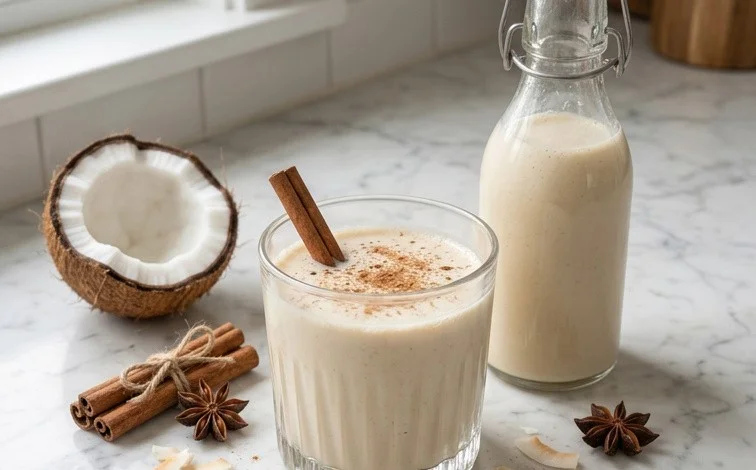
Coquito (Puerto Rican Coconut Eggnog)
Coquito is a creamy, spiced coconut drink that’s a staple during the holidays in Puerto Rico and many other Latin American households. It’s incredibly rich and flavorful, tasting like pure tropical indulgence in a glass. While traditionally made with eggs, this version uses a delightful blend of milks and coconut to achieve that signature smooth texture and festive taste without them. The aroma of cinnamon and nutmeg fills the kitchen as it comes together, a sure sign that something special is brewing.
Ingredients:
- 1 (14-ounce) can sweetened condensed milk
- 1 (15-ounce) can cream of coconut (like Coco Lopez or Goya)
- 1 (12-ounce) can evaporated milk
- 1 (13.5-ounce) can of coconut milk
- 2 teaspoons vanilla extract, or 1 vanilla bean, split and seeded
- 2 whole cinnamon sticks
- 1/2 teaspoon grated nutmeg
- 1 to 2 cups apple juice
- Grated nutmeg or ground cinnamon for garnish (optional)
Making the Coquito Base
The magic of Coquito lies in its luxurious texture, achieved by combining different types of dairy and coconut products. We start with the foundation: sweetened condensed milk. This brings sweetness and a lovely thick consistency. Next, the cream of coconut is essential. It’s much thicker and sweeter than regular coconut milk, providing that unmistakable coconut flavor and a silky mouthfeel that’s key to Coquito. Don’t confuse it with regular coconut milk; cream of coconut is specifically designed for desserts and drinks and usually comes in a can.
Then, we add evaporated milk. This is a concentrated milk product that has had about 60% of its water content removed. It adds richness and a creamy body without thinning out the mixture too much. To complement the cream of coconut and add another layer of coconut flavor, we include a can of regular coconut milk. This balances the richness and ensures a well-rounded coconut profile.
Infusing the Flavors
For the aromatic elements, vanilla is non-negotiable. If you have a vanilla bean, splitting it and scraping out the seeds will give you the most intense, pure vanilla flavor. However, good quality vanilla extract works beautifully as well, providing that classic warmth. We also add whole cinnamon sticks and freshly grated nutmeg. Grating nutmeg fresh is a game-changer for its aroma and pungent flavor, far superior to pre-ground. Using whole cinnamon sticks allows their flavor to infuse gently without making the drink overly spicy. These spices are crucial for that distinct, festive taste we associate with Coquito.
Assembling and Chilling
Now for the assembly. This is where the magic happens, and it’s remarkably simple. All the ingredients, except for the apple juice and garnish, go into a blender.
Step 1: Combine the Liquids and Spices
Pour the entire cans of sweetened condensed milk, cream of coconut, evaporated milk, and coconut milk into a blender. Add the vanilla extract (or the scraped seeds and pod from your vanilla bean). Toss in the two whole cinnamon sticks and the 1/2 teaspoon of grated nutmeg. If you are using the vanilla bean, you can add the split pod to the blender as well to let its flavor infuse.
Step 2: Blend Until Smooth
Secure the lid on your blender and blend on medium speed for about 1 to 2 minutes. You want to ensure everything is thoroughly combined and that the mixture is perfectly smooth. If you used a vanilla bean pod, you’ll want to blend long enough to break it down, or you can strain it out later if you prefer. Check for any unblended bits of nutmeg or cinnamon.
Step 3: Infuse with Apple Juice
Once the base is smooth, it’s time to incorporate the apple juice. Start by adding 1 cup of apple juice to the blender. Blend again for about 30 seconds to incorporate it. This step is where you start to adjust the consistency and sweetness. Apple juice adds a subtle fruity note and helps to thin the thick Coquito base to a drinkable consistency. You can add more apple juice, up to another cup, depending on how thick or thin you prefer your Coquito. Taste a small amount (carefully!) after blending to gauge the sweetness and thickness. If it’s too thick, add a little more apple juice and blend briefly.
Step 4: Strain and Chill
This is an important step for achieving the silkiest texture. Pour the blended Coquito through a fine-mesh sieve into a large bowl or pitcher. This will catch any remaining cinnamon stick pieces, vanilla bean seeds if you didn’t want them whole, or any tiny nutmeg flecks that didn’t fully emulsify. Stir the Coquito gently after straining. Cover the container tightly and refrigerate for at least 4 hours, but preferably overnight. This chilling time is absolutely essential. It allows the flavors to meld together beautifully and for the Coquito to thicken to its perfect, luscious consistency. Skipping this step will result in a less flavorful and thinner drink.
Step 5: Serve and Garnish
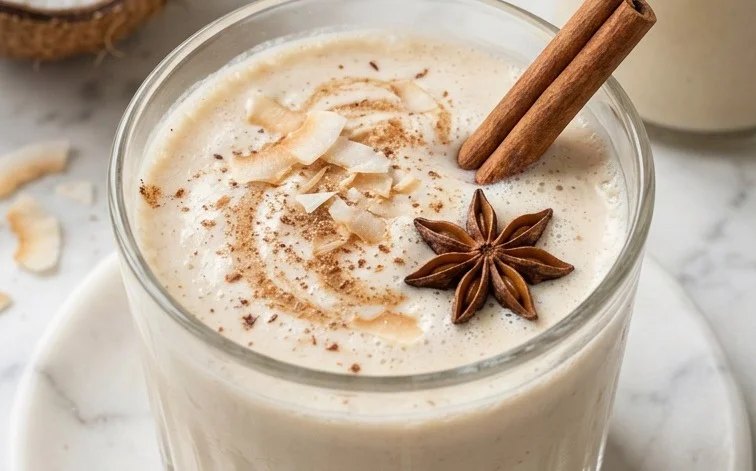
When you’re ready to serve, give the Coquito a good stir, as it might separate slightly in the refrigerator. Pour the chilled Coquito into small glasses. For an extra festive touch, garnish each glass with a sprinkle of grated nutmeg or a dash of ground cinnamon, if desired. The vibrant smell and rich taste are perfect for any celebration.
Coquito is best enjoyed cold, and it can be stored in the refrigerator for up to a week. Just give it a good shake or stir before each serving. Making Coquito is a labor of love, and the resulting creamy, spiced delight is a wonderful way to celebrate.
Conclusion:
This Coquito recipe offers a taste of tropical celebration, perfectly spiced and wonderfully creamy without eggs, making it a favorite for holiday gatherings. Its rich coconut flavor, balanced sweetness, and warming spices like cinnamon and nutmeg make it a truly special drink. Serve it chilled in small glasses, garnished with a sprinkle of grated nutmeg or cinnamon, for an elegant touch. It pairs wonderfully with holiday cookies or simply enjoyed on its own.
FAQs:
Q: How long does Coquito last?
A: Stored in an airtight container in the refrigerator, this Coquito will stay fresh for about 7 to 10 days. The flavors meld and deepen over time, so it’s great to make a day or two ahead of when you plan to serve it.
Q: Can I make Coquito without cream of coconut?
A: While cream of coconut is key to the traditional texture and flavor, if you absolutely cannot find it, you could try using full-fat canned coconut milk along with extra sweetened condensed milk for sweetness and thickness. However, the flavor and mouthfeel will be different from authentic Coquito.
Q: How can I make Coquito thicker or thinner?
A: To make it thicker, you can add a bit more sweetened condensed milk or cream of coconut, or chill it for longer. To make it thinner, add more of the coconut milk or a splash of apple juice until you reach your desired consistency. Remember that it will thicken slightly as it chills.
Coquito (Puerto Rican Coconut Eggnog)
A rich and creamy Puerto Rican coconut eggnog, perfect for holiday celebrations. This non-alcoholic version offers all the classic flavors without the non-alcoholic spirits.
Ingredients
-
1 (14-ounce) can sweetened condensed milk
-
1 (15-ounce) can cream of coconut
-
1 (12-ounce) can evaporated milk
-
1 (13.5-ounce) can of coconut milk
-
2 teaspoons vanilla extract
-
2 whole cinnamon sticks
-
1/2 teaspoon grated nutmeg
-
1 to 2 cups apple juice
-
Grated nutmeg or ground cinnamon for garnish (optional)
Instructions
-
Step 1
In a large saucepan, combine the sweetened condensed milk, cream of coconut, evaporated milk, coconut milk, vanilla extract, cinnamon sticks, and grated nutmeg. -
Step 2
Place the saucepan over medium heat and stir constantly to prevent scorching. -
Step 3
Bring the mixture to a gentle simmer, then reduce the heat to low and continue to cook for about 10-15 minutes, stirring occasionally, allowing the flavors to meld and the mixture to slightly thicken. -
Step 4
Remove the saucepan from the heat. Carefully remove and discard the cinnamon sticks. -
Step 5
Stir in 1 cup of apple juice. Taste and add more apple juice if a thinner consistency is desired. -
Step 6
Pour the coquito into a pitcher or airtight containers. Allow to cool completely at room temperature, then refrigerate for at least 4 hours, or preferably overnight, to allow the flavors to fully develop. -
Step 7
Before serving, stir well. Serve chilled in small glasses, garnished with grated nutmeg or ground cinnamon, if desired.
Important Information
Nutrition Facts (Per Serving)
It is important to consider this information as approximate and not to use it as definitive health advice.
Allergy Information
Please check ingredients for potential allergens and consult a health professional if in doubt.

Leave a Comment