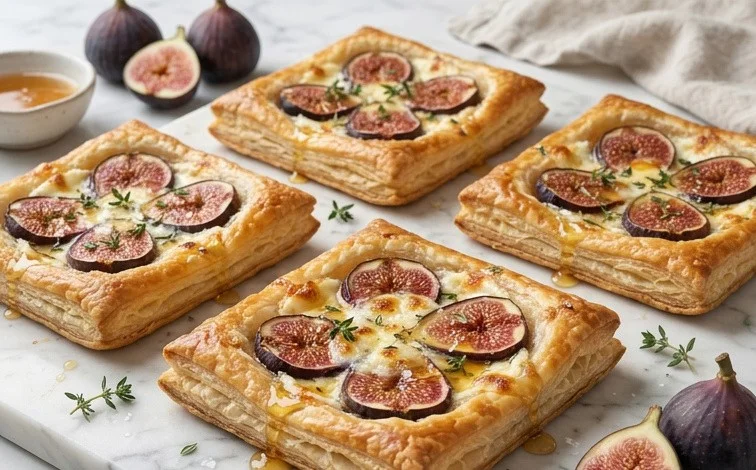
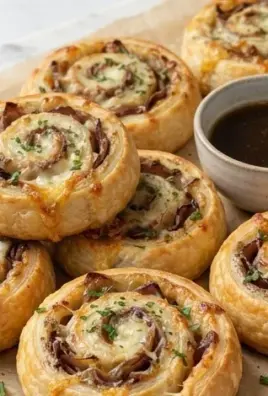
Goat Cheese and Fig Puff Pastry Tarts are a delightful combination of sweet and tangy flavors, encased in flaky, buttery pastry. These tarts are wonderful for a light lunch, a starter for a dinner party, or even just a sophisticated snack. The sweetness of the fig jam plays beautifully against the tangy goat cheese, and the savory caramelized onions add another layer of depth. Using puff pastry makes them feel incredibly elegant, but they’re surprisingly simple to put together. I love how the crisp layers of the pastry contrast with the soft, rich filling. They look impressive on a serving platter, making them a go-to for entertaining when you want to impress without spending hours in the kitchen. The slight char on the caramelized onions and the fresh thyme sprinkled on top really tie everything together.
Ingredients:
- ½ batch rough puff pastry or classic puff pastry (or store-bought, see notes)
- All-purpose flour (for work surface)
- Egg wash (1 egg whisked with 1 teaspoon of water or cream)
- 1 cup fig jam
- ½ cup prepared caramelized onions, rough chopped
- 4 ounces goat cheese
- 6-10 sprigs of fresh thyme.
Goat Cheese and Fig Puff Pastry Tarts
These tarts are wonderful for a light lunch, a starter for a dinner party, or even just a sophisticated snack. The sweetness of the fig jam plays beautifully against the tangy goat cheese, and the savory caramelized onions add another layer of depth. Using puff pastry makes them feel incredibly elegant, but they’re surprisingly simple to put together.
Preparing the Puff Pastry
If you’re making your own rough puff pastry or classic puff pastry, ensure it’s chilled and ready to go. If you’re using store-bought, the key is to let it thaw according to the package directions. Usually, this means taking it out of the freezer and letting it sit at room temperature for about 20-30 minutes until it’s pliable but still cold. Over-thawed puff pastry can become sticky and difficult to handle, leading to less flaky results. I like to work on a lightly floured surface to prevent sticking. You’ll want to cut your pastry into manageable pieces. For these tarts, I usually aim for rectangles about 4×6 inches, but you can adjust this size based on how large you want your individual tarts. Don’t worry too much about perfect symmetry; a rustic look is part of their charm.
Assembling the Tarts
Once your pastry is cut, you’ll want to create a slight border around the edges. This border will puff up during baking and help contain the delicious fillings. To do this, gently score a line about ½ inch in from the edge of each pastry rectangle using the tip of a sharp knife. Be careful not to cut all the way through the pastry. Inside this scored border, spread a generous layer of fig jam. You want enough to cover the base, but not so much that it spills over the sides when it melts and expands. Next, evenly scatter the rough-chopped caramelized onions over the fig jam. The caramelization brings out their natural sweetness and a deep savory note that complements the figs and cheese perfectly. The onions should be in small enough pieces to distribute well without making the tart too bulky.
Adding the Goat Cheese and Thyme
Now for the star of the show, the goat cheese! Crumble the 4 ounces of goat cheese over the caramelized onions. You can be generous here; the creamy tanginess of the goat cheese is a key element. I like to leave some small clumps of cheese, as they melt into lovely pockets of creaminess. Finally, take your fresh thyme sprigs and pluck the leaves off the stems. Scatter these fresh thyme leaves over the top of the goat cheese. The aromatic, slightly peppery notes of thyme are fantastic with both figs and goat cheese, adding a beautiful herbaceous finish. Don’t overdo the thyme; just a light sprinkling is perfect to enhance, not overpower, the other flavors.
Baking to Perfection
Before you bake, it’s essential to give the pastry borders a beautiful golden sheen. This is where the egg wash comes in. Gently brush the scored edges of each tart with the egg wash. This will help them brown nicely and give them that appetizing, glossy finish. Place the prepared tarts on a baking sheet lined with parchment paper. Parchment paper prevents sticking and makes cleanup a breeze. You’ll want to bake these in a preheated oven at 400°F (200°C). The high heat is crucial for puff pastry to achieve its signature airy layers. Bake for about 15-20 minutes, or until the pastry is puffed up, golden brown, and the cheese is softened and slightly melted. Keep an eye on them, as ovens can vary, and you don’t want the pastry to burn.
Serving and Enjoying
Once they come out of the oven, let the tarts cool for just a few minutes on the baking sheet. This allows them to set slightly. If you like, you can add a tiny drizzle of honey or a few more fresh thyme leaves right before serving, though they are perfectly delicious as is. These tarts are best served warm, when the pastry is still crisp and the filling is gooey and fragrant. They make a lovely appetizer, perhaps served alongside a fresh green salad, or as a light lunch. They are also fantastic for entertaining, as they can be assembled ahead of time and baked just before guests arrive. If you happen to have any leftovers, they can be gently reheated in a moderate oven, but they are truly at their best when fresh from the oven.
Conclusion:
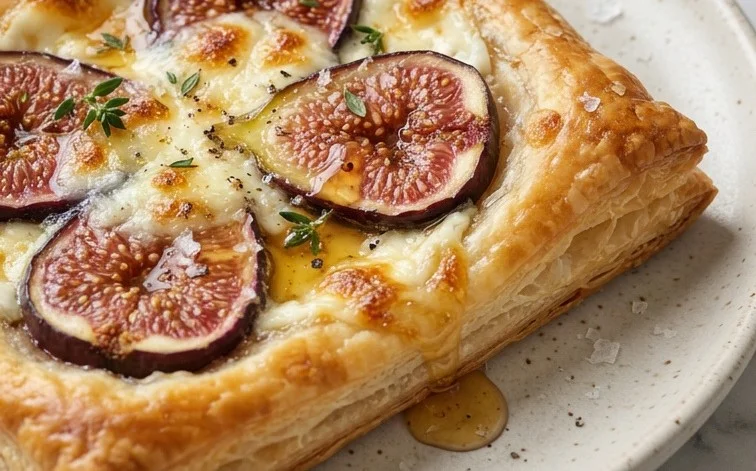
These Goat Cheese and Fig Puff Pastry Tarts are truly a special treat. They offer a fantastic balance of sweet fig jam, creamy goat cheese, and savory caramelized onions, all wrapped up in wonderfully flaky puff pastry. They’re versatile enough for a light lunch, an elegant appetizer, or a sophisticated snack. I hope you find them as enjoyable to make as they are to eat. The simplicity of the ingredients belies the impressive result, making them a great option for both weeknight treats and dinner parties. Don’t hesitate to experiment with the quantities or even add a sprinkle of chopped walnuts for extra texture if you like.
Frequently Asked Questions:
Can I make the caramelized onions ahead of time?
Absolutely. Caramelized onions can be made a day or two in advance and stored in an airtight container in the refrigerator. This saves you a step when assembling the tarts and allows the flavors to meld even further.
What can I substitute for fig jam?
If fig jam isn’t available or you’d prefer something else, apricot jam or even a good quality red currant jelly can work well. The key is a sweet, slightly tart fruit spread that complements the goat cheese.
How should I store leftover tarts?
Leftover tarts are best stored in an airtight container in the refrigerator for up to 2 days. To reheat, place them on a baking sheet in a moderate oven (around 350°F or 175°C) for about 5-8 minutes until the pastry is crisp and the filling is warmed through.
Goat Cheese and Fig Puff Pastry Tarts
Elegant and easy goat cheese and fig tarts perfect for appetizers or a light dessert.
Ingredients
-
½ batch rough puff pastry or classic puff pastry (or store-bought)
-
All-purpose flour (for work surface)
-
Egg wash (1 egg whisked with 1 teaspoon of water or cream)
-
1 cup fig jam
-
½ cup prepared caramelized onions, rough chopped
-
4 ounces goat cheese
-
6-10 sprigs of fresh thyme
Instructions
-
Step 1
Preheat oven to 400°F (200°C). Line a baking sheet with parchment paper. -
Step 2
On a lightly floured surface, roll out the puff pastry to about 1/8-inch thickness. Cut into desired shapes (rounds or rectangles). -
Step 3
Place the pastry shapes onto the prepared baking sheet. Score a border about 1/2 inch from the edge of each pastry, being careful not to cut all the way through. -
Step 4
Spread a layer of fig jam within the scored border of each pastry. Top with caramelized onions and crumble goat cheese over the jam and onions. -
Step 5
Brush the edges of the puff pastry with egg wash. -
Step 6
Bake for 20-25 minutes, or until the puff pastry is golden brown and puffed. Garnish with fresh thyme sprigs before serving.
Important Information
Nutrition Facts (Per Serving)
It is important to consider this information as approximate and not to use it as definitive health advice.
Allergy Information
Please check ingredients for potential allergens and consult a health professional if in doubt.

Leave a Comment