Fresh parsley is the star of this sauce, its bright, herbaceous notes forming the foundation of what makes chimichurri so special. When I first made this at home, I was amazed at how simple ingredients could create something so incredibly flavorful. It’s this wonderful, zesty, garlicky condiment that just wakes everything up. It’s originally from Argentina and Uruguay, and it’s traditionally served with grilled meats, but honestly, I put it on almost everything. Roasted vegetables, chicken, fish, even just on some crusty bread – it’s that good. Making it yourself means you can control the spice level and ensure you’re using the freshest ingredients possible. Ingredients: 1 cup packed fresh flat-leaf parsley leaves 1/2 cup packed fresh oregano leaves 4 cloves garlic, minced 1/4 cup red wine vinegar 1/2 cup extra virgin olive oil 1/2 teaspoon red pepper flakes (or to taste) 1/2 teaspoon salt, plus more to taste 1/4 teaspoon black pepper, plus more to taste Making the Chimichurri This sauce comes together really quickly, which is one of its best qualities. You don’t need any cooking, just a bit of chopping and whisking. The key is to use fresh herbs; dried ones just won’t give you that same vibrant flavor. I like to chop the herbs and garlic by hand to get a bit of texture, but you can also use a food processor if you prefer a smoother consistency. Just be careful not to over-process it into a paste. The first step is all about preparing your fresh herbs.
Best Chimichurri Sauce
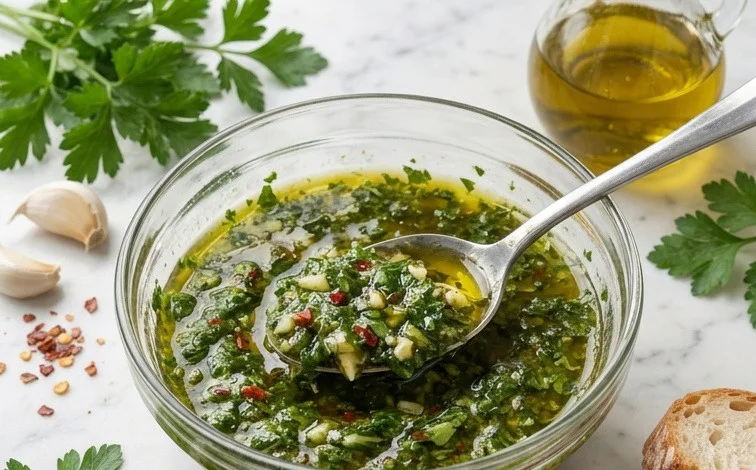
Fresh parsley is the star of this sauce, its bright, herbaceous notes forming the foundation of what makes chimichurri so special. When I first made this at home, I was amazed at how simple ingredients could create something so incredibly flavorful. It’s this wonderful, zesty, garlicky condiment that just wakes everything up. It’s originally from Argentina and Uruguay, and it’s traditionally served with grilled meats, but honestly, I put it on almost everything. Roasted vegetables, chicken, fish, even just on some crusty bread – it’s that good. Making it yourself means you can control the spice level and ensure you’re using the freshest ingredients possible.
Ingredients:
- 1 cup packed fresh flat-leaf parsley leaves
- 1/2 cup packed fresh oregano leaves
- 4 cloves garlic, minced
- 1/4 cup red wine vinegar
- 1/2 cup extra virgin olive oil
- 1/2 teaspoon red pepper flakes (or to taste)
- 1/2 teaspoon salt, plus more to taste
- 1/4 teaspoon black pepper, plus more to taste
Making the Chimichurri
This sauce comes together really quickly, which is one of its best qualities. You don’t need any cooking, just a bit of chopping and whisking. The key is to use fresh herbs; dried ones just won’t give you that same vibrant flavor. I like to chop the herbs and garlic by hand to get a bit of texture, but you can also use a food processor if you prefer a smoother consistency. Just be careful not to over-process it into a paste.
The first step is all about preparing your fresh herbs. You’ll want to wash and thoroughly dry your parsley and oregano. Moisture is the enemy of a well-preserved sauce, so make sure they are as dry as possible. You can use a salad spinner for this, or gently pat them dry with paper towels. Once dried, strip the leaves from the stems of both the parsley and oregano. You don’t need the tough stems; just the tender leaves. Finely chop these herb leaves. The finer you chop them, the more their flavor will meld into the sauce. I aim for a very fine dice, almost like a confetti.
Next, we deal with the garlic. You’ll need about 4 cloves, and the best way to get the most flavor from them is to mince them very finely. You can use a knife, or a garlic press if you have one. If you’re mincing by hand, try to get them as small as possible so they distribute evenly throughout the sauce. Some people find raw garlic a bit strong, so if you’re sensitive, you can use a little less, or even roast the garlic first to mellow its flavor, though this changes the classic raw chimichurri profile.
Now it’s time to bring everything together in a bowl. In a medium-sized mixing bowl, combine the finely chopped parsley, oregano, and minced garlic. Add the red pepper flakes to this mixture. The red pepper flakes are what give chimichurri its gentle warmth. If you like it spicy, feel free to add a bit more, or even a pinch of cayenne pepper. If you prefer it milder, you can omit them entirely or use just a tiny pinch.
The liquid components are what bind all those lovely aromatics. Pour in the red wine vinegar and the extra virgin olive oil. The vinegar adds a bright tang that cuts through the richness of the olive oil and complements the herbs. Make sure you’re using a good quality extra virgin olive oil, as its flavor will be prominent in the sauce. Stir everything together with a whisk or a fork until it’s well combined. It might look a little thin at first, but as the flavors meld, it will become a beautiful, emulsified sauce.
The final step is to season it properly. Add the salt and black pepper. Start with the amounts listed in the recipe, but then taste and adjust. Salt is essential for bringing out all the flavors of the herbs and garlic. Don’t be afraid to add a little more if needed. You want the sauce to be well-balanced. Let the chimichurri sit for at least 10-15 minutes before serving, or even better, let it sit for an hour or two at room temperature (or in the refrigerator if you plan to store it longer). This resting period allows the flavors to meld and deepen beautifully. The herbs will soften slightly, and the garlic’s bite will mellow a bit, creating a more harmonious taste. You can also make this sauce a day or two ahead of time; the flavor actually improves with a little age. Just give it a good stir before serving. It will keep in an airtight container in the refrigerator for up to a week.
Conclusion:
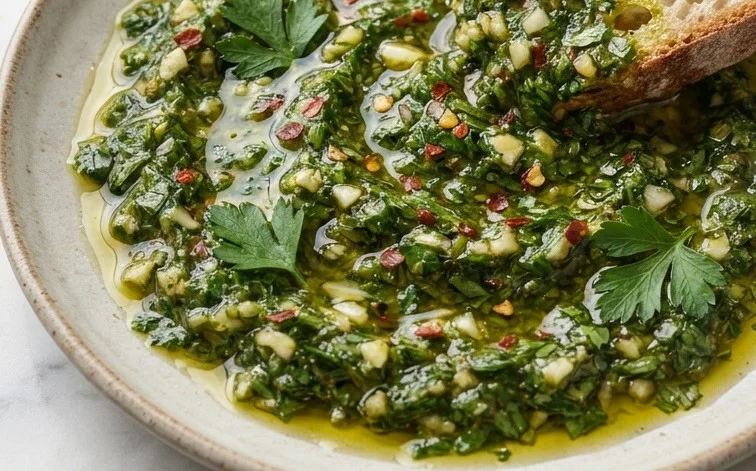
This Best Chimichurri Sauce recipe is a fantastic way to add a punch of fresh, herbaceous flavor to so many dishes. Its simplicity means you can whip it up in minutes, making it perfect for impromptu meals or as a regular staple in your kitchen. The combination of fresh parsley, oregano, garlic, and a hint of spice is truly addictive. Try it on grilled steak, chicken skewers, or even roasted root vegetables. You can also stir a spoonful into your favorite salad dressing or use it as a dip for pita bread. This chimichurri sauce is incredibly versatile and always a crowd-pleaser.
How long does chimichurri sauce last?
Stored in an airtight container in the refrigerator, this chimichurri sauce will keep for up to a week. The flavors actually meld and deepen over time, so it often tastes even better on the second or third day. Give it a good stir before using.
Can I adjust the spice level?
Absolutely. The red pepper flakes are what give the sauce its gentle heat. For a milder sauce, start with just a pinch or omit them entirely. If you like it spicier, feel free to add more flakes, or even a finely minced jalapeño or serrano pepper along with the garlic.
What if I don’t have fresh oregano?
While fresh oregano is preferred for its bright flavor, you can substitute dried oregano in a pinch. Use about 1 tablespoon of dried oregano for the 1/2 cup of fresh. Be aware that the flavor will be less intense and the texture will be different, so fresh is definitely recommended for the best chimichurri sauce.
Best Chimichurri Sauce
A vibrant and herbaceous Argentinian sauce, perfect for grilling and marinades.
Ingredients
-
1 cup fresh parsley, finely chopped
-
1/2 cup fresh oregano, finely chopped
-
4 cloves garlic, minced
-
1/4 cup red wine vinegar
-
1/2 cup olive oil
-
1 teaspoon red pepper flakes
-
Salt to taste
-
Black pepper to taste
Instructions
-
Step 1
Combine chopped parsley, oregano, and minced garlic in a medium bowl. -
Step 2
Add the red wine vinegar and stir to combine. -
Step 3
Slowly drizzle in the olive oil while whisking continuously until emulsified. -
Step 4
Stir in red pepper flakes, salt, and black pepper. -
Step 5
Taste and adjust seasoning as needed. -
Step 6
Let the sauce sit for at least 15 minutes to allow the flavors to meld.
Important Information
Nutrition Facts (Per Serving)
It is important to consider this information as approximate and not to use it as definitive health advice.
Allergy Information
Please check ingredients for potential allergens and consult a health professional if in doubt.


Leave a Comment